
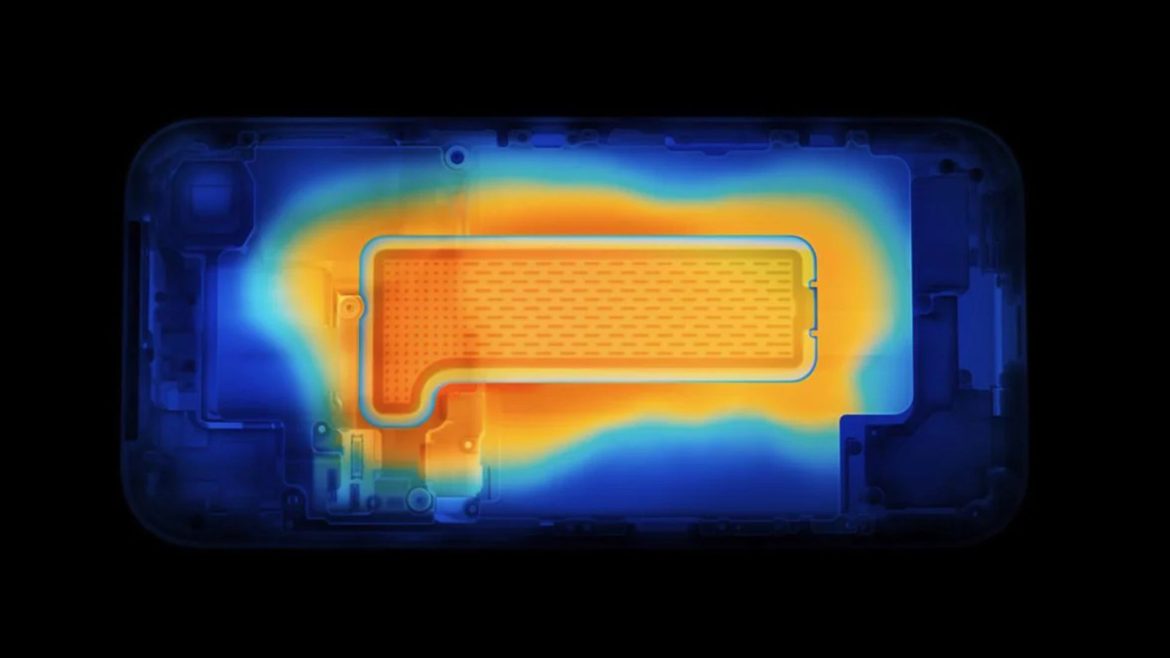
Every generation, we see smartphone chipsets break some kind of performance record and achieve feats that we thought weren’t even remotely possible, such as running AAA games at decent visual settings. However, two metrics that we’ve more or less ignored while admiring these SoCs are power consumption and temperature. Putting aside the benchmarks and those impressive framerates, a new discussion paired with some test results has shown that it’s becoming increasingly difficult for smartphone makers to effectively cool chips, and it appears as though the problem will get worse.
With vapor chambers unable to effectively transfer heat from smartphone chipsets, the pressure now falls on companies to make chips more efficient
There have been instances where chipsets like the Exynos 2600 mass produced on Samsung’s 2nm GAA node touched 30W of peak power when stressed. If the same power limit were hit on a laptop, we wouldn’t have been too bothered, but reaching the same wattage while running inside a compact chassis should worry anyone who plans on upgrading their device later this year.
On Reddit, ‘Virtual-Reference708’ was exerting the iPhone 17 Pro Max by running 3DMark Wild Life Extreme Stress Test and by firing up some taxing games. While the initial performance run is impressive, the benchmark scores start to slowly trickle down, showing immediate evidence of thermal throttling. The longer these tests are run, the worse the performance gets, and to compensate for the excessive heat, the display can sometimes dim automatically.
Bear in mind that the iPhone 17 Pro Max is equipped with a vapor chamber, and it’s evident that the A19 Pro is too hot to handle for this cooling solution. In the Reddit thread, it’s stated that smartphone chipsets are designed to start at a 15W power limit or higher for short periods to load apps or perform tasks quickly, but the compact chassis can only dissipate around 6W of heat before it gets hot enough to make your hands uncomfortable.
Chinese companies like REDMAGIC are boldly experimenting by incorporating active fans and a watercooling loop inside their smartphones to keep SoCs like the Snapdragon 8 Elite Gen 5 cool. When stressed, Qualcomm’s flagship chipset can often reach between a 20W and 24W power limit. Other manufacturers like Apple and Samsung cannot experiment with such ‘over the top’ cooling solutions because their design language doesn’t allow for these obnoxious changes. In short, smartphone cooling has definitely hit a thermal wall, but that doesn’t mean chipmakers cannot remedy this problem.
What can be done to allow smartphones to cool chipsets when running sustained workloads?
The use of TSMC’s 2nm lithography should improve power efficiency, but architectural changes carry equal importance. In this specific area, Apple dominates the competition as its A19 Pro features efficiency cores that have been shown to deliver up to 29 percent increased performance in some tests, with practically zero power draw difference compared to the A18 Pro. From the looks of it, Apple is heavily focused on reducing that power draw, but what about the others?
Qualcomm operates in the completely opposite spectrum, as its Snapdragon 8 Elite Gen 6 Pro has been rumored to be tested at a 5.00GHz frequency, surpassing the Snapdragon 8 Elite Gen 5’s 4.74GHz threshold. We understand that the chipset manufacturer wants to best its competitors like Apple, but it’s doing absolutely nothing to tame the power draw in smartphones, making it a striking difference between the two companies.

Even with Qualcomm fully jumping into custom cores, starting with the Snapdragon 8 Elite, Apple’s efficiency prowess has yet to find a worthy adversary. In addition to vapor chambers, which have pretty much become a necessity, Samsung is innovating in this area to improve heat transfer, starting with its Heat Pass Block (HPB) technology that it has incorporated in the Exynos 2600. What it does is place a copper heatsink over the silicon die to transfer heat, with the DRAM chip moved to the side rather than on top of the die.
Fortunately, Samsung is also testing out other architectures, such as developing side-by-side (SBS) cooling, unlocking a 30-40 percent bump in memory bandwidth. This technology is said to debut with the Exynos 2700 and should allow for better sustained performance.

Can a smartphone’s thickness ever change to accommodate beefier cooling solutions for chipsets?
It’s entirely possible, but smartphone manufacturers can only go so far when increasing thickness because making a device bulkier is directly proportional to making it heavier and, as a result, a less comfortable user experience. At the end of the day, companies behind the development of these devices have extremely limited freedom to play around with the power and thermal envelopes, but that’s exactly where some much-needed innovation can come into play.
News Source: Reddit

About the author: Omar Sohail is a reporter and analyst for Wccftech’s mobile section, specializing in the technology and business of the mobile industry. His expertise lies in the intricate hardware supply chain, covering developments in semiconductor manufacturing, chip lithography, and camera sensor technology.
Follow Wccftech on Google to get more of our news coverage in your feeds.
