
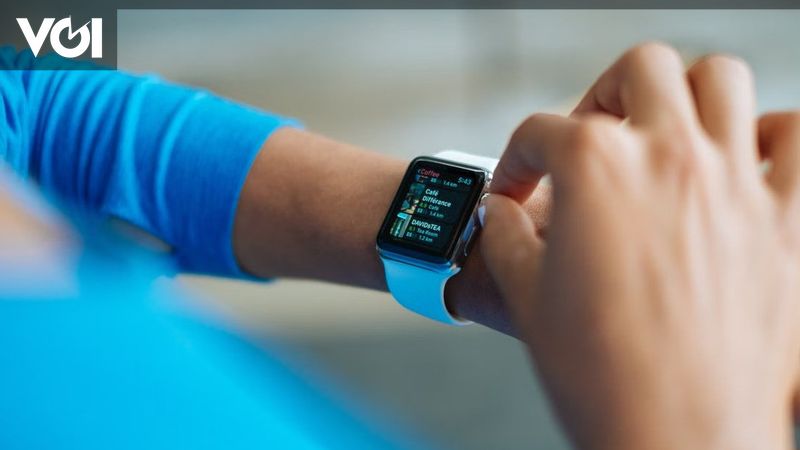
JAKARTA – Almost a quarter of users of wearable devices in a study in the UK admitted to ignoring health warnings from their devices. Doctors warn that some warnings, especially related to the heart rate, can be a sign of a problem that needs to be examined further.
The Mirror, quoted Friday, August 21, reported that a study of 2,000 adults found that 57 percent use wearable devices or electronic devices worn on the body, such as smartwatches, fitness trackers, and smart rings.
As many as 46 percent actively monitor health and fitness through watches, mobile phones, or smart rings. However, 23 percent of this group admitted not understanding most of the information they saw. As many as 60 percent have also seen data without knowing what it means.
As many as 24 percent have ignored health warnings from their devices. The warnings most often ignored are related to heart rate at 40 percent, activity level at 35 percent, and stress at 32 percent.
The study was commissioned by Cromwell Hospital and carried out via OnePoll.
Cromwell Hospital’s consultant cardiologist, Dr Neil Srinivasan, said wearable technology had changed the way people monitored their health. However, users still need to understand the data that appears.
“This lack of understanding leads some people to ignore warnings and signs that could indicate serious health problems, especially those related to the heart,” said Srinivasan.
According to Srinivasan, the warnings from the device should not be immediately ignored. If there is suspicious data, users need to consult a health worker to find out what it means and determine whether further examination is needed.
The study also found that the number of steps was the most frequently monitored data with a share of 67 percent. Next is the heart rate at 52 percent and calories burned at 46 percent.
However, only 17 percent of respondents were able to understand data that might be related to irregular heart rhythms. Meanwhile, 21 percent felt confident in understanding information about respiratory rate.
When finding confusing data, 61 percent seek an explanation on the internet. As many as 30 percent choose to ignore it.
As many as 26 percent admitted that being confused about reading wearable data had made them anxious for no apparent reason.
As many as 28 percent of respondents who monitor health through wearables have sought medical advice after receiving a health warning or notification.
Of those who checked themselves, 58 percent said the problems found were relatively mild. However, 21 percent said the warning turned out to be related to more serious health problems.
As many as 35 percent have shared wearable data when consulting with medical personnel. Of that group, 26 percent assessed that the data helped the diagnosis to be faster or simpler.
Starting September 1, 2026, Bupa will launch a genomic-based service for the prevention of cardiovascular disease. Genomics uses genetic or DNA information to look at health risks.
The service will be used to identify people who are at higher risk of cardiovascular disease, then connect them with available prevention services.
Srinivasan said understanding data from wearable devices can help recognize early signs of health problems and speed up treatment, especially those related to the heart.
The English, Chinese, Japanese, Arabic, and French versions are automatically generated by the AI. So there may still be inaccuracies in translating, please always see Indonesian as our main language.
(system supported by DigitalSiber.id)
Add VOI as a Preferred Source
Follow VOI news updates across Google.
+
