
Deeper insights versus affordability—here’s our recommendation on the best body composition tracker for you
As body composition tracking becomes more mainstream, buyers are increasingly looking for devices that can do more than measure weight. The latest smart scales can provide a broader picture of wellness through detailed body composition metrics, such as body fat, muscle mass, hydration, and trend tracking.
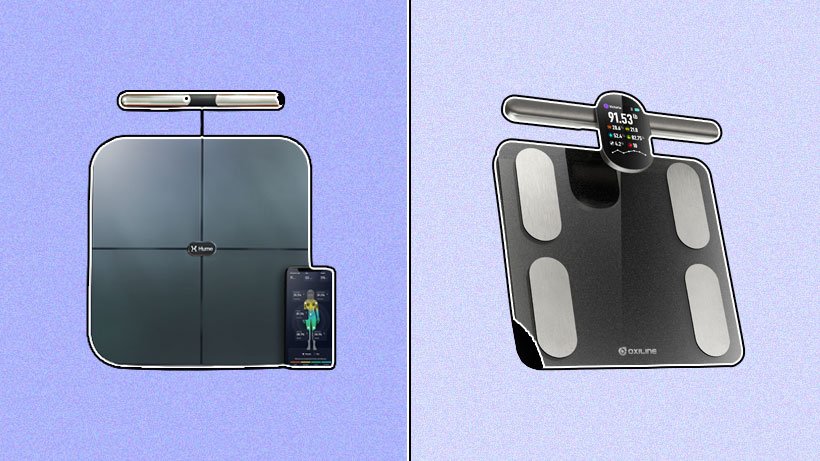
That’s exactly what Hume Body Pod and Oxiline Scale MD Pro aim to do. Both go well beyond basic weight tracking, but they take slightly different approaches. Hume Body Pod focuses on deeper wellness insights, a richer app experience, and coaching-style features. Meanwhile, Oxiline MD Pro prioritizes straightforward body composition tracking at a more affordable price.
With Oxiline priced at around $179 and Hume Body Pod at around $229, the choice isn’t just about spending less. In this comparison, we’ll see whether the extra features in Hume Body Pod are worth paying for or if the more affordable Oxiline Scale MD Pro is the smarter buy.
| Hume Body Pod | Oxiline Scale MD Pro |
|---|---|
| $229 | $179 |
| Weight, body fat, muscle mass, body water, visceral fat, metabolic indicators, additional wellness insights | Weight, body fat, muscle mass, body water, BMI, core body composition metrics |
| Multi-frequency BIA | Multi-frequency BIA |
| Hume Health app | Oxiline app |
| Some coaching/advanced features may be subscription-based, depending on the current plan structure | Core tracking is available without a mandatory subscription |
| Multiple users supported via the app | Multiple users supported via the app |
| Bluetooth + app sync | Bluetooth + app sync |
| Visit Hume Body Pod | Visit Oxiline Scale MD Pro |
Design and everyday use
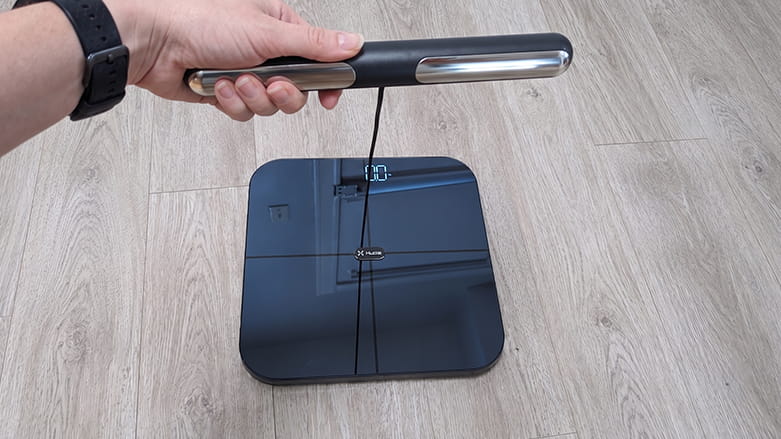
Probably the biggest difference in daily use we noticed between Hume Body Pod and Oxiline MD Pro Scale was the overall polish of the experience. In our opinion, Hume Body Pod has a more premium aesthetic overall, and we really liked the large, easy-to-read display, as well as the tracker’s integration with the Hume Health app for deeper insights and trend tracking. The scale itself is simple to step on, measurements sync pretty fast, and the app presents all trends in a gamified way, which easily lured us into consistent check-ins.
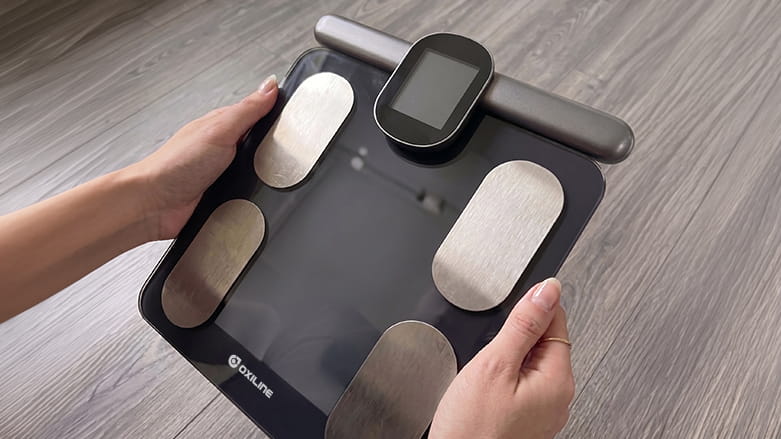
Meanwhile, we thought Oxiline’s approach was much more utilitarian. Although the hardware is well-designed and has a modern look, it focuses more on efficient measurement delivery than on coaching. The setup is very straightforward with quick Bluetooth pairing, and we thought first-time smart scale users could appreciate this approach for its simplicity.
Both body composition trackers support multiple users, which is very handy if you want to share them with your household members. However, from our experience, we found that the Hume app generally does a better job at separating and organizing individual data.
As for daily weigh-ins, both devices proved to be quite easy to live with. That said, if you want to track your trends as accurately as possible, we found that stepping on the scales at the same time each day produced the most consistent and useful data. So, as with many wellness devices, consistency is important with body composition trackers, too.
However, where Hume Body Pod pulls ahead is in how it turns those data numbers and metrics into a much more engaging experience, which encourages you to actually stay consistent. Oxiline is simpler and does not flood you with notifications, coaching prompts, or deeper analytics. We think there might be quite a few users who would enjoy the consistent cheering on and support offered by Hume, and just as many who would prefer Oxiline’s quieter guidance—it’s all a matter of preference.
That said, Hume Body Pod still offers a more comprehensive tracking approach with a more polished overall look and experience.
Winner: Hume Body Pod
Body composition tracking features
Both Hume Body Pod and Oxiline MD Pro track more than just body weight, but the depth of the data differs.
On the one hand, there’s Oxiline, which focuses on core metrics such as body fat percentage, muscle mass, body water, BMI, weight, and more. From our perspective, these are all the essentials needed to track weight loss or general fitness for most users. However, Oxiline does not attempt to deliver insight from these metrics, so you would have to figure some parts out on your own.
On the other hand, there’s Hume Body Pod and its broader set of wellness and fitness-oriented insights and measurements. Besides the essential data, the body composition tracker provides additional contextual information. Because the figures individually only tell part of the story, when tracked over weeks and months and compared to the data you started with, they can offer a more detailed view of potential body composition changes and overall progress.
Which body composition data is actually useful?
While both smart scales track a whole slew of metrics, not all of them might be useful in every case. Because, naturally, if you aim to lose weight, you’d be looking into things like body fat percentage, and if you aim to gain muscle mass, that metric might not be your highlight.
So, let’s see which body composition tracker might work better in different scenarios:
- Casual wellness tracking. Weight, body fat percentage, and trend graphs are usually the most valuable metrics. Oxiline MD Pro already covers these well.
- Weight loss users. Body fat trends matter more than daily weight changes because they help distinguish fat loss from water-weight fluctuations. Both scales can help here.
- Fitness enthusiasts. Muscle mass estimates become more interesting, although users should focus on long-term trends rather than single readings. Hume’s additional analytics are more useful for this group.
- Body recomposition users. People trying to gain muscle while losing fat tend to benefit most from the richer data set and trend analysis offered by the Hume ecosystem.
The practical reality
From our experience testing numerous smart scales, we found that most of us didn’t need dozens of body composition metrics to track essential changes. Additionally, we often faced a specific issue with such devices: they often display a lot of numbers without helping us understand what they actually mean or which ones truly matter.
That said, both Hume and Oxiline stood out here, albeit in different ways. We found that Hume does a much better job of connecting measurements to goals and progress, so much so that they are no longer just numbers but useful insights. Meanwhile, Oxiline is great at keeping the experience simpler and less overwhelming, especially for casual or first-time users.
Winner: Hume Body Pod
Accuracy and measurement technology
Both Hume Body Pod and Oxiline MD Pro use multi-frequency bioelectrical impedance analysis (BIA), which is the standard technology used in at-home body composition scales. Here’s how it works: the scale sends a very small electrical current through the body (nothing you can actually feel) and uses resistance measurements to estimate fat mass, lean mass, water content, and other metrics.
In practice—and this is what actually matters for you as a potential user—consumer BIA devices are best viewed as trend trackers rather than clinical diagnostic tools. And, as with most at-home wellness devices, your own consistent use will give you the most accurate results regarding changes, but rarely perfect accuracy.
Things like hydration levels, recent exercise, food intake, skin temperature, and even the time of day can affect readings. For example, a body fat percentage measured after a hard workout or a hearty meal may differ noticeably from one taken first thing in the morning. So, again, consistency to the point of weight-ins at the same time every day is what will give you the most consistent data.
Furthermore, comparing any consumer smart scale to professional methods, such as DEXA scans, hydrostatic weighing, or multi-compartment body composition testing, reveals that all at-home body composition-tracking devices have clear limitations.
Ultimately, if you do decide to take a DEXA scan at some point, it is very likely the numbers will not match those you see on either Hume Body Pod or the Oxiline MD Pro. And that’s okay; what matters the most is whether the device you use at home produces reasonably consistent readings under similar conditions.
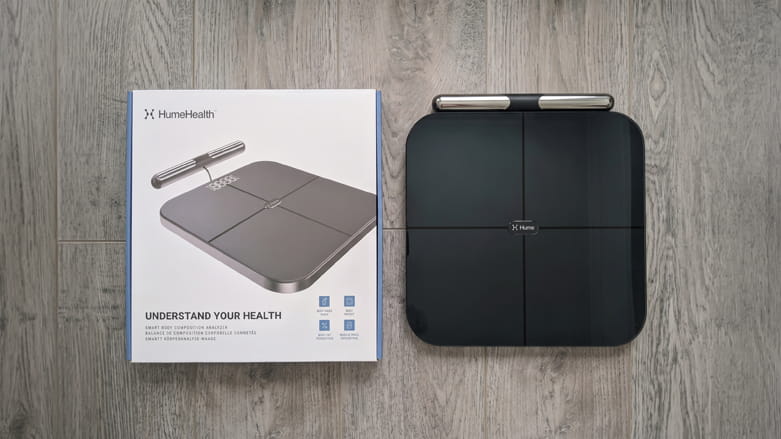
In our comparison, neither scale was notably more accurate than the other, so choosing one based solely on precision may not be the case here. Both devices use modern BIA technology, and both should be used in accordance with the same best practices, which include weighing at the same time of day, under as similar hydration conditions as possible, and an emphasis on trends rather than individual readings.
Winner: Tie
App experience and insights
In our eyes, the overall app experience is exactly where Hume Body Pod shines. Its companion app, Hume Health, is designed to engage users with trend highlights, insights, and body composition data presented in such a way that feels more like a wellness platform rather than just a smart scale companion app. We liked that using the Hume Health app allowed us to track progress and set goals very easily, and the coaching-style recommendations were not only a nice additional touch, but gave genuinely useful context to the numbers.
Meanwhile, Oxiline’s app is much more pragmatic. All it does is record measurements, display charts, and provide basic progress tracking without trying to become a major wellness ecosystem. However, we think that users who only want their weight and body composition data stored in one place are likely to view Oxiline’s simplicity as a benefit rather than a drawback.
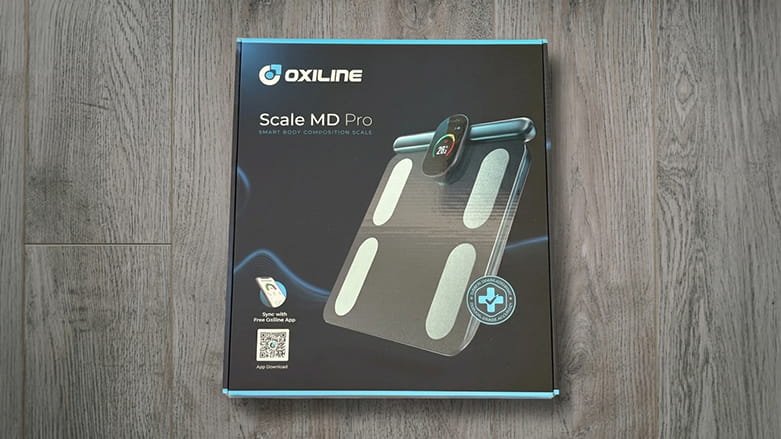
Ultimately, we think that the difference between the Hume Health app and the Oxiline app comes down to how much guidance you want from your body composition tracker. If you prefer to go deep into analytics and receive coaching-style insights, then Hume is by far the stronger platform. But if you simply want reliable tracking without all the extra layers and notifications, then you might find Oxiline easier to live with.
Winner: Hume Body Pod
Subscription costs and value
As smart scales are comparatively expensive devices, their long-term value is just as important—if not more important—as the initial satisfaction you get after purchasing one. Here, Oxiline MD Pro keeps it simple: you only pay for the scale and get the core tracking features in the app, with no additional fees or ongoing subscriptions. In our book, that’s a huge plus, especially if you dislike keeping up with yet another subscription.
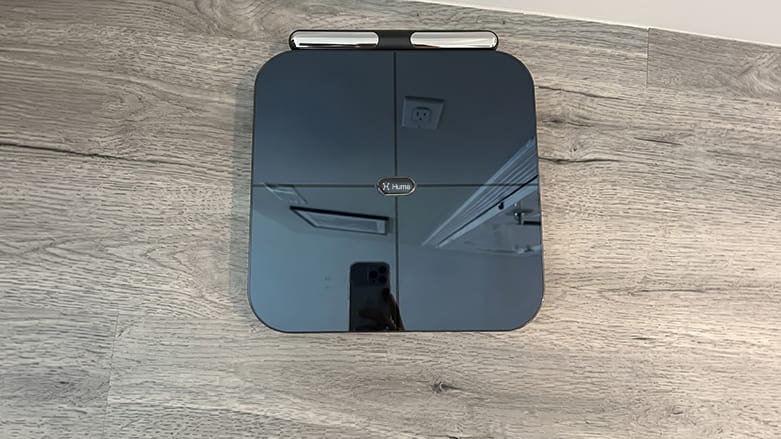
Hume Body Pod comes with a higher upfront cost and may already include optional membership or coaching tiers, depending on the offer. And while you can use the app to track core metrics for free, Hume also offers a premium subscription for around $9.99/month to unlock additional in-app features.
However, the key question here is whether you will actually use those additional features. If you know you like to engage with goal tracking, insights, and coaching-style recommendations, then you’ll find the additional cost justifiable. If you only check weight and body fat data occasionally, much of that broad ecosystem will go unused.
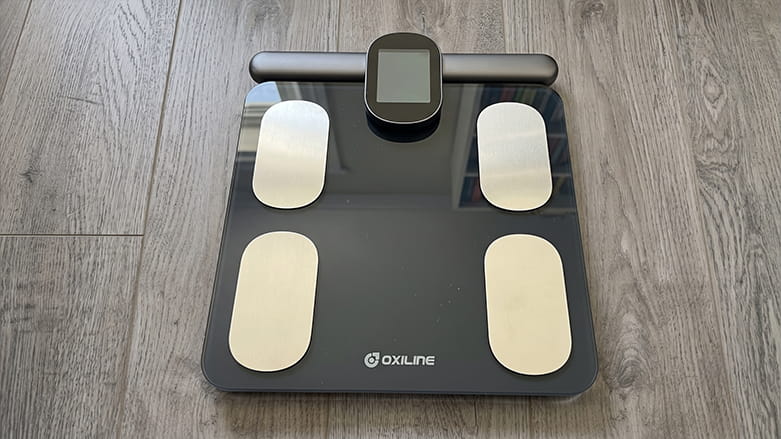
Overall, we think Oxiline MD Pro offers slightly better long-term value, since it’s a one-and-done purchase with no additional subscription costs.
Winner: Oxiline MD Pro
Price and availability
Hume Body Pod is currently priced around $229, placing it firmly in the premium body composition tracker category. You can purchase it on the official Hume website, and if you visit it several times, you may land on a special deal, bundle discount, or a limited-time promotion.
While Hume Body Pod costs more than Oxiline, part of that premium goes toward a nicer overall finish and a broader wellness ecosystem, including more in-depth insights in the companion app. If you’re interested in thorough long-term metric tracking and coaching-style features, you may find the higher price easy to justify.
Oxiline MD Pro is priced at around $179, making it the more affordable—although still premium-tier—option between the two. You can purchase this smart scale directly from its official website, where you might also find additional promotions or discounts.
Despite its lower cost, Oxiline MD Pro still offers quite a comprehensive set of body composition metrics, but a less engaging app and fewer in-depth insights. That said, users who want a simpler approach to data tracking might prefer Oxiline’s to-the-point style.
Verdict: Which should you choose?
Both Hume Body Pod and Oxiline MD Pro are useful additions to your wellness tech kit. However, they cater to slightly different user categories.
Choose Hume Body Pod if:
- You want more than a smart scale. Hume is better suited to users who want ongoing wellness insights, coaching-style guidance, and a more engaging app experience overall.
- You are focused on body recomposition or long-term wellness. The richer analytics and trend tracking may be useful if you are trying to lose fat, gain muscle, or improve your overall fitness habits.
- You will actually use the ecosystem. Probably the most valuable aspect of Hume comes from engaging with its insights and recommendations, not just stepping on the scale.
Choose Oxiline MD Pro if:
- You want solid body composition tracking at a lower price. The MD Pro covers the core metrics most people care about without the extra layers.
- You prefer simplicity. The Oxiline app is a bit more straightforward to navigate and focuses on measurements rather than coaching.
- You dislike subscriptions. The companion app is available without requiring an ongoing membership.
In our opinion, Hume Body Pod offers a stronger overall package, with the smart scale, app, and coaching-style insights working together to create a more in-depth wellness platform. Meanwhile, we find Oxiline MD Pro easier to recommend for budget-conscious users who mostly want a simple (but not simplistic) device to track their body composition without needing a larger ecosystem or more in-depth insights.
So, if you are currently deciding between the two and think you can benefit from the extensive companion app, then you may find Hume Body Pod worth the additional spending. If you simply want a reliable body composition tracker at a lower price, Oxiline may deliver better value for you.
References
National Institutes of Health. Bioelectrical Impedance Analysis in Body Composition Measurement
National Institutes of Health. Accuracy of consumer bioelectrical impedance devices compared with reference methods
