
My phone, which has been charging on a MagSafe charger on the nightstand beside me overnight, goes off at 6am. If I have enough willpower, I get up without hitting the snooze button. Most days, that doesn’t happen. Looking down at my wrist, my Garmin Forerunner 570 confirms what I already know: I didn’t get a great night’s sleep.
I groggily wipe my eyes and head to the bathroom, phone still in hand, careful to avoid stepping on my dog, who has left her bed and sprawled out on the carpet in front of the bathroom door.
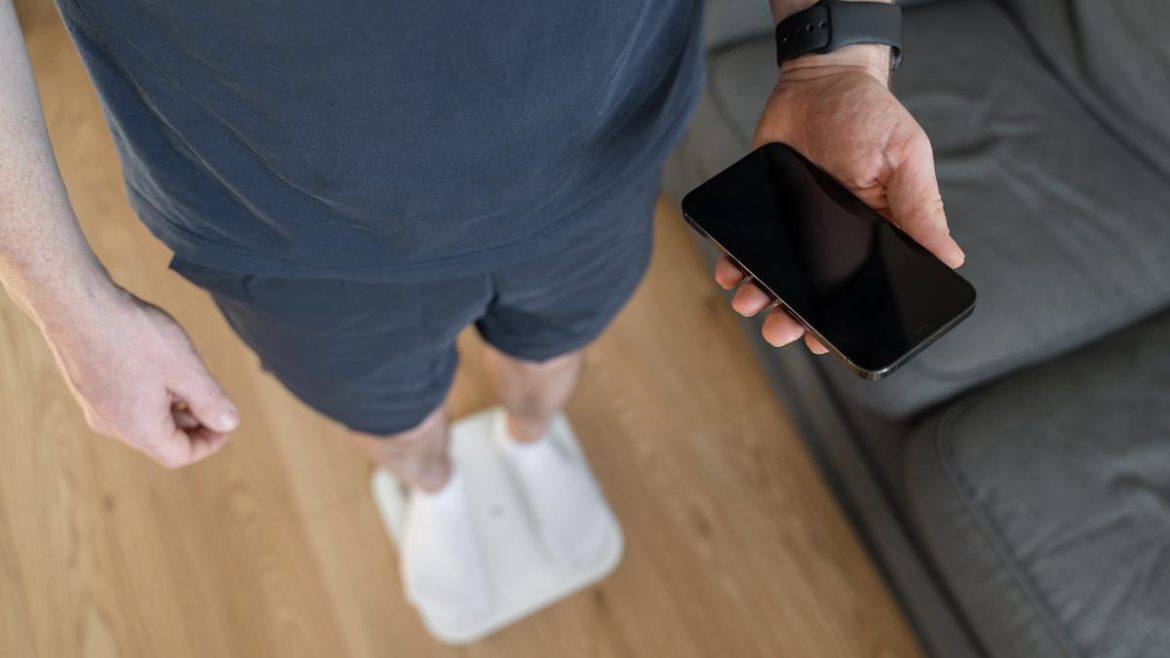
“Hey Google, turn on the bathroom lights,” I say to the wall-mounted smart speaker. The bathroom lights turn on. I open the Arborleaf app on my phone, set it on the counter and step onto the scale. The day’s data — weight, BMI, body fat % — are transferred to my phone immediately.
Advertisement
Advertisement
Downstairs, the coffee has already brewed thanks to a smart plug I have set to turn on fifteen minutes before my alarm. I pour two cups — one for me and one for my wife — and quietly creep back up the stairs, setting hers on her nightstand next to her phone.

Some smart devices, like the smart plug that starts brewing my morning coffee fifteen minutes before my alarm goes off, are most certainly a necessity. (Moccamaster)
I sit back down in bed and sip my coffee while I check my Strava in the last few minutes before the rest of the house wakes up. My neighbor Dave has already gone for a 7-mile run. As I tap the screen and give him kudos, I feel a small twinge of guilt for not getting up earlier.
None of these gadgets are inherently bad. In fact, some of them genuinely make my mornings easier. But somewhere along the way, I realized nearly every part of my life had become tracked, optimized, automated or scored.
And honestly? It was exhausting.
Advertisement
Advertisement
So I started simplifying. Not abandoning technology entirely — I need my coffee ready for me the minute I walk downstairs — but figuring out which gadgets genuinely made life easier and getting rid of the ones that were just adding noise.
Some smart home tech absolutely rules
Not every piece of smart home tech became unnecessary in my life. Some of it kept chugging along unnoticed in the background — the way useful tech should be.
Smart plugs are fantastic for specific things like coffee makers (like mine, which doesn’t have a built-in clock), holiday lights and lamps.
My smart garage door opener automatically closes the garage at 8pm every night, which is incredibly helpful because I am absolutely the guy who forgets to close it before bed, not realizing it until the following morning. And home keyless entry? Incredible. I never carry house keys anymore.

And while I don’t use our Google Nest Mini speakers constantly, they have become surprisingly great for family life. My daughter uses them for dance parties, timers while brushing her teeth and asking Google approximately 900 questions a day.
Advertisement
Advertisement
I also still really like our Ecobee thermostat. Specifically, the ability to adjust the temperature from my phone, set schedules and automatically cool the house down before bed.
What I don’t love is giving my utility company partial control over my thermostat during periods of high energy usage for a small discount. Saving a few bucks is nice. Having my air conditioning throttled during a heat wave because the power company decided the house should be 84 degrees is less nice. I’ve turned that function off.


The smart tech I still use — just less obsessively
I still wear a smartwatch. In fact, I really like smartwatches. But at some point, I realized I had stopped exercising because I enjoyed it and started exercising because my watch told me I should.
Every workout became data. Every run became something to upload. Every bad night’s sleep became a reason to mentally downgrade the following day before it even started.
Advertisement
Advertisement
I stopped caring about recovery scores, sleep scores, Body Battery, training readiness and whether a stranger on Strava ran a faster 10K than me before sunrise on a Tuesday. Comparison is the thief of joy, and fitness apps can ruin your motivation if you’re not careful.
These days, I mostly wear my Garmin when I’m actually training for something. I still like tracking hikes, runs and bike rides, but I no longer need my wrist buzzing at me 24 hours a day to tell me whether I’m succeeding at being healthy.

I bought one of those smart scales that measures approximately 47 different aspects of your body composition every morning. Weight. BMI. Body fat percentage. Water weight. Muscle mass. Bone density. Probably my emotional stability too.
The problem is that bodies fluctuate constantly. Sodium, hydration, sleep and stress can all move the numbers around from day to day. I found myself overanalyzing tiny changes that didn’t actually matter. Recently, I was sick with a stomach bug and lost 6 pounds in a little under a week. My scale was ecstatic for me, telling me my body fat % had dropped by 2 full points. I knew better. That weight was mostly due to dehydration. Translation: the scale lies.
Advertisement
Advertisement
Now, I weigh myself once a week instead of every morning. Same scale, less obsession. It turns out taking the data with a grain of salt is healthier than trying to optimize every decimal point.
One health data app I actually found incredibly interesting and helpful was Function Health. I paid for it for a year, went in for three blood draws and it gave me the results of over 160 tests, much more thorough than my regular annual physical exam. I could then go over the results with my PCP, though the app has a clinician review the results for you as well.
The amount of information and testing it provided was genuinely interesting, and it gave me a much more detailed look at my health. But after the initial excitement wore off, I realized I don’t necessarily need an extremely detailed breakdown of every biomarker in my body every single year while I am in my mid-thirties.
Getting a baseline? Useful. Catching potential issues early? Very useful. Treating my body like a Formula 1 car that needs constant telemetry analysis? Maybe a little much.

I went through a phase where I wanted every light in the house to be connected to my Google Home app. It sounded futuristic and convenient in theory.
Advertisement
Advertisement
In practice, it mostly meant occasionally standing in a dark room, muttering “Hey Google” multiple times because a bulb had disconnected from Wi-Fi again. One night, my wife and I woke up at 3am to our entire house as bright as the surface of the sun because I had forgotten to set all of our smart bulbs to return to their previous state after a power outage.
That said, I haven’t completely abandoned smart lighting. I use smart bulbs in the bedroom because being able to turn the lights off from bed is objectively great. They’re also nice in lamps and rooms where adding dimmers would require rewiring.
I just no longer think every single light fixture in a house needs firmware updates.

I also fully understand why people love robot vacuums. If you hate vacuuming, they probably feel magical.
Advertisement
Advertisement
Apparently, I’m weird because I don’t really mind vacuuming. I pop my AirPods in, turn on a podcast, and the whole house is pet-hair-free in what feels like a few minutes. What I do mind is emptying the robot vacuum every single day because my dog sheds like she’s trying to build a second dog out of loose fur.
If you buy one, absolutely get a self-emptying model. Otherwise, you’re basically just replacing one chore with a slightly different chore.
The smart home tech I avoid completely
At one point, I had a smart faucet. It was expensive, occasionally confusing and eventually broke. You know what has worked flawlessly for hundreds of years? A normal faucet. I realize this probably makes me sound 94 years old, but not everything needs to be voice-controlled.
I remain unconvinced that my refrigerator needs Wi-Fi. A fridge already has one very important job: to keep food cold. I don’t need it to display family photos, stream music or remind me that I am low on yogurt. It’s also one more expensive thing to break in an appliance category that is already expensive to repair.
Advertisement
Advertisement
I also tried going fully digital with our family calendar. In theory, it made sense: shared schedules, phone notifications, color-coded events and automatic syncing across devices. In practice, things still got missed. We eventually went back to a physical wall calendar in the kitchen. It works better for our family.
That said, I do understand the appeal of products like the Skylight Calendar 2, which basically splits the difference between a traditional family calendar and a digital display. I might give that one a try again when my kid is a little older, solely because of the chore function.
Those phones charging on the nightstand? I was convinced we needed them there to sleep and wake up, using them as our noise machine and alarm clock. The thing is, you can buy a sound machine and an alarm clock — I prefer the sunrise kind — that don’t also give you the option of doomscrolling before bed. Funny enough, my sleep score isn’t so bad anymore.


If you have Amazon Prime, you’ll get free shipping, of course. Not yet a member? No problem. You can sign up for your free 30-day trial here. (And by the way, those without Prime still get free shipping on orders of $35 or more.
