
Have a question about Philly’s neighborhoods or the systems that shape them? PlanPhilly reporters want to hear from you! Ask us a question or send us a story idea you think we should cover.
Ask an economist how to make housing more affordable in the U.S. and they’ll likely mention a straightforward solution: build more homes.
While it’s not a silver bullet, building more homes gives buyers and renters more options, helping slow the upward climb of home prices and rents. It can even lower prices if a market is experiencing significant overbuilding.
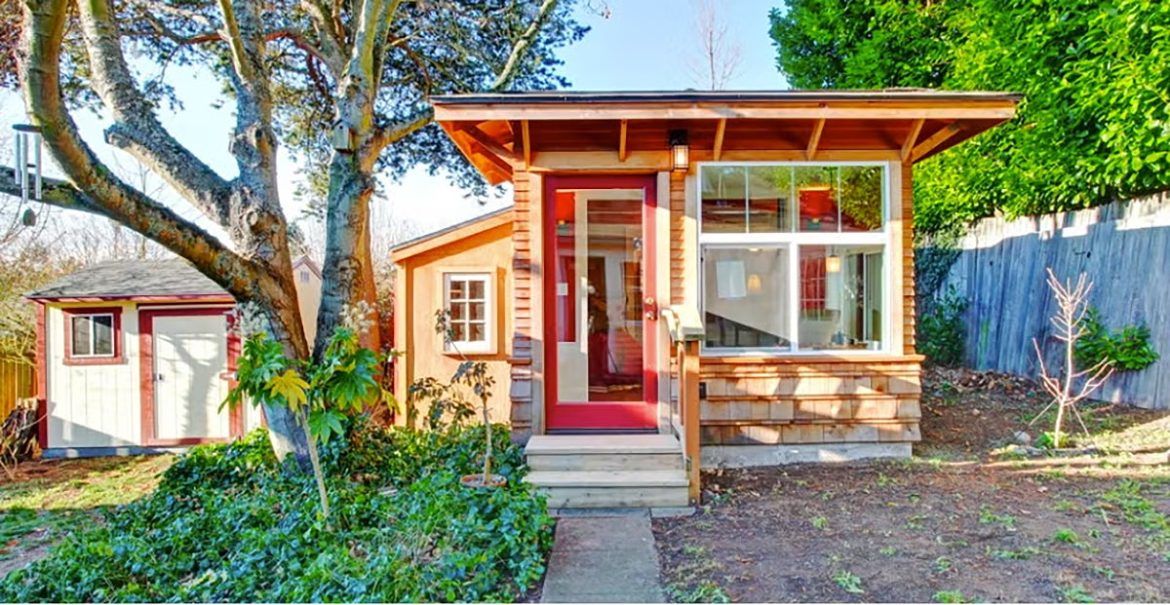
In Pennsylvania, those dynamics sit at the heart of two bipartisan bills that state lawmakers hope to pass this session as part of a broader housing push. Both look to increase the state’s supply of so-called accessory dwelling units, or ADUs, independent dwellings that are attached to a single-family home or sit separately on the property.
The bills would require municipalities to allow them by right, meaning property owners wouldn’t need discretionary approval to build them, even if they are restricted locally by their municipality.
In many municipalities around the state, building an ADU requires a zoning variance — approval to deviate from the law. Advocates say that often creates a time-consuming and expensive impediment to building, whether a homeowner wants to build a tiny home, convert a garage or create a basement apartment.
The bills in Harrisburg would effectively bypass that approval process by creating a statewide standard for ADUs, increasing the certainty that homeowners can make these projects happen.
“The current systems in place have gotten us into this situation, and so we need to try to do things. We need to change and adapt,” said state Rep. John Inglis, D-Allegheny, who introduced the House version of the measure.
Local governments are opposed
The effort comes amid a statewide housing crisis partly shaped by a shortage of units, especially affordable rentals for low-income residents. At the current “build rate,” Pennsylvania will be short roughly 185,000 homes by 2035, according to the Shapiro administration’s housing plan.
Proponents say ADUs can help close the gap, while providing homeowners with additional income and tenants with more independence. They are typically small rentals and are considered an example of “gentle density” along with duplexes, triplexes and multiplexes.
“I don’t think there is a game-changing policy step that could be taken to change things quickly next month or even next year. But all these steps to increase available supply are very positive and directionally very important,” said Mark Zandi, chief economist at Moody’s Analytics.
Opponents strongly disagree. Organizations representing local governments call the bills a “one-size-fits-all mandate” that discounts the land-use expertise of municipalities across the state, a move they say will create “real challenges.”
“These challenges include exceeding street parking capacity; exceeding water, sewer, and storm water infrastructure capacity; hindering emergency services access to dwellings and ADUs; and further increasing density in already dense neighborhoods,” the Pennsylvania Municipal League and the Pennsylvania State Association of Township Commissioners said in a joint statement.
The bills in the House and Senate are similar to measures passed in several states, including California, Massachusetts and Oregon. And while they mirror one another, they are not carbon copies.
In the House, the measure permits ADUs by right on a “parcel or lot on which a residential building is present or may be constructed,” while the Senate version applies more narrowly to land where a single-family home sits or can be built.
