

Behind Honor Robot Phone lies a strategic AI bet that takes a half-step lead ahead of the industry.
In today’s mobile phone market, a question every company has to answer is: where exactly is the direction of the next round of growth? AI? That’s absolutely correct. But what route should be taken to enter the AI track? There is no standard answer yet. Every company can only take bold steps first and then carefully trial and error.
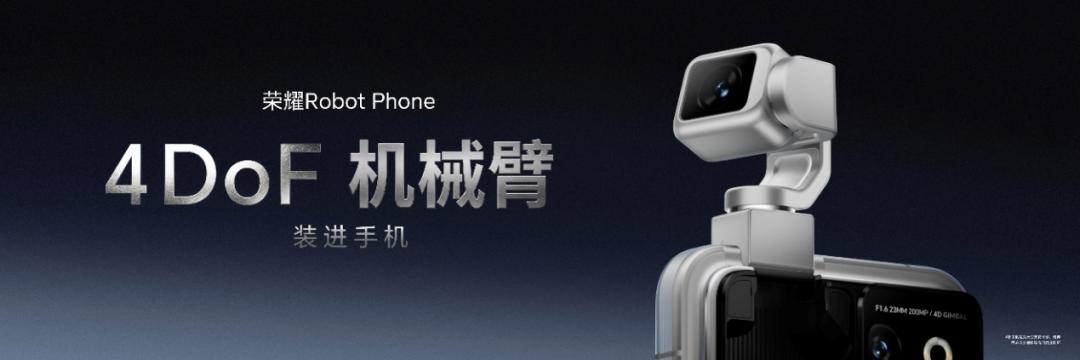
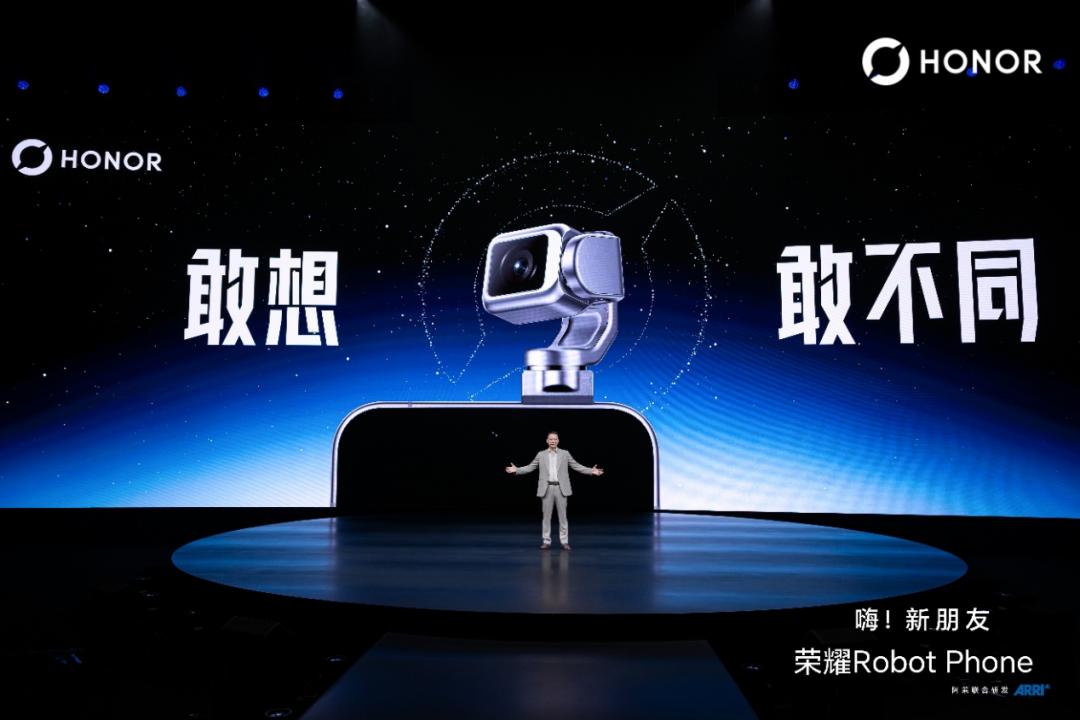
On August 12, Honor released the Honor Robot Phone. Defined by Honor as “the world’s first robotic phone”, this product is equipped with a 4-DOF titanium alloy dexterous gimbal, Agentic OS kernel and system-level Agent architecture, and co-developed mobile imaging capabilities with ARRI. The 12GB+512GB version is priced at 9999 yuan, and the 16GB+1TB version is priced at 12999 yuan.
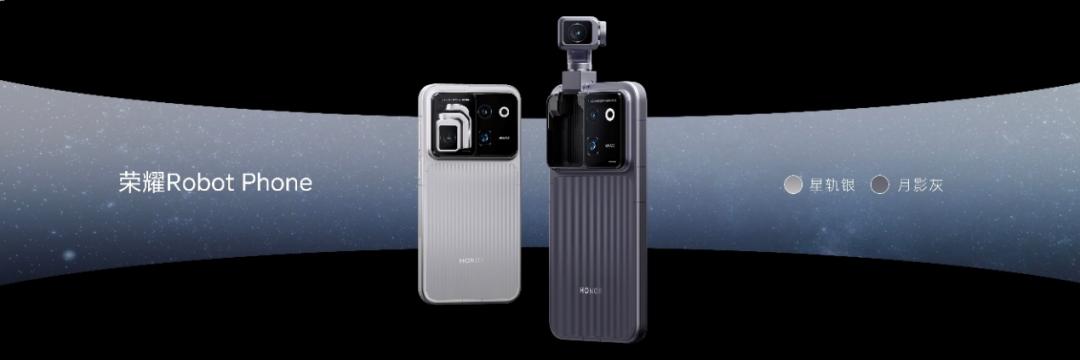
The biggest highlight of the Honor Robot Phone’s appearance is this movable camera that looks very similar to the DJI Osmo Pocket. Many content creators may think at first glance: today’s smartphones are so versatile that people may not even need to carry a separate pocket camera in the future?
From a product perspective, it is not just a high-end model that can actively rotate the lens to complete follow shooting and automatic camera movement, and there is far more worth discussing beyond this phone itself.
Why did Honor add a mechanical system to a highly integrated smartphone? Why not just stop at integrating large models, but enable the AI in the phone to gain perception and action capabilities?
Node AI believes that all these questions point to one answer: the Robot Phone is not an isolated innovation, but a strategic statement of Honor’s increased investment in AI. In our view, Honor hopes to seize the opportunity when AI phones are still in the stage of function exploration, and provide a template for “AI terminal form” half a step in advance, so as to compete for the right to define the next generation of smart terminals with a mass-produced real product.
Will the nearly 10,000-yuan Robot Phone sell like hot cakes?
Let’s start with the conclusion: no.
From the perspective of sales logic, the Robot Phone is not a typical mass flagship. The price tags of 9999 yuan and 12999 yuan, the thickness of about 9.59mm, the weight of 248g, plus a set of precision mechanical structure that requires continuous reliability verification, all determine that in the short term, it is more suitable for users who are willing to try new things, engage in heavy video creation and prefer the automatic follow shooting experience.
However, Node AI believes that the success or failure of this phone cannot be judged solely by shipment volume, which may seriously underestimate Honor’s real purpose hidden in this product. The Robot Phone is more like a strategic declaration of Honor facing the AI era, as well as a display of its “muscle strength” in software and hardware collaboration.
Honor equips the Robot Phone with the 5th generation Snapdragon 8 Elite, a 7060mAh battery and full flagship communication capabilities. This is not a simple “stacking of specifications”, but an attempt to make this “new species” have the strength as a daily main phone. If it can only complete demonstrations on the exhibition stand, or only serve as a “toy”, it will make no sense. Only when the novel mechanical structure and conventional experience can stand the test at the same time, can it become a real entry point for Honor’s AI strategy.
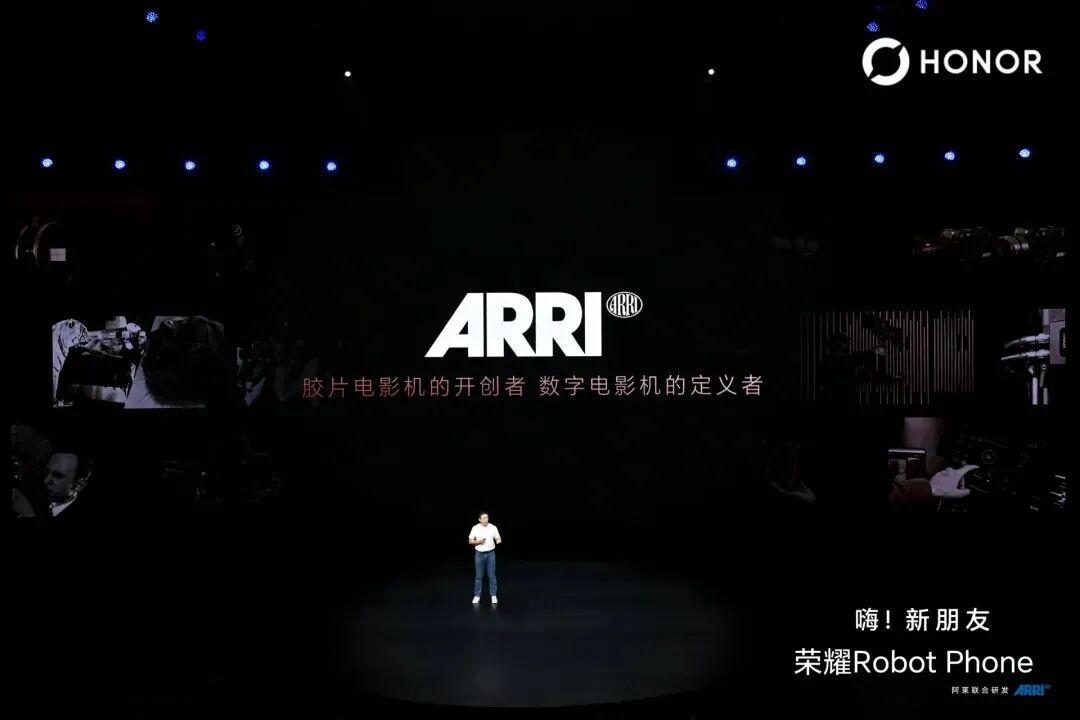
Any new hardware needs a sufficiently convincing high-frequency scenario. Imaging is currently the most popular and potential demand for mobile phones, and it is also the place where gimbals, visual perception and AI decision-making can naturally converge. The ARRI cooperation should also be understood in this logic. The 200-megapixel dexterous gimbal main camera, ARRI LogC3, 11 kinds of ARRI Looks and 6 camera movement modes are directly aimed at building a “portable camera”.
To make a bold assumption, Honor may try to first establish the use value of the Robot Phone through automatic follow shooting, video call focus tracking and intelligent camera movement, cultivate user acceptance, and then gradually extend to more embodied interaction scenarios. If this is the case, it is indeed a very “product manager-level” implementation path.
Peer manufacturers are advancing on three tracks at the same time, why is Honor so “stubborn”?
AI has become the most certain technical direction in the mobile phone industry, but there is still no unified answer in the industry as to what an “AI phone” actually is. Apart from Honor, what are other major mobile phone manufacturers doing?
Apple integrates personal context, screen understanding and cross-application operations with Siri AI, focusing on enabling AI to deeply enter its existing software and hardware ecosystem. Samsung promotes Agentic AI with the Galaxy S26 series, connects mobile phones through multi-agent collaboration, and tries to integrate wearable devices. Google strengthens its own Gemini on the Pixel 10 series, allowing it to handle tasks within some apps, and expand to watches, computers and cars to form an ecosystem.
Huawei relies on HarmonyOS NEXT 6 and Xiaoyi Smart Brain to introduce planning, execution, reflection and memory; OPPO consolidates the basic capabilities of on-device AI on the Find X9 series, and jointly demonstrates the pre-research stage on-device full-modal Omni model with MediaTek; Xiaomi takes imaging, performance and cross-device collaboration as the starting point to integrate HyperAI into productivity and smart ecosystems.
It can be seen that Honor’s peers are advancing along three routes at the same time: first, embedding generative AI into mobile imaging and office scenarios; second, upgrading the mobile voice assistant to a key entry point of the system that can call applications; third, making smartphones the hub of smart watches, smart cars, computers and smart home devices.
However, most of these explorations by domestic and foreign peers are still continuing the original mobile phone form. Looking back from this Robot Phone launched by Honor, it may have never intended to follow the conventional path since its project initiation. Because in that case, this phone will still face the traditional competition of chips, models, imaging and system experience. The differences in individual AI functions of mobile phones may be smoothed out soon. Moreover, spending manpower, material and financial resources to make a mobile phone without freshness may be a bit boring for Honor.
Node AI learned that this “new species” Robot Phone also encountered a lot of disputes internally at the earliest stage. For example, unpredictable R&D costs and manufacturing costs, and uncertain user preferences all made the future of this phone uncertain. Facing all uncertainties, someone has to stand up and make the final decision.

Li Jian, CEO of Honor, is exactly that person. In his view, Honor, as an AI terminal ecosystem company, must make a “truly smart phone”, which is a strategic belief that must be firmly adhered to. “An eagle will never fold its wings just because of a storm.” Li Jian never hides his desire for innovation when facing the media.
After a year, this robotic phone that embodies “true intelligence” has arrived as scheduled. From the perspective of Node AI, it first represents a strategic declaration, and secondly a product form. The gimbal is not deliberately designed to create differentiation, but to let the market and users intuitively understand Honor’s understanding of “smart interaction” for mobile phones.
While peers are focusing on thinking at the system level about “what AI can do for users”, Honor is trying to answer “what will AI terminals look like in the future” at the same time. Maybe this phone is not an epoch-making work that leads a full generation, but it does push the competition of AI phones from the software level to the level of software and hardware integration.
The real trump card is still the AI system capability
The most eye-catching part of the Robot Phone is its mechanical structure, but the strategic focus that Honor has really invested in is the Agentic OS hidden behind the gimbal.
According to Honor’s definition, the Robot Phone takes Agentic OS as the kernel, adopts a system-level Agent architecture, and debuts the YOYO Pro mode to build a complete closed loop of perception, planning, reasoning, execution and feedback. Honor also deeply co-created an end-side large model solution optimized for mobile phone scenarios with Alibaba’s Qwen large model.
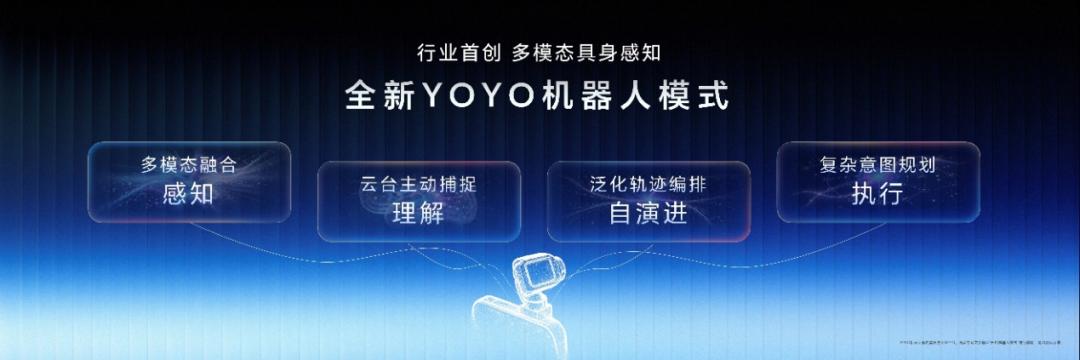
This is essentially different from embedding a Chatbot in a mobile phone. Ordinary AI assistants are mainly responsible for answering questions, while system-level Agents need to understand goals, schedule applications, execute tasks and be responsible for the results. The YOYO automatic execution brought by Honor has the capabilities of long instruction compliance and cross-application generalization. Users only need to state the goal, and the system can complete continuous operations in the background.
When it comes to tangible capabilities, the most intuitive one is that when this capability is combined with the gimbal, it can adjust the viewing angle according to gestures, follow characters during video calls or live broadcasts, complete camera movement and framing according to natural language, and also give feedback through actions and anthropomorphic expressions.
In addition, the Robot Phone is not an isolated device, but more like an open AI ecosystem. Its system can not only be driven by Agents, but the YOYO Skill Store also opens more than 100 system capabilities such as gimbal control, multi-modal calls, and cameras to developers.
From the perspective of Node AI, the advantages of traditional large mobile phone manufacturers lie in supply chain, hardware engineering and channels. After the arrival of AI mobile terminal competition, mobile phone manufacturers cannot only act as the hardware entry point of models, otherwise they will become the hardware OEMs with the least say in the industrial chain. Therefore, mobile phone manufacturers must actively build their own core AI experience and ecosystem rules. Honor’s exploration through Agentic OS, system capability opening and hardware form is to strive for the terminal dominance in the AI era.
The standard answer for the next generation of mobile phones has not yet appeared
In the view of Node AI, the Honor Robot Phone can be regarded as a strategic model that Honor takes a half-step lead, but it does not mean that Honor has found the standard answer for the next generation of mobile phones.
System-level Agents, mechanical actuators, professional imaging and developer ecosystems are all integrated into the same mass-produced mobile phone, and the real product is used to accept market inspection. Compared with staying at the concept and function demonstration stage, this step requires higher R&D costs, and also reflects Honor’s determination to transform into an AI terminal ecosystem company, as well as its supply chain strength.
But it is still only half a step ahead.
Whether the Honor Robot Phone can evolve from a new species to a benchmark that peers will imitate one after another still needs to answer a series of practical questions. For example:
First, whether the gimbal has a sufficiently high usage frequency after the novelty period passes;
Second, whether the mechanical structure can withstand long-term high-intensity use, and whether the after-sales maintenance cost is expensive;
Third, whether the Agent’s cross-application execution is reliable, transparent and secure;
Fourth, how to balance power consumption and privacy during continuous perception;
Fifth, can the YOYO Skill Store attract a sufficiently large number of high-quality developers?
These problems are exactly the hidden costs that creators of new species have to pay. Leading in a new category is not only about releasing earlier, but also about encountering problems earlier, and even helping peers to test and make mistakes earlier.
Is Honor ready for the follow-up plans?
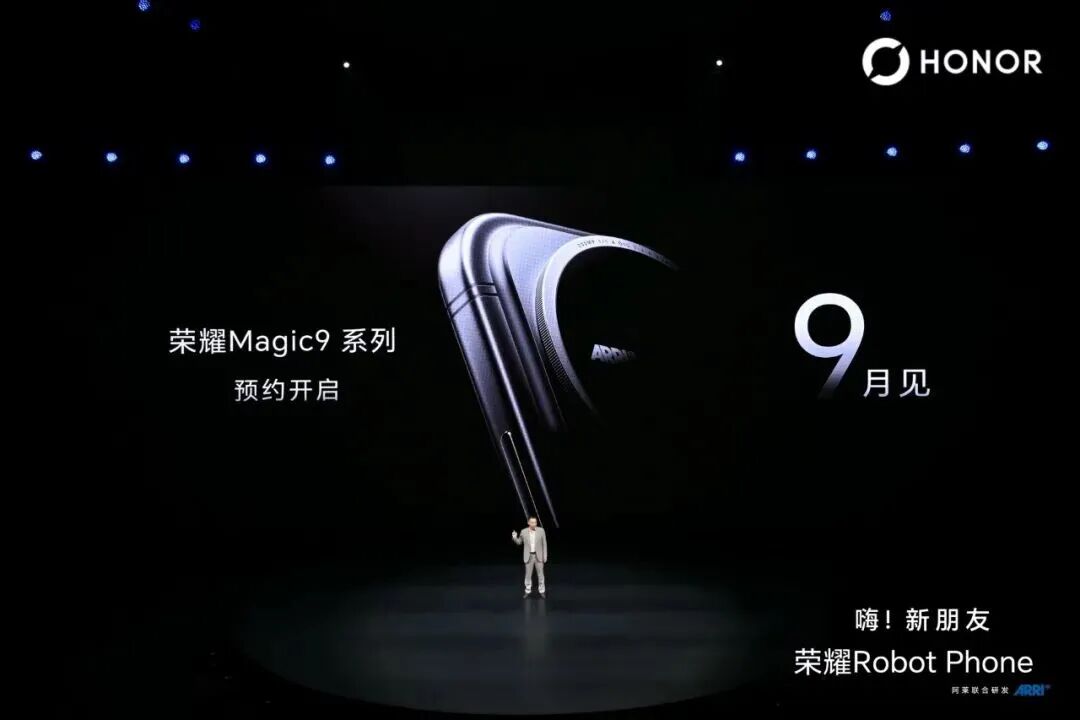
On September 28, the Magic9 series will be released in Beijing. YOYO will be fully deployed on the Magic9 series, and the imaging results jointly developed with ARRI will continue to be implemented on the Magic9 series. It can be seen that the Robot Phone is more like a pathfinder, which undertakes the role of strategic declaration and brand awareness building, while the AI system and imaging capabilities truly for the mass market will be extended to conventional flagship products.
The Honor Robot Phone has been an adventure since its project initiation. The mechanical structure increases costs and reliability pressure, the price of nearly 10,000 yuan limits the early market scale, and whether the novel appearance will be accepted by consumers, the long-term value all needs to wait for the market to answer. But Honor obviously does not want to be just a follower in the AI wave, passively waiting for model vendors to embed their technologies. Instead, it chooses to take the lead with a new species before industry consensus is formed, even if it is only half a step ahead.
The value of the Robot Phone’s half-step lead determines that Honor has one foot in the mature flagship mobile phone industry, and the other foot is testing the new boundary of AI terminals. Just as Li Jian said: “Honor will never be a mediocre consumer electronics assembly plant, and will focus on user value to continue pragmatic innovation.“
How many units this product can finally sell is of course important; but for Honor, the more important question may be, when the next generation of AI terminals is truly formed, will the industry adopt the answer defined by others, or the direction that Honor has already begun to verify today.
Imitation is easy but original creation is difficult. For Honor and Li Jian, it is fun precisely because it is difficult.
This article is from the WeChat official account “Node AI View”, author: Yang Xuejian, published with authorization from 36Kr.
