

But introducing new models, the Ultra in particular, has robbed the basic Galaxy S of its place, to the point where the baseline model feels purposeless — and that doesn’t seem like it’s going to change.
So why does the Galaxy S even exist anymore?
The Galaxy S26 will be great — but Samsung left something important behind
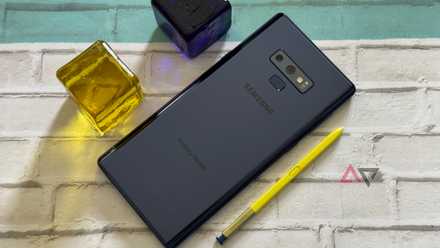
The Galaxy Note 9 used to represent Samsung
The Galaxy S has one of the proudest histories in smartphones

The basic Galaxy S smartphone is one of the most important smartphones in tech history.
It took Samsung from being just another face in the crowd to being the face of Android itself.
Ask most people to name an Android phone, and the majority of the time, they’re going to name a Samsung phone. Samsung is ubiquitous with Android, and it has one phone to thank for that.
The first Galaxy S was a beast of a smartphone. It came with Samsung’s Super AMOLED tech and the most powerful processor you could get into a phone at the time. In short, it showed Samsung was throwing everything it had at the Galaxy S.
That gamble paid off. The Galaxy S was a huge sales hit, catapulting Samsung into the forefront of the nascent smartphone market.
Samsung continued to do the same with the following Galaxy S models, and the approach continued to work. The Galaxy S was ascendant.
Even when Samsung began dabbling with larger variants with the Galaxy S6 Edge+, it was simply positioned as a larger version of the S6 Edge. It wasn’t an upgrade, simply another option. A side-grade, if you would.

That all ended with the introduction of the Galaxy S20 Ultra.
The Ultra line has its own problems with stagnation, but one thing hasn’t changed since it was first shown off: This was the upgrade. The Galaxy S had finally been thrown from atop the pile.
So what did Samsung do to redress that? Absolutely nothing.
What does the basic Galaxy S even have to offer?

The Galaxy S’s fall is reflected in Samsung’s sales numbers.
The Ultra dominates Samsung’s sales numbers, taking the majority of sales in any given year. The Galaxy S and Plus split what remains, and the Plus tends to take a slight lead over the base model, though nowhere near the gap between those two models and the Ultra.
It makes sense that most people opt for the Ultra. After all, if you want a flagship phone, you already want the best. So you opt for the best of the best — the Ultra.
Because that’s the sales hook for the Ultra: it’s the biggest and the best.
The Plus is the slightly cheaper flagship. The basic Galaxy S is the cheapest and the smallest? It’s a weird hook and revolves more around what it doesn’t have rather than what it actually offers. It’s not a compelling sales pitch.
Robbed of its position as the range’s top dog, the Galaxy S no longer has a purpose.

It’s fallen far, now sitting at the bottom of the pile in terms of sales. But it’s getting even worse, as it’s becoming the range’s whipping post as well.
Rumors say the Galaxy S is in line to receive cost-cutting restructures. Due to increases in the costs of other components, Samsung is exploring the idea of moving the manufacture of some of the Galaxy S27’s displays from its own factories, to cheaper alternatives. It would still use the same AMOLED tech, but built cheaper.
This is, admittedly, minor stuff. But it shows where Samsung’s head is at where the Galaxy S is concerned. It shows a lack of respect for a historical name and an admittance that what was once its most important phone is now just additional fluff surrounded by more important variants.
A phone with a pedigree, but no purpose

The Samsung Galaxy S still exists, and that’s about all that can be said about it.
The Galaxy S sits in a weird place in 2026. It can’t be canned because it’s still a big part of the range, and even the lowest sales numbers in a flagship range equate to millions of devices.
However, Samsung is hesitant to spend money on a much-needed revamp because there’s no guarantee it will make the money back. And so, the Galaxy S just sits there, stuck in limbo.
The obvious answer that we’ve all been screaming out is a Pro rebrand.
Hopes were high that 2027 would be the year Samsung finally made that change, after it came close with the S26 range. But the recent rumors about cost-cutting make that feel much less likely.

Even if the Galaxy S27 is suddenly renamed the S27 Pro, Samsung’s need to cut costs makes it far more likely this will be a rebadging exercise, rather than the root-and-branch reform the model desperately needs.
And so, we might be looking at another year of the “basic” Galaxy S. A vestigial remnant of a once-great smartphone. Still powerful and very capable, but consistently sat in the shadow of its bigger and better brethren.
I’m sure Samsung never meant to denigrate one of its most historic and storied phones. But the push for new and shinier models without revamping what it already has has led to a point where the Galaxy S is purposeless.
Living off the stories of its youth and its pedigree. And sadly, it doesn’t seem like that will end any time soon.
