
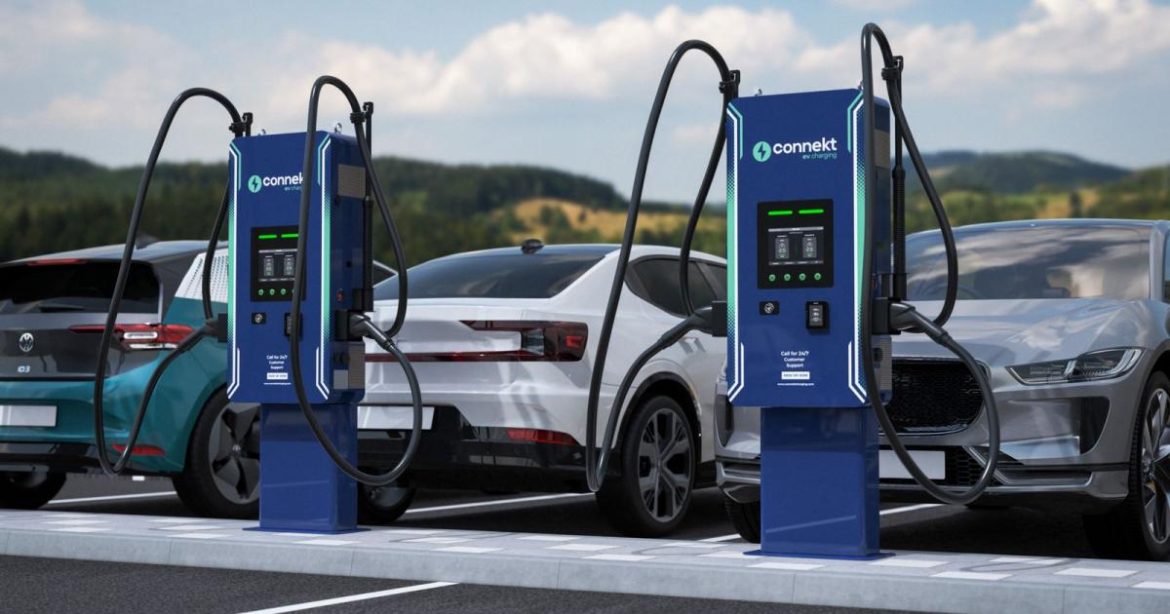
There is now a clear shift in how motorists (and commercial vehicle operators) are thinking about their next purchase – with an accelerating interest in electric.
Read more
In 2021, there were 210,000 battery electric vehicles on UK roads. Today, it’s over two million. The RAC says: “It took 14 years for the UK to register its one-millionth BEV (battery electric vehicle) from a standing start, but only a further two years to double this number.”
Transport and Energy magazine reported: “The pace of change is unprecedented in automotive history and predictions are that the UK will have eight million EVs registered by 2030, when new ICE vehicles will be banned, and millions of used EVs will be on the market.”
Zapmap, the online app which tracks UK new registrations of electric vehicles on a monthly basis, shows that at the end of 2022 there were more than 664,000 EVs registered – by the end of last year (2025) it had topped 2 million.
It says: “We are reaching the inflection point, and the next 24 months are critical for EVs to be a success in the UK. Accelerating charge points (installation), ensuring the grid can take the burden, and also that drivers are comfortable with the transition, will all be important.”
The Department for Transport reports a surge in new EV registrations particularly over the last six months.
Recent figures from Transport Scotland show there were approximately 107,700 battery electric cars and vans registered in Scotland at the end of 2025, as well as approximately 56,000 plug in hybrid electric cars and vans and 500 range extended electric cars and vans.
However these figures are expected to be much higher when company car and lease hire vehicles are taken into account. A Transport Scotland spokesman said: “EV registration numbers significantly under‑report actual numbers, as new electric cars and vans which are leased are not included. These vehicles are registered at the headquarters of leasing companies rather than at the homes and workplaces of the individuals and fleets that lease them.”

Sales of used EVs are also rising significantly each month. The UK’s used electric car market grew by 25% last year, with the strongest growth coming from battery electric vehicles, according to new figures from the Society of Motor Manufacturers and Traders. A total of 88,614 were sold with sales of plug-in hybrids also increasing. This represents a record 4.0% of the market.
The Electric Vehicle Association Scotland (EVAS) the body that represents many EV owners and drivers across the country, believes the rush for EVs in the context of the current energy crisis “really shows what happens when something upsets the equilibrium, encouraging people to question what can work for them”.
Director Neil Swanson added: “Driving an EV will work for most people, saving them money almost from day one. Current events have highlighted and accentuated the benefits, overcoming the uncertainty and reluctance to adopt a cleaner, quieter and cheaper option. This sudden growth will benefit all as it further supports the market and the rollout of even more public charging infrastructure.”
He agrees that there is a need to see growing electrification in the commercial and HGV fleets, to match what has been quietly happening in the car world, remains adding “this rise in fuel cost, especially if electricity market reform can be implemented to reduce the cost of electricity, is perhaps an unintended catalyst required to accelerate that transition.”
The DTp lists the top selling electric vehicles in the UK last year were US-built Teslas – the Model Y (24,315) and the Model 3 (21,209) closely followed by Audi and Mercedes Chinese models such as Omoda, Jaecoo, Chery and Byd (Build Your Dream).
According to car dealer Motorpoint there has been an “explosive growth” of new EV cars coming from China.
Motability, a UK charity supporting the purchase and adaptation of cars for more than 860,000 disabled drivers, is one of the largest, now boasting more than 280 all‑electric, petrol‑hybrid and plug‑in hybrid cars on its scheme.
Although so called ‘range anxiety’ still exists for many contemplating transitioning to all electric, reassurances come two-fold; technology leaps in battery design and manufacture mean EVs are capable of much higher mileages – batteries now come with up to 10 year lifetime warranty – add to that the numbers of charge points across the UK soaring. Scotland is leading the way in deployment of a wide range of chargers, some capable of delivering a full load in under 15 minutes.
As for Scotland’s charging network, Zapmap reports that there are now 12,672 EV chargers, 4,373 of which are on the ChargePlace Scotland (CPS) network. Numbers are continuing to rise each month. By the end of 2026 the CPS backroom administration of public charge points will be transferred to Scotland’s 32 local authorities – the majority seeking partnerships with private industry to deliver the service and future expansion.
Consortia have already been established by some councils, which are now entering into long‑term contracts with private operators. The aim is to upscale the EV charging systems and increase the reliability of the existing units ahead of the final CPS handover.
One example has seen four northern councils – Moray, Highland, Aberdeen and Aberdeenshire – establish an EV infrastructure partnership last year they claim will result in the installation of 570 new charging points (CPs) across the north by 2030.
The group has awarded a 20-year contract to a private operator which will, they say, provide an improved EV charging infrastructure for the north of Scotland by 2028, doubling the region’s existing EV infrastructure.
This EV charging transition is being supported through a £39 million Scottish Government fund.
Read more
What is claimed to be the UK’s largest single contract of its type, Glasgow City Region – it represents eight councils in the area – has begun a procurement process to appoint a private sector partner to run the 20 year project. This could see a minimum of 3,000 new EV charge points being installed. The successful bidder will also assume responsibility for Glasgow’s existing 600-plus chargers.
EVAS says it would prefer greater clarity from all Scottish councils on progress being made. “Drivers shouldn’t need to worry who administers or owns charge points, just if their normal method of activating a charge session works. Roaming is the answer, but the market lags reality.”
Around 6,000 additional public charge points across Scotland are expected by 2030. For the latest status of the CPS transition project, check: www.chargeplacescotland.gov.uk.
