
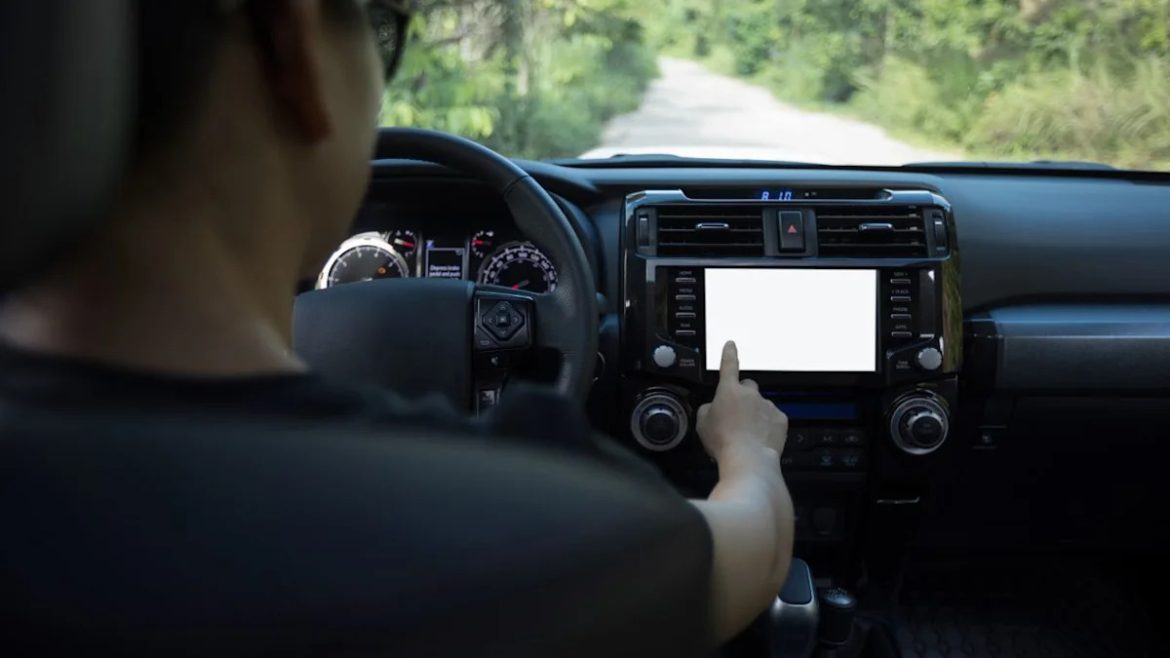
Modern vehicles have bigger screens, faster processors, and more advanced software than ever before. Yet a new study suggests those technological improvements aren’t making basic in-car controls any easier to use while driving.
Swedish automotive publication Vi Bilägare recently repeated a touchscreen usability test it first conducted in 2022, using a new group of vehicles and the same testing method. The results indicate that drivers are now spending even more time interacting with infotainment systems to complete simple everyday tasks.
The test measured how long drivers needed to adjust climate settings, change radio stations, and modify display brightness while driving at highway speeds on a closed airfield. Drivers were given time to familiarize themselves with each vehicle beforehand, ensuring the results reflected the interface itself rather than unfamiliarity.
Advertisement
Advertisement
Although touchscreen technology has continued to evolve, the latest findings suggest many automakers are still struggling to design systems that minimize driver distraction.
Drivers Spend More Time Looking Away From The Road
Image Credit:Shutterstock.
According to the study, drivers traveled an average of 813 meters while completing the assigned tasks in the latest test. That’s up from 756 meters in the identical 2022 evaluation.
At highway speeds, that difference amounts to roughly two additional seconds spent interacting with the vehicle instead of focusing entirely on the road ahead. While two seconds may sound insignificant, it represents a considerable distance traveled with at least part of the driver’s attention diverted.
Researchers noted that larger displays and improved graphics have become common over the past four years, but those upgrades haven’t automatically translated into better usability.
Good Software Is More Important Than Physical Buttons
One of the biggest takeaways from the study is that touchscreen technology itself isn’t necessarily the problem. Instead, the design and organization of the software appear to have the greatest impact on usability.
Advertisement
Advertisement
The Volvo XC60 delivered the best overall performance, requiring drivers to travel just 485 meters to complete the test sequence. Its interface was praised for placing frequently used functions within easy reach and presenting menus in a logical layout.
Even so, the XC60 still required 68 meters more than the Volvo C40 tested in 2022, showing that even the best-performing modern systems have room for improvement.
The study also challenged the common belief that traditional buttons are always safer. A 2016 Volvo V60, equipped with more physical controls than many newer vehicles, performed significantly worse than the touchscreen-heavy XC60 because of its more complicated layout and crowded control scheme.
Some Systems Performed Much Worse Than Others
Image Credit: CC7 / Shutterstock
Several vehicles struggled during testing, with the latest Mercedes-Benz CLA delivering one of the weakest performances. Drivers needed approximately 35 seconds to complete the required tasks—15 seconds longer than a Mercedes GLB tested four years earlier.
Advertisement
Advertisement
Researchers also noted that the CLA’s infotainment display required around 19 seconds after unlocking before it would accept touch inputs, adding further frustration before drivers could even begin interacting with the system.
The Tesla Model Y, meanwhile, showed measurable improvement over the Model 3 tested in 2022 despite retaining its heavily touchscreen-focused interior. That result reinforces the idea that thoughtful software design can reduce distraction even when physical buttons are largely absent.
The Industry Still Has Work To Do
The findings suggest that simply installing larger displays or adding more processing power isn’t enough to improve driver usability. Interface design, menu structure, and the placement of commonly used functions remain just as important.
As automakers continue replacing physical controls with digital interfaces, minimizing the amount of time drivers spend navigating menus will become increasingly critical. The latest test shows that while touchscreens are unlikely to disappear anytime soon, many manufacturers still have significant work to do before these systems become as intuitive and as safe as they should be.
Advertisement
Advertisement
If you want more stories like this, follow Guessing Headlights on Yahoo so you don’t miss what’s coming next.
