
Comment sections and electric vehicle forums are packed with recurring critiques. But many of them stem from outdated information. In the last decade, EVs have gotten far more reliable, the price of batteries has fallen, and charging infrastructure has become more abundant. Also, most automakers have settled on a single charging standard (NACS), and — thanks to significant fluctuations in oil prices — total cost of ownership for EVs has continued to fall, with used EVs proving especially cost-effective.
Another common argument from critics is that EVs cost more up front and that their manufacture exacts a higher toll on the environment. Neither of these are clear cut. The veracity and degree of each claim depends on where you live, and can vary enormously depending on variables like the rebates in your state and how the electricity you use to charge your car is generated.
Admittedly, EVs aren’t the right fit for everyone. If, for example, you live in a very rural area, have an exceedingly lengthy commute, or do a lot of towing, an EV may not meet your needs. But for most city dwellers or suburbanites, many arguments leveled against EV ownership simply no longer hold up.
EV batteries deteriorate fast and cost a fortune to replace
Federal emissions rules are phasing in a warranty requirement starting with model year 2027 that will see EV makers required to guarantee batteries for 8 years or 80,000 miles for light-duty vehicles and trucks below 6,000 pounds (gross vehicle weight rating). It’ll apply to vehicles heavier than that from 2031, too. Some states have their own laws that go even further or add additional requirements. In California, for example, EV makers need to guarantee that the batteries in their vehicles won’t “deteriorate to less than 70% for a warranty period of eight years or 100,000 miles, whichever first occurs” for EVs made between now and 2030. That climbs to 75% for those made from 2031 onwards.
Of course, there’s some fine print. If a vehicle is involved in a collision or subjected to natural disasters, its warranty can be rendered void, but regulators expect manufacturers to stand behind their vehicle’s batteries, and many do. Hyundai, for instance, offers a 10-year/100,000 mile warranty on its Ioniq 5. Also, it turns out that experts may have drastically underestimated the lifespan of EV batteries.
A 2026 study by fleet management and connected vehicle company Geotab analyzed more than 22,700 EVs across 21 different models and found that, “overall, modern EV batteries are robust and built to last beyond a typical vehicle’s service life.” It found the average annual rate of battery degradation is 2.3%, but that this increases in hot climates, if high-power DC fast charging is used frequently, or if vehicles “spend over 80% of their total time at or near-full or nearly empty charge levels.” Nonetheless, Geotab says an EV battery should last 13 years or more and, even then, should have more than 65% of its original capacity.
Charging options for EVs are limited
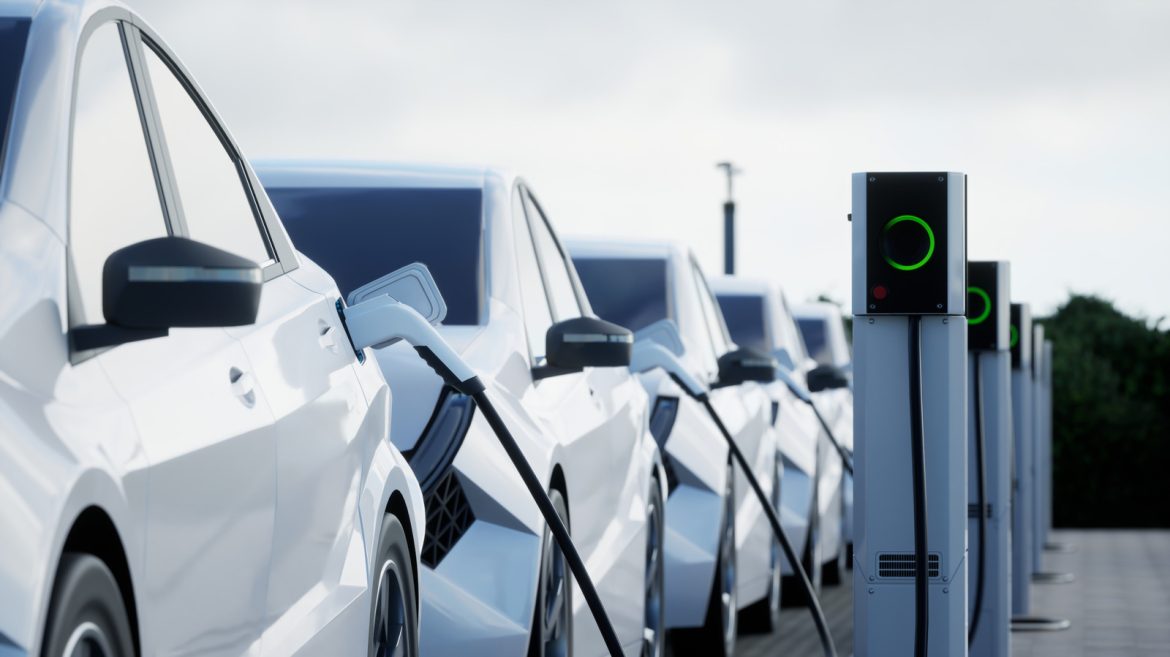
In the early days of EVs, charging infrastructure was limited, but that’s no longer the case. A study from Paren found that in 2025, almost 18,000 new DC fast-chargers were added in the U.S. alone, representing a nearly 30% year-on-year increase.
However, many EV owners hardly use DC chargers, relying on Level 2 chargers at their homes instead — which some EV makers will install for a fee or partially subsidize — because EVs are best treated like smartphones: topped up when possible so you always head out with a full charge. The hardest habit change EV ownership requires is remembering to plug in your car each night.
A further mitigator of charging anxiety is that most manufacturers have adopted the North American Charging System (NACS) plug (as popularized by Tesla) for their recent vehicles, while offering adaptors for their older ones. That means access to Tesla’s Supercharger network and the ability to charge from the majority of non-Tesla public chargers, too.
EVs are worse for the environment than ICE vehicles
One of the most frequently cited fallacies about EVs is that, because of the materials used in the manufacture of their batteries, they’re worse for the environment than internal combustion engines. Research by the Environmental Protection Agency has found that EVs have a lower environmental impact over their lifespans than ICE vehicles do thanks to their lack of emissions and use of fewer consumables like oil and filters.
How much cleaner an EV is than its gasoline counterpart depends on the source of its power. An EV that’s charged primarily from renewable sources like solar, wind, or hydro-electric power will, of course, have a lower impact than one charged by coal power plants. So, how environmentally friendly an EV is will largely depend on the electricity grid that feeds the chargers it uses. That can vary significantly from state to state.
Nonetheless, EVs’ lack of tailpipe emissions mean they’re still cleaner in the long run than their gasoline-powered equivalents, although the dirtier the grid, the longer it takes for them to offset the carbon cost of their manufacture. Helpfully, many power grids in the U.S. are adding more solar and wind power each year.
An EV is more expensive than a gas-powered car
The prices of EVs continue to get more competitive as manufacturers streamline their manufacturing processes and the price of batteries falls. Although federal rebates have ended, some states still offer rebates of their own, and many manufacturers offer their own discounts.
In addition to offering lower maintenance costs, EVs aren’t subject to fluctuations in the price of gas, which is a legitimate concern in 2026 as the U.S. war with Iran looks set to affect oil prices for the foreseeable future.
Lastly, every year more EVs wind up on the secondhand market. A study by the Center for Sustainable Systems at the University of Michigan found that out of secondhand vehicles — which make up 70% of all U.S. vehicle purchases — EVs have the lowest total cost of ownership, and buying a three-year-old EV can result in savings of $13,000 over the life of the vehicle compared to buying it new, versus just $3,000 in savings when buying a three-year-old ICE vehicle rather than a new one. That’s nothing to sneeze at.
