
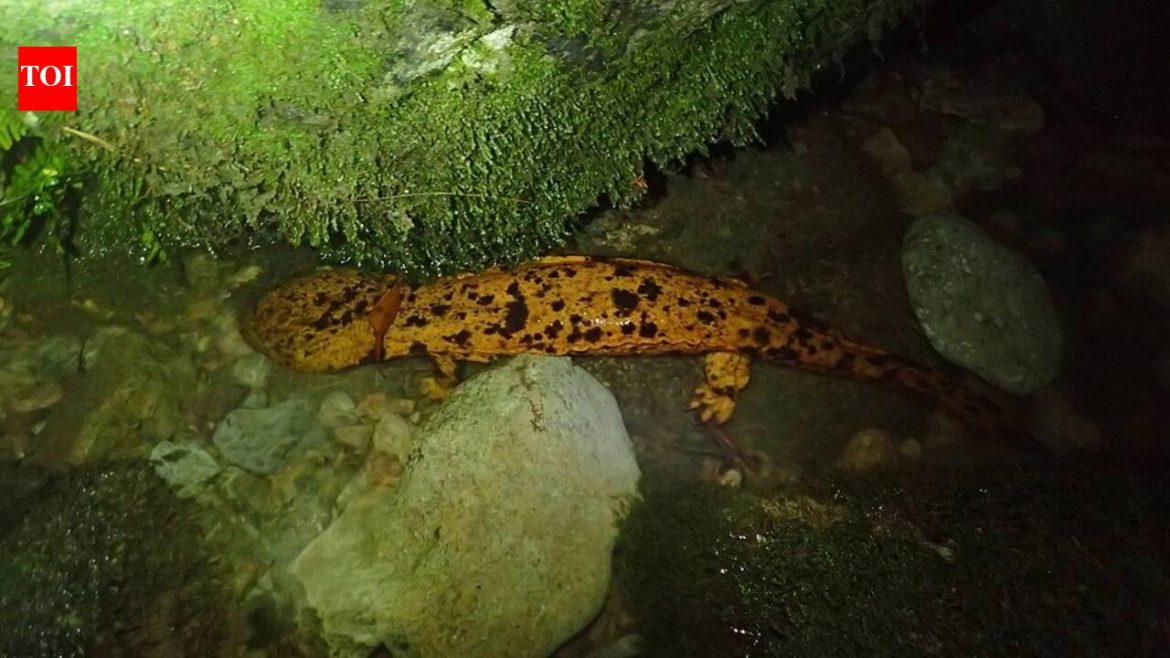
River dams have long been blamed for disrupting the movements of fish, and not just the marine species; they can also cause serious obstacles for other freshwater wildlife. One such victim of river dams is the Japanese Giant Salamander, which is one of the largest amphibians and a species designated as a Special Natural Monument in Japan. To help these amphibians tackle these obstacles, scientists have tested different solutions rather than removing small dams and weirs that fragmented the salamanders’ habitat. One such solution was to design ladderways that would allow the Giant Salamander to climb over barriers and continue moving upstream. According to a 2016 study published in the International Journal of River Basin Management, this experimental structure seemed to be effective and can be considered a practical conservation tool for reconnecting fragmented river habitats without dismantling the existing structure. Dams interrupted species that depended on riversThe Japanese salamander spends its lifetime in cool, fast-flowing rivers; thus, it relies on the connected waterways to forage, establish territories and reproduce. With the construction of several low-head dams across Japan, however, the river system has been fragmented, making it difficult for salamanders to move between habitats. According to the study published titled Use of ladderways in fragmented habitat to aid the movement of Japanese giant salamander, habitat fragmentation has become a growing challenge as restricted movement can isolate populations and reduce their long-term resilience. Thus, the researchers explored the idea of making artificial ladderways to help the amphibians overcome these concerns instead of relying on the costly removal of dam projects.
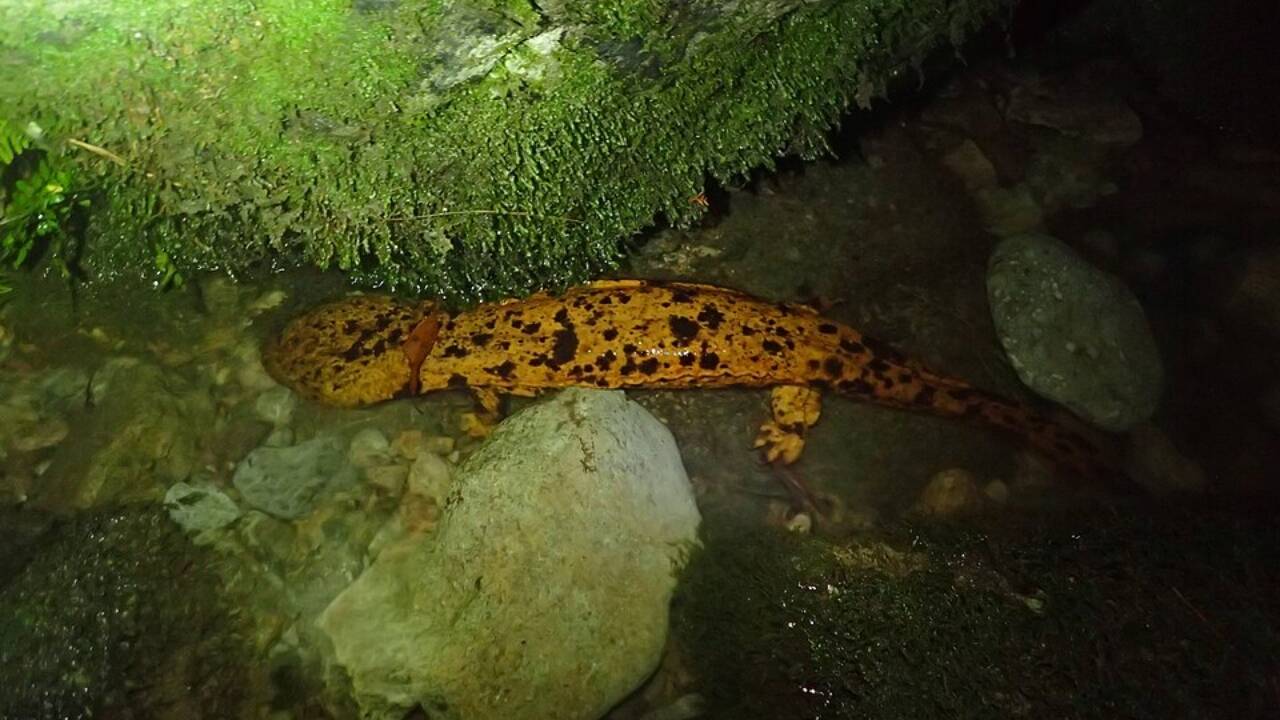
An image of a Japanese giant salamander. Image credits: Wikimedia Commons
To determine which design worked best, scientists constructed experimental ladderways under four different conditions, where they compared step-type and slope-type ladders, tested whether the water was flowing or still, examined whether the ladders were positioned on the left or right side of the channel, and investigated whether the presence of the side wall influenced climbing success for the amphibians. The 2016 study noted that the salamanders showed a clear preference for step-type ladders, with the presence of the wall playing an important role alongside the ladder. The researchers noted that without the wall, many animals slipped and fell before reaching the top. One unexpected finding was that design mattered more than complexity: salamanders used the adjacent wall for support, and without it, they often lost their footing and fell. Notably, the position of the ladder within the river channel played a very small role, as researchers observed that ladderways built against a side wall with preferably flowing water offered the most practical route for the giant salamanders to cross small river barriers. Removing dams might not be the only solutionRemoving obsolete dams is often considered the best solution to restore river connectivity; however, it is not always feasible as many structures continue to provide water storage, flood control or other benefits. The authors of the 2016 study have argued that salamander ladderways could provide a realistic solution as they improve the connectivity while allowing the existing infrastructure to remain as it is. Therefore, instead of replacing broader river restoration efforts, ladderways offer an additional conservation tool for areas where dam removal is impractical or economically challenging. Furthermore, the study’s significance extends beyond Japan, as freshwater habitats worldwide face similar obstacles, with dams, weirs, and other infrastructure creating barriers for aquatic life. Studies have shown that habitat fragmentation is one of the major threats faced by Japanese giant salamanders, thus reinforcing the importance of improving river connectivity. It is worth noting that this ladderway experiment shows how relatively modest engineering can achieve goals instead of conservation as a choice between protecting infrastructure and wildlife.
