
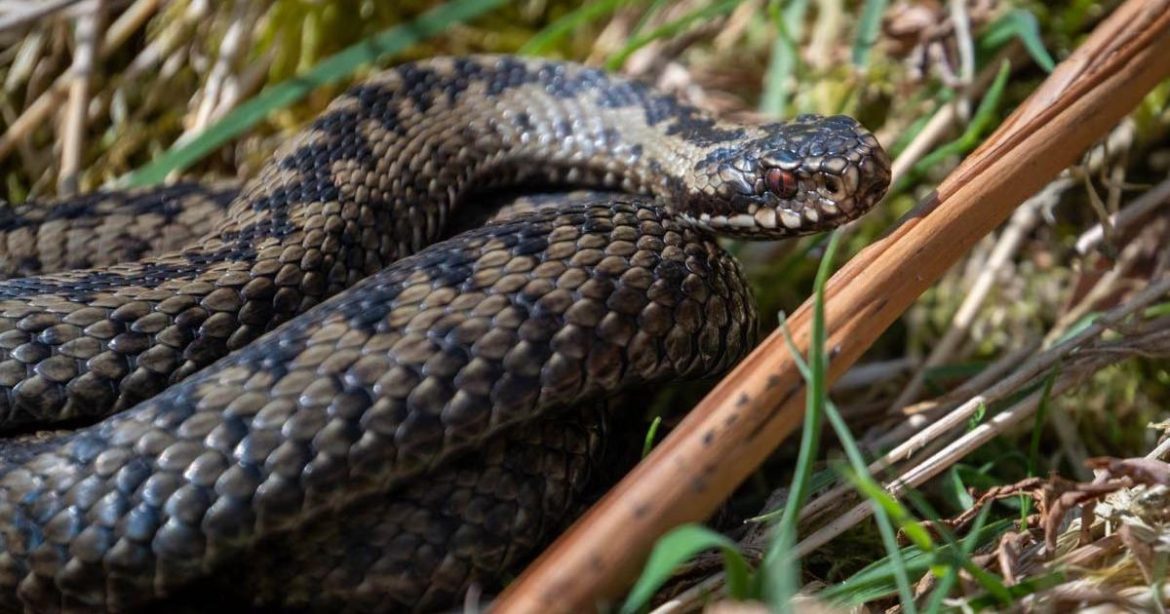
It is a genuine, though rarely dangerous, part of the landscape in Cumbrian areas.
Despite reports from Cumbria Wildlife Trust suggesting the county once held the highest snake population nationally, the findings of a new report now indicate a less optimistic outlook due to fragile upland habitats.
Adders are most likely to be found in heathland and moorland, woodland edges, coastal dunes near Ravenglass and Seascale, as well as lowland bogs.
The Lake District has recorded adder sightings across the national park including in woodlands near Staveley-in-Cartmel, High Dam near Finsthwaite, and various coastal sites.
Active from March to October, they hibernate over the winter but can often be seen in early spring basking near their hibernation sites, with adherence to optimal survey conditions significantly impacting detection rates.
Adder populations appear to be declining in Cumbria but this is also happening nationwide.

Listed as ‘vulnerable to extinction in England’ by Amphibian and Reptile Conservation (ARC), research published in The Herpetological Journal states that 90 per cent of monitored adder populations are in decline, and 90 per cent of surveyed sites have small populations (typically fewer than ten individuals).
Small adder populations could all be extinct by 2032 if current trends persist.
It is key to highlight the risk to walkers posed by adders is minor, and the species is protected by law.
Despite an estimated 50 to 100 people bitten by adders each year, with only 14 deaths since 1876, fatalities are extremely rare and the risk of serious harm remains low.
The last human fatality occurred in 1975.
Medical advice encourages those bitten to remain calm and seek immediate medical attention.
Protective measures include wearing sturdy footwear, staying on paths, and keeping dogs on a lead in areas known for adder activity.
Owners are encouraged to keep dogs as still as possible if bitten and seek immediate veterinary care.
