
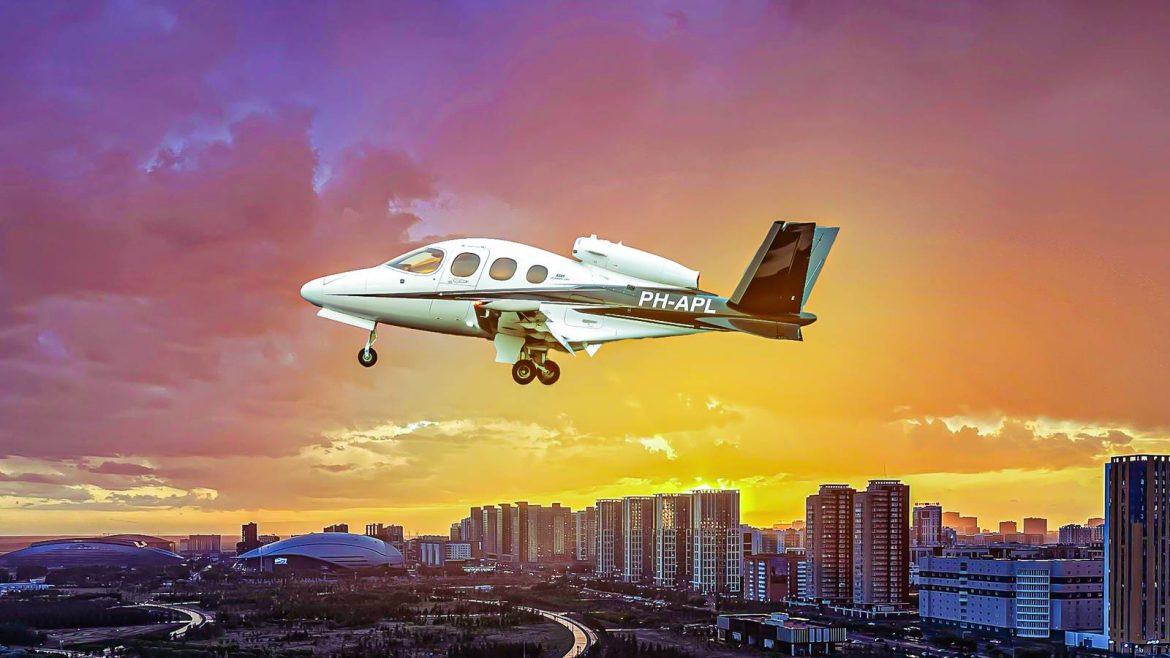
The Cirrus SF50 Vision Jet is among the most popular very light jet. Known as the Vision Jet, this aircraft was developed by Cirrus in 2006. The first mock-up was released in 2007, and the prototype flew the following year.
Due to issues caused by funding delays, CAIGA acquired this single-engine jet in 2011 and received FAA type certification in October 2016. Deliveries started the same year, and by 2020, the SF50 Vision Jet became the best-selling model between 2018 and 2023.

How much does the Cirrus Vision Jet cost?
As the saying goes, quality comes at a price, and so does the Vision Jet. Even though it is not the most expensive jet on the market, new models nowadays cost around $3 million.
The price depends on the manufacturing year, and each model presents a slightly different price tag. When production started in 2016, the price ranged from $2.1 million to $2.8 million. Today, the SF50 Vision Jet. G2 swings between $3 million and $3.5 million.
The G2+, the most expensive and recent version, ranges between $3.2 million and $3.6 million. As of February 2023, more than 150 G2+ models have been constructed. The average purchase cost is around $2,000,000.
The aircraft is mainly flown as Pleasure & Business for owner pilots for insurance purposes. As such, getting insurance may be challenging under some conditions. For instance, if the pilot is over 75 years old, if there are more than two fractional owners, if more than four pilots are named on the policy, or if the plane is involved in more than two dry leases. Insurance companies usually require pilots to have a minimum of 500 hours of total flying time and 50 hours of training with a mentor pilot. Many providers, though, would need 1,000 hours of total flying time due to the high value of the Vision Jet.


7 Features That Make The Cirrus Vision Jet So Popular
The small personal Cirrus Vision Jet is a marvel of simplicity, safety, and efficiency.
A closer look at the SF50 Vision Jet design
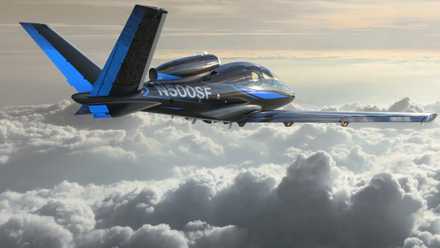
The SF50 Vision Jet is a low-wing cantilever monoplane powered by a single Williams FJ33-4A-19 turbofan, producing 1,900 lbf (8,500 N) of thrust. The aircraft, composed of a V-tail, retractable tricycle landing gear and built entirely from composite material, is designed to serve 12,000 flight hours. The plane is equipped with a whole-aircraft ballistic parachute called the Cirrus Airframe Parachute System (CAPS), which deploys from the nose of the plane, making it the first jet to have such a feature.
A clamshell door gives access to the cabin on the left side of the fuselage. The cabin is 5.1 ft (1.56 m) wide and 4.1 ft (1.24 m) high. Cirrus touts flexible seating options, including “executive seating for two passengers, family seating for five and no seat option for hauling larger items.”
Explained: The Importance Of Travel Insurance For Airline Passengers
Purchasing travel insurance can give you peace of mind.
Despite its market value, the interior is quite luxurious, with leather seats and premium equipment. There is generous space between the seats, sidewall cut-outs for additional room to store luggage, armrests, cupholders, and a USB power port. Passengers can find crew seats equipped with airbag seatbelts and climate-controlled air conditioning. In addition, some upgrades include interior lighting, entertainment screens, WiFi connection, and 115V AC power.

Cabin size:
- Length: 11.5 ft (3.5 m)
- Width: 5.1 ft (1.56 m)
- Height: 4.1 ft (1.24 m)
Aircraft size:
- Length: 30.9 ft (9.42 m)
- Wingspan: 38.68 ft (11.78 m)
- Height: 10.9 ft (3.32 m)
The Vision Jet uses Garmin G3000 avionics featuring Synthetic Vision Technology (SVT), assuring improved situational awareness and a limpid interface. Full Authority Digital Engine Control (FADEC) provides automated engine control for performance and safety.
The aircraft features urethane de-icing boots and a single carbon shell for cabin pressurization. Some crucial airframe parts and the wing spar are constructed with low-temperature carbon fiber and pre-carbon fiber, respectively. High-strength metal alloys are used for the landing gear and other concentrated stress areas, whereas the primary flight control surfaces and wing flaps are aluminum with mechanical control.
Single-Engine Private Jet: How The Cirrus Vision Jet Came To Be
The notion of a single-engine jet was once seen as improbable, if not impossible – until the Vision Jet.
Diving into Vision Jet’s performance
Cirrus SF50 Vision Jet features:
- Cruise speed: 311 KTAS (576 km/h)
- Rate of climb: 1609 ft (490 m)
- Takeoff distance: 2035 ft (621 m)
- Landing distance: 1628 ft (496 m)
- Max takeoff weight: 6,000 lbs (2,722 kg)
- Payload with full fuel: 498 lbs (226 kg)
Compared to its first model, the prototype G2 includes new properties like a higher maximum operating altitude, upgraded avionics, new cabin appointments, lithium-ion batteries, and extra paint schemes. These improvements result in an enhanced climb performance and increased cruising speed, reaching 311 knots of true airspeed (ktas).
In 2018, the Vision Jet was awarded the Robert J. Collier Trophy for its outstanding achievement, innovation, and design as the first single-engine personal jet equipped with a parachute system. Other accolades have been received, including the Flying Editors’ Choice Award 2017, Plane & Pilot Plane of the Year 2017, Flying’s Innovation Award 2018, and the 2023 Edison Awards Gold Prize in Air Mobility.
