
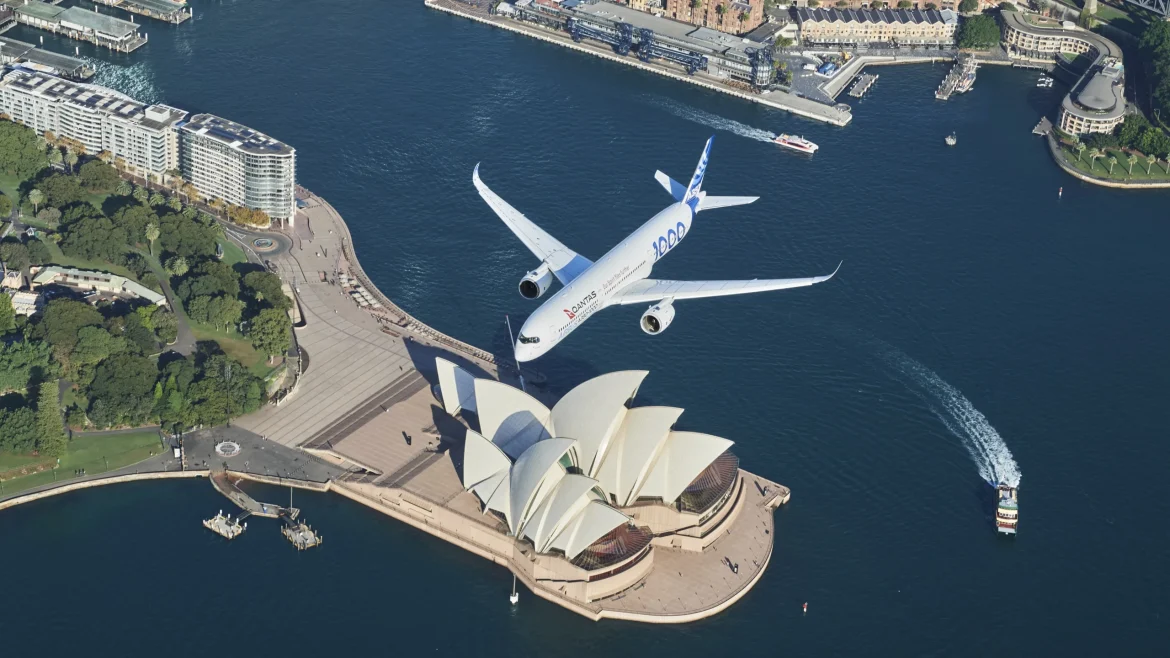
The aviation industry is exploring a new flight concept inspired by migrating birds, where aircraft fly in coordinated formations to reduce fuel burn and emissions.
Airbus is leading this effort through its fello’fly and GEESE initiatives, aiming to introduce formation-style operations on long-haul routes by the 2030s.
Major carriers, including Delta Air Lines (DL) and Air France (AF), have already participated in test flights across routes such as Amsterdam Airport Schiphol (AMS) to Hartsfield-Jackson Atlanta International Airport (ATL).
These trials demonstrate how commercial jets can coordinate mid-air and travel together efficiently without compromising safety.
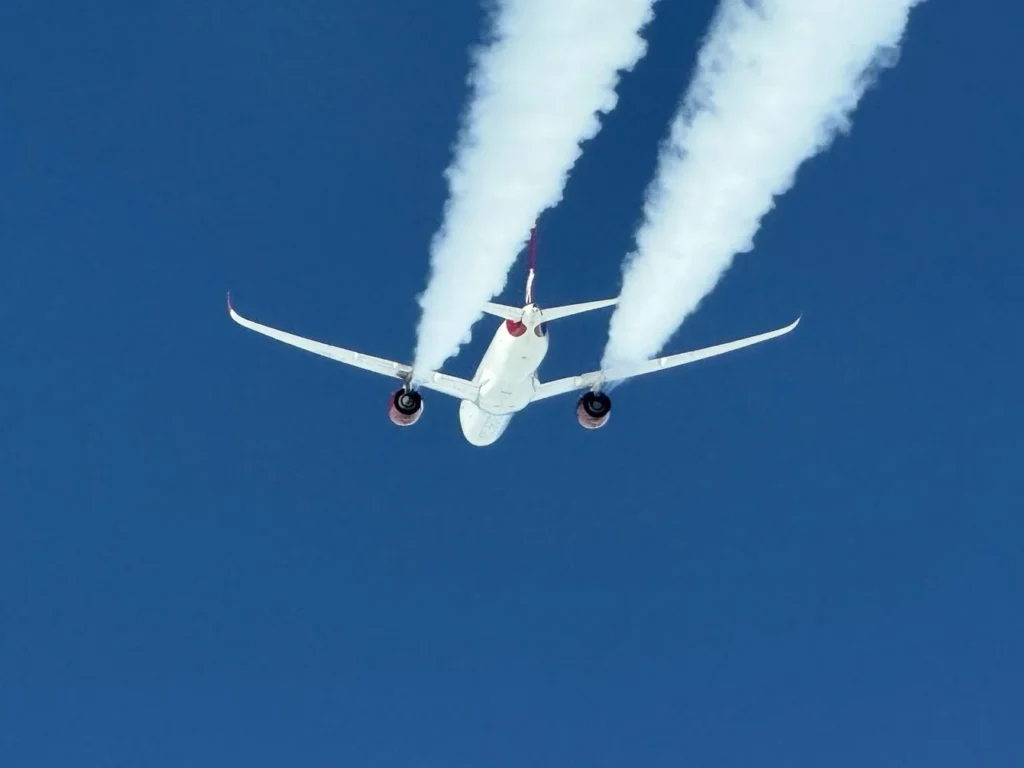
Formation Flight Concept
The concept draws directly from how geese fly in a V-formation, where trailing birds benefit from reduced air resistance.
Airbus applies similar aerodynamic principles by positioning a following aircraft to capture uplift generated by the leading jet’s wake.
This method allows the trailing aircraft to use less engine thrust, reducing fuel consumption. Airbus estimates that each paired flight could cut carbon emissions by up to 5 percent without requiring new aircraft designs.
Engineers emphasize that the approach uses existing physics rather than experimental propulsion systems.
This makes it one of the more practical near-term solutions for lowering aviation emissions.

GEESE Project Trials
Airbus launched the fello’fly project in 2019 to study feasibility and safety.
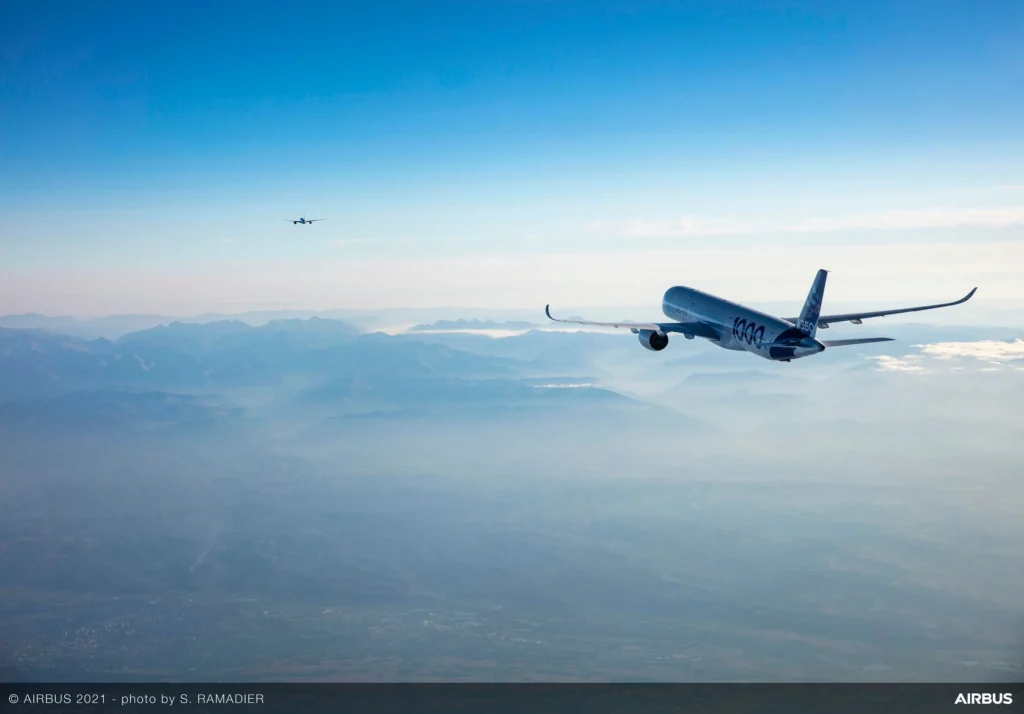
In 2021, two Airbus A350 aircraft successfully flew across the Atlantic at a reduced separation distance of around 1.2 nautical miles, significantly closer than standard spacing.
The follow-up GEESE program expanded testing by involving airlines, air traffic controllers, and operational teams.
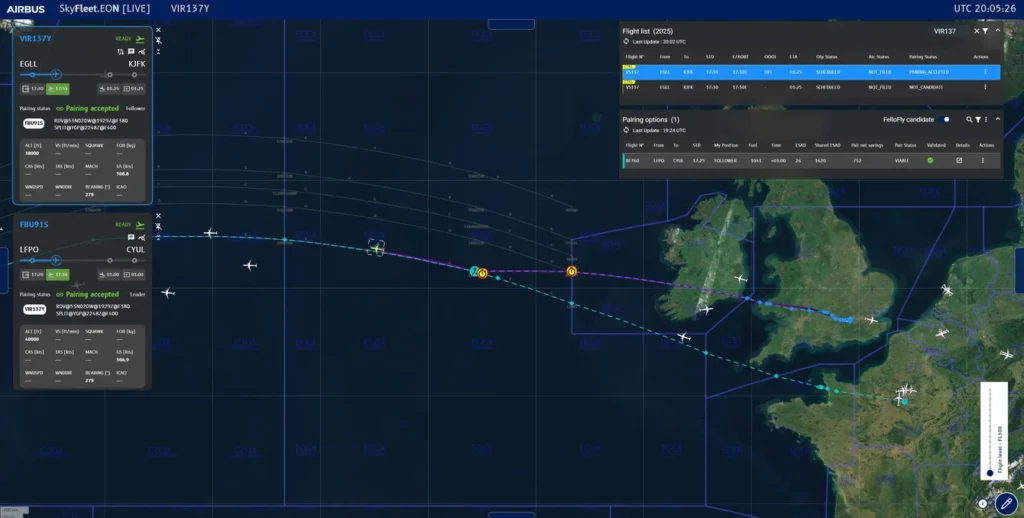
In 2025, transatlantic trials confirmed that aircraft departing from different cities could meet at a planned rendezvous point and continue together.
These tests relied on a digital system known as the Pairing Assistance Tool, which identifies compatible flights after departure.
Pilots maintained standard safety procedures throughout, ensuring no deviation from established operational norms.
Aviation Emissions Impact
Aviation currently contributes about 3 percent of global greenhouse gas emissions, with long-haul flights accounting for a large share.
Airbus estimates that formation flying could save approximately 60,000 tons of fuel annually on North Atlantic routes alone.
The industry expects sustainable aviation fuel to deliver the largest emissions reduction over time. However, operational improvements like formation flying provide immediate benefits without major infrastructure changes.
Regulatory approval and pilot training will determine how quickly the concept enters commercial service. Airbus aims to complete testing before 2030, with gradual rollout expected in the following decade.
Airlines also face the challenge of public perception, as passengers may initially question the safety of closer aircraft spacing.
Industry experts stress that the separation distances remain within certified safety margins, even during coordinated flight.
Future Implementation
Airbus continues to work with global carriers and aviation authorities to refine procedures and integrate the concept into existing air traffic systems.
The success of recent trials suggests that coordinated long-haul operations are technically viable.
The initiative reflects a broader shift toward efficiency-driven innovation in aviation. As airlines seek cost-effective ways to meet environmental targets, formation flying could become a standard practice on high-density routes.
If implemented at scale, the approach could reshape how aircraft operate over busy corridors like the North Atlantic.
It offers a rare combination of environmental benefit and operational feasibility, making it a key development to watch in the coming years.
Stay tuned with us. Further, follow us on social media for the latest updates.
Join us on Telegram Group for the Latest Aviation Updates. Subsequently, follow us on Google News
