
For the uninitiated, the name F/LIST probably doesn’t mean anything. Yet, in the world of commercial aviation, business and private jets, it stands for one of the most respected interior design companies, responsible for the layout and comfort of planes the likes of the Embraer Legacy 650, Bombardier Global 6000, or Boeing 787.
We bring the F/LIST into the spotlight this week because the Austrian company has just been selected to imagine the interior of a new kind of airplane being developed in the U.S. by Texas-based Otto Aerospace.
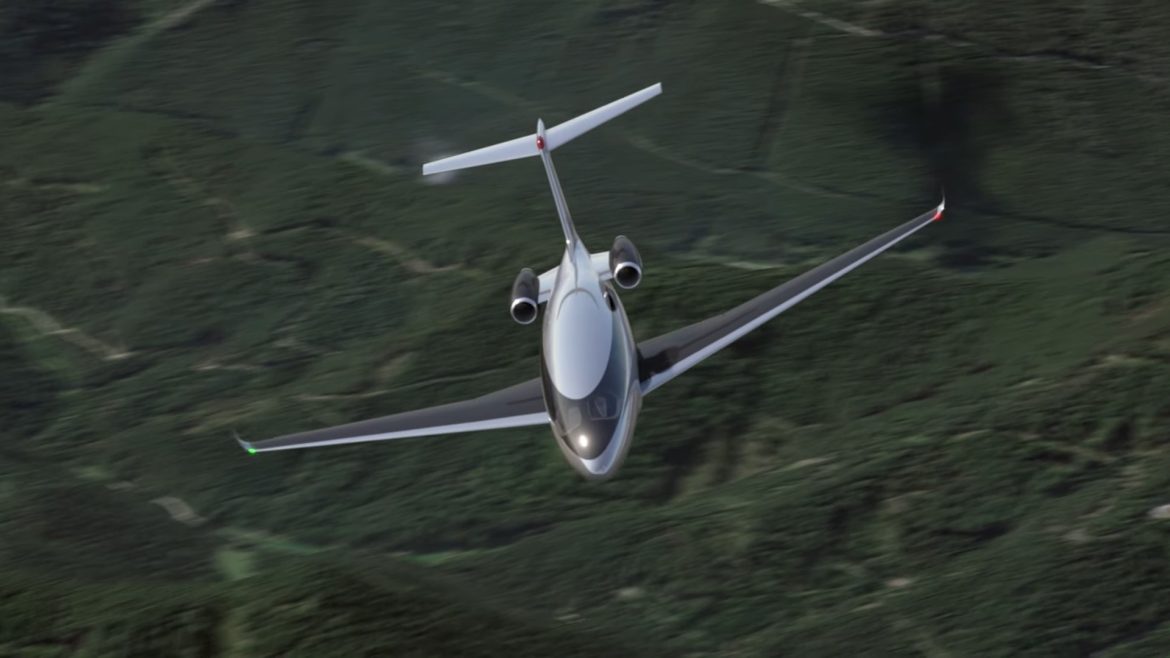
The plane is called Phantom 3500, and we’ve talked about it before here on autoevolution. A business jet by trade, it is supposed to bring along significant cuts in fuel consumption and emissions by making use of laminar-flow aerodynamics and precision-made all-carbon-fiber composites.
The design is not meant to leverage some kind of new powertrain, but will use, instead, a couple of otherwise common Williams turbofan engines capable of developing a combined 7,200 pounds of thrust.
That’s enough to take the jet to cruise speeds of 460 mph (740 kph), at altitudes of up to 51,000 feet (15,544 meters) and to distances of up to 4,000 miles (6,500 km), which is about what separates New York from Berlin.
The cruise altitude is higher than what most commercial airplanes are capable of going, and Otto hopes this little detail will translate into increased efficiency on account of the much calmer skies and the lack of traffic, weather, and turbulence.

Photo: Otto Aerospace
It is the laminar flow-friendly bodywork, though, that’s supposed to make all the difference. Laminar flow is the orderly motion of fluids over a surface in parallel layers, undisturbed by each other or outside elements.
On normal airplanes, laminar flow is partially achieved on the wings and parts of the fuselage, but it generally goes to waste and rapidly turns into turbulence, high drag, and increased fuel consumption, as there are a lot of things that can get in its way, including rivets, panel gaps, and windows.
Hoping to achieve its goal of a 61 percent cut in fuel burn compared to present-day super-midsize aircraft, Otto is designing the Phantom 3500 to have none of that. Not even windows, which will be replaced by something called the SuperNatural Vision (SNV).
Basically, we’re talking about a number of screens that will be placed on the inside of the fuselage, which “will provide passengers with a glare-free, color-enhanced, panoramic view through digital windows that are lighter, quieter, safer, and more energy efficient than anything in the market today.”
Images will be fed to these screens by means of high-resolution cameras fixed to the outside of the aircraft – Otto does not say how these cameras will be installed so that they don’t come in the way of laminar flow.
Although the Phantom 3500 has been in the works for a while now, not much has been revealed yet about its interior. We know that the plane will be capable of carrying up to nine passengers at a time, and that’s about it.

Photo: Otto Aerospace
F/LIST will start imagining the interior of the plane at the same time as Otto’s work on everything else, and that’s something that doesn’t usually happen in the aviation industry. The two companies hope that this approach will help incorporate interior design directly into the aircraft architecture so that it can play a role in the machine’s efficiency.
Although the first flight of a Phantom prototype is scheduled for next year (2027), it won’t be until the next decade that the aircraft will enter service. That means we still have a lot of waiting to do until we can get a true sense of its interior.
Earlier in May, the company announced the successful completion of the Preliminary Design Review (PDR) for the Phantom, opening the doors to an actual build. The prototype, unceremoniously called Flight Test Vehicle 1, will be the first to roll down the lines in Jacksonville, Florida, and then into the air.
The more aerodynamic shape of its bodywork should allow for a 35 percent reduction in drag levels compared to similarly sized airplanes, which, in turn, should translate into 60 percent less fuel required to cover a certain distance. On top of it all, because it flies much higher than usual, it should generate no contrails.
Add to that the fact that the engines on the Phantom 3500 will be able to run on Sustainable Aviation Fuel (SAF), and it should be much less harmful to the environment as well, putting out 92 percent less CO2 than its competitors.
The design has captured the idea of some industry players, with a carrier called Flexjet already placing an order for 300 Phantoms. As per the contract, Otto needs to deliver the first operational laminar flow aircraft in 2030. More companies are likely to follow Flexjet’s example as work on the aircraft progresses.
