
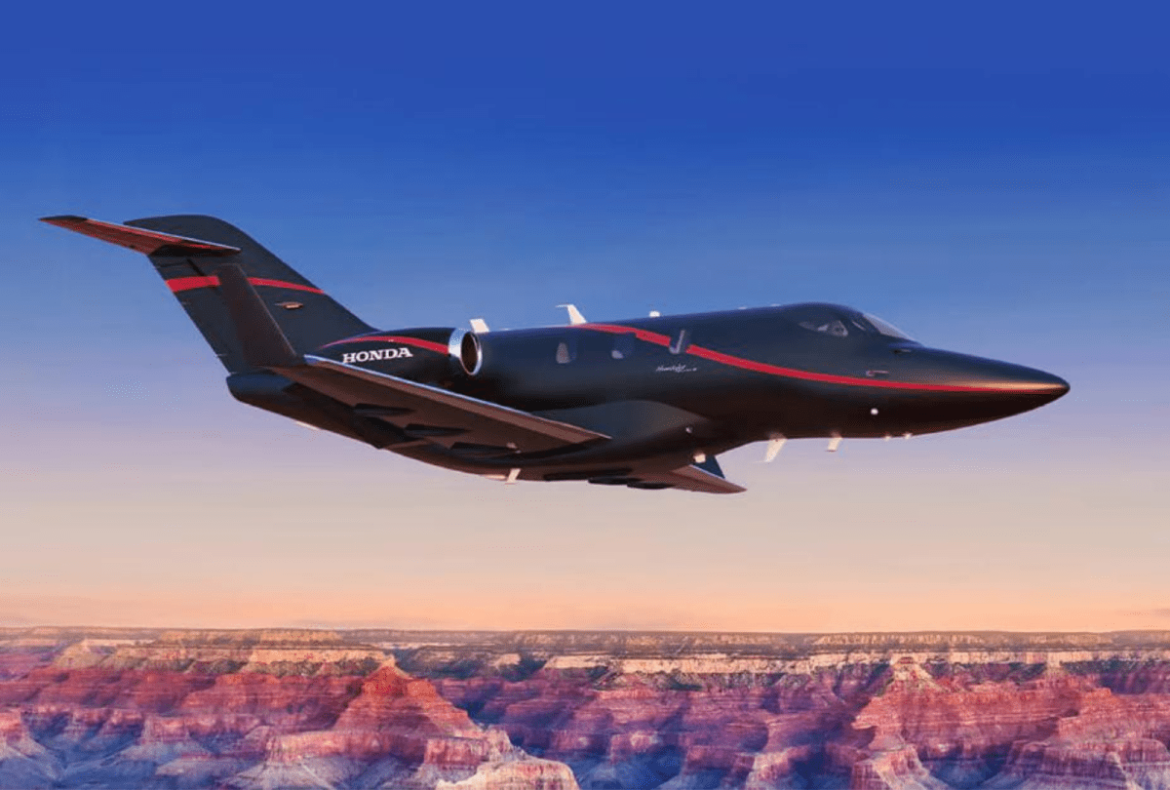
If the pilot of a HondaJet Elite II airplane suddenly becomes incapacitated, the plane can land itself thanks to the implementation of Garmin’s Autoland technology. The U.S. is the only region where HondaJets are able to utilize the high-tech solution.
Billed as Emergency Autoland (EAL) in the Honda, the system uses Garmin-automated-capable avionics equipment tailored for the plane to land safely at a proper destination automatically, without the navigation and expertise of a pilot.
“The HondaJet has always been a technological leader among very light jets, offering premium avionic systems with customized pilot-focused user interfaces to reduce pilot workload and make the aircraft more enjoyable to fly. Incorporating the latest Garmin automated-capable avionics equipment and Honda Aircraft expertise, the HondaJet Elite II offered a modern platform to introduce EAL capabilities to the very light jet segment,” Chris Martin, a Honda Aircraft Company spokesperson, told Newsweek.
The implementation of the technology has been in the works for some time. Honda Aircraft Company, a division of the larger Honda Motor Co. company that makes passenger vehicles, announced in October 2022 that they were working with the Federal Aviation Administration (FAA) to integrate the technology.
After years of work, in October 2025 the company completed FAA certification flight testing for the system under Type Inspection Authorization. Protocol for this level of certification includes engineering review, risk management assessment, and inspection among other qualifications.
This month, the company received its official certification from the FAA.
Today, 11 plane types are equipped with Autoland technology and additional implementation is in the pipeline with the Beechcraft Denali, Epic F1000 AX, Citation M2 Gen3, Citation CJ4 Gen3, Citation CJ3 Gen3, Pilatus PC-12 Pro and HondaJet Echelon scheduled to receive it soon.
Like Beechcrafts, Citations and Pilatus planes, HondaJets are usually operated by a solo pilot. To be piloted as such, a model must be licensed for single-pilot operation by the FAA. Honda sees the EAL technology as a way to avoid catastrophe.
“The HondaJet is certified for single-pilot operation. HondaJet owners often fly their own planes without a copilot onboard to assist if the pilot suffers a medical emergency. Knowing that the system can initiate a safe landing if the pilot is incapacitated may provide additional peace of mind to those flying in single-pilot aircraft,” Martin said.
As outlined by Garmin, the technology works by first either engaging automatically when it determines that a pilot is unable to fly or when passengers press the activation button. The system then sorts out the best airport to execute a landing based on runway length, fuel range and distance, among other factors. It then announces its intentions by connecting with air traffic control and telling passengers. Finally, the airplane lands.
Despite the hands-free, eyes-off nature of EAL, there are no overlaps with HondaJet’s EAL technology and the advanced driver assistance systems found in the company’s passenger vehicles, like the Honda Accord and CR-V.
Martin explained: “There is little to no overlap between aviation sensor suites and automotive ADAS systems… As an example, the Honda Sensing system is primarily tasked with identifying and reacting to typical roadway conditions within a relatively short distance from the vehicle. When Emergency Autoland is activated, the HondaJet sensors must evaluate very different factors at greater distances, such as altitude, weather conditions.”
Also unlike ADAS technology, there is no artificial intelligence in EAL operations, Honda confirmed.
Honda plans to pursue similar certifications for EAL in other countries.
