
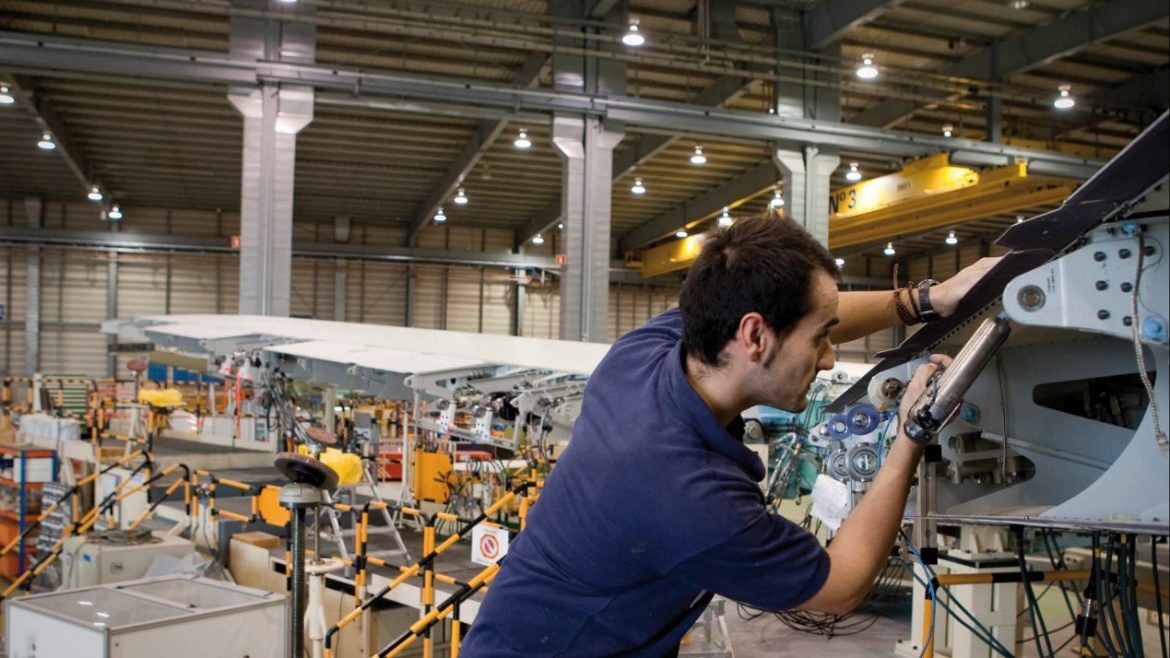
Airbus has expanded its manufacturing facility in Queretaro with an investment of MX$646.7 million (US$34.5 million) and the creation of 262 jobs, increasing production capacity for aircraft doors and helicopter components as the company works to meet rising global demand for commercial aircraft and achieve higher production targets by 2027.
The expansion comes at a time when the aerospace industry continues to face persistent supply chain constraints. According to the International Air Transport Association (IATA), delays in aircraft and component production have pushed the global commercial aircraft backlog to more than 17,000 units, surpassing the average annual backlog of approximately 13,000 aircraft recorded between 2010 and 2019. Industry estimates indicate that production bottlenecks could cost airlines more than US$11 billion in 2025 as carriers extend the operational life of existing fleets while awaiting new deliveries.
The inauguration ceremony was attended by Queretaro Governor Mauricio Kuri González, state officials, and Airbus executives, who highlighted the state’s role in the global aerospace industry and the growing importance of the facility within Airbus’ international manufacturing network.
Marco Antonio Del Prete Tercero, Queretaro’s secretary of sustainable development, said the investment reinforces Airbus’ confidence in the state and strengthens one of its most important industrial sectors.
He noted that the development of Queretaro’s aerospace cluster has become one of the state’s most significant industrial initiatives, positioning the region as a leading aerospace manufacturing hub in Mexico and Latin America. According to Del Prete, Airbus has contributed to workforce development, supply chain expansion, and job creation through its long-term presence in the state.
Ricardo Capilla, president, Airbus Mexico, said the Queretaro facility is the result of close collaboration between Airbus, the Mexican federal government, and state authorities. “One of the main indicators of success is that the current facilities are four times larger than what was originally planned for the project,” he said.
The expansion is closely tied to Airbus’ efforts to increase aircraft production in response to sustained demand across its commercial aviation programs. Capilla highlighted the performance of the Airbus A320 family, which has accumulated a record backlog of approximately 19,000 orders and more than 12,000 deliveries since its launch.
“The expansion of operations in Queretaro will support Airbus’ production objectives,” Capilla said. According to the company, the additional capacity will contribute directly to its goal of reaching a monthly production rate of between 70 and 75 aircraft by 2027.
Dominic Raps, managing director, Airbus Queretaro, said the expansion will increase the production of doors for single-aisle aircraft, a component that plays a central role in the company’s manufacturing ramp-up strategy.
As part of the project, Airbus is introducing new industrial technologies designed to improve production efficiency and precision. The company will install an Automated Outer Skin Riveting Center capable of performing more than two million preparation operations annually. The expansion also includes specialized machinery for high-precision hinge preparation and advanced measurement systems used to validate components before they are integrated into aircraft fuselages.
Laurent Mazoue, head of operations, Airbus Helicopters, said Queretaro has become a strategic pillar of Airbus’ global operations by supplying finished products for Airbus Commercial programs.
Mazoue said the project includes a new 4,500-square-meter building, bringing the facility’s total footprint to 12,000 square meters. “This growth reflects the long-term collaboration between Airbus and the state, particularly in training, talent development, and infrastructure,” Mazoue said.
The expansion also aligns with Airbus’ broader growth strategy in Latin America. Earlier this year, Arturo Barreira, president, Airbus for Latin America and the Caribbean, said the manufacturer expects its share of the region’s aircraft fleet to exceed 70% in the coming years, up from approximately 60% today.
“That figure of more than 70% reflects our net order backlog, so we expect to increase our market share in the coming years because we have more deliveries scheduled than our competitors,” Barreira said in March.
The outlook is supported by strong demand for narrowbody aircraft, particularly the A320 family, which continues to drive fleet growth among airlines across the region. Airbus executives expect deliveries already included in the company’s order book to further expand its market share as those aircraft enter service.
Queretaro continues to attract aerospace investment from international manufacturers seeking to expand production and maintenance capacity. Earlier this year, Safran Landing Systems expanded its maintenance, repair, and overhaul (MRO) center in the state by 6,000 square meters, increasing capacity to service Airbus A330 Enhanced, A330neo, and Boeing 787 landing gear systems. The facility is one of only three Safran sites worldwide dedicated to supporting landing gear systems for long-haul aircraft.
