
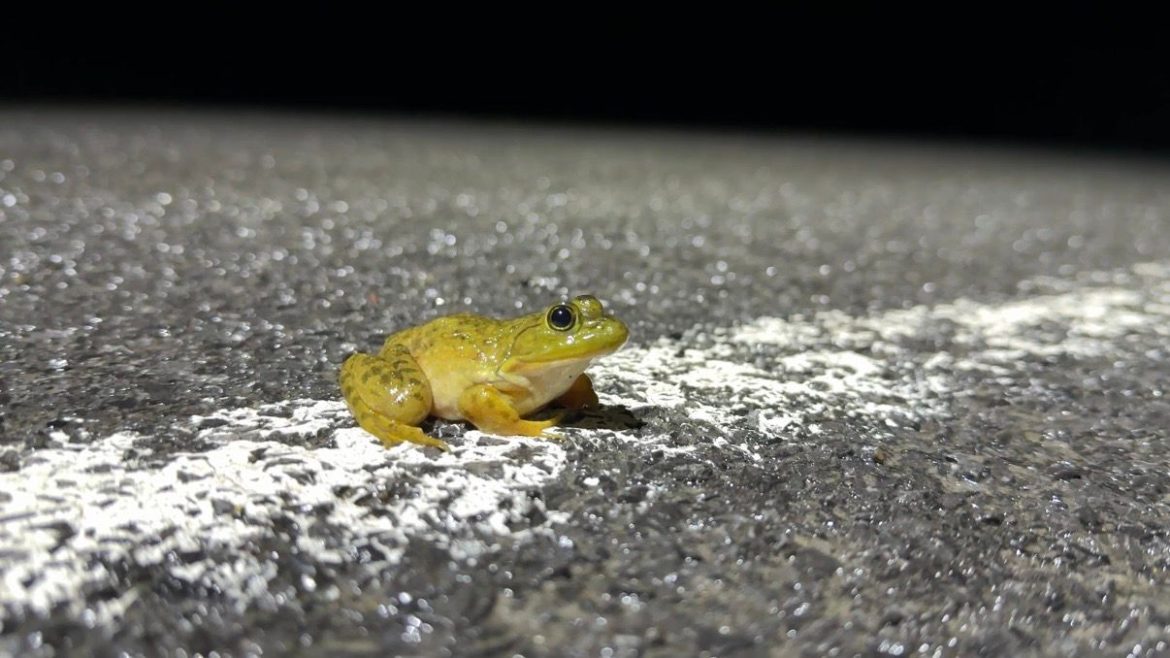
On rainy spring nights, when most people are heading indoors, a group of volunteers in Tompkins County heads the other way — out in the darkness, flashlights in hand, watching the roadways for some of the region’s smallest and most vulnerable travelers: amphibians.
Every spring, salamanders, frogs, newts and other amphibians emerge from the shelter of the forest floor and set off on a journey to vernal pools where they will mate and lay eggs.
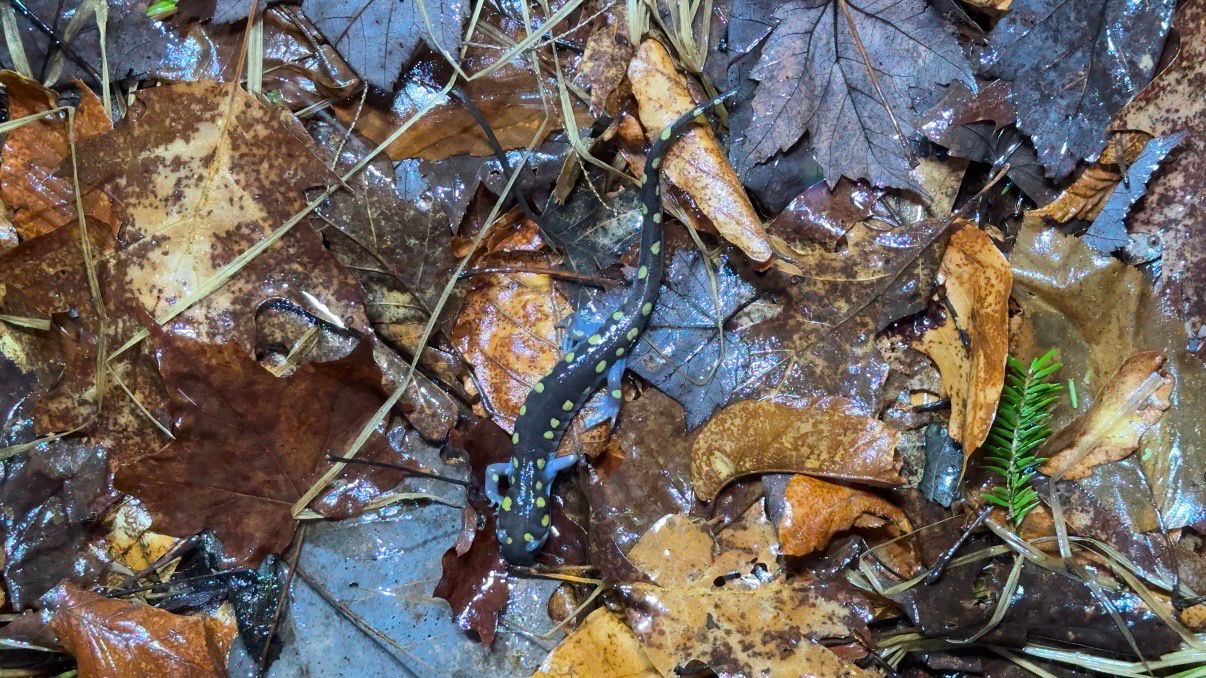
A spotted salamander makes its way through the brush to a vernal pool. (Spectrum News/Natalie Mooney)
Among the travelers is the spotted salamander, a striking blue amphibian speckled with bright yellow spots down its back. It spends most of its life underground and is rarely seen by humans except during this brief, seasonal migration.
But before they can reach their destination, many must survive a major obstacle: crossing busy roads.
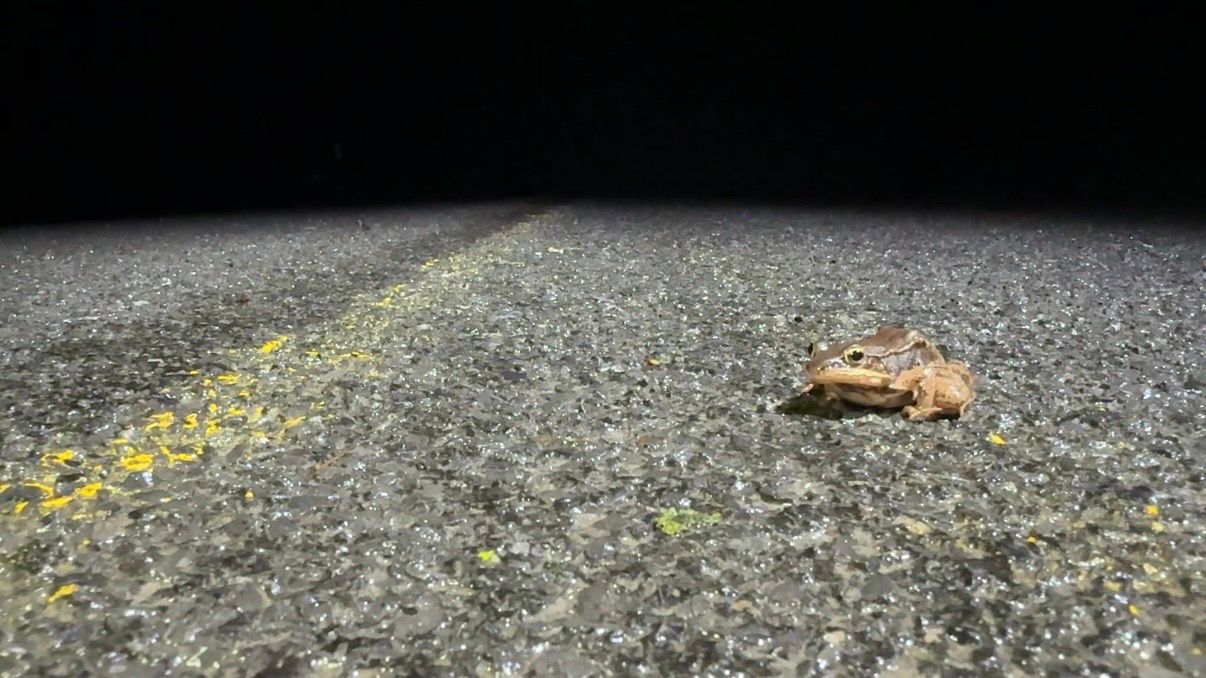
A toad stops in the middle of the road. (Spectrum News/Natalie Mooney)
That’s why volunteers with the Tompkins County Amphibian Patrol, or TCAMP, suit up in the dark and rain to help them make it across alive.
“These guys will spend their whole lives underneath this leaf litter and in the soil,” Stephen Bredin, founder and president of TCAMP. “They’ll mate and they’ll deposit eggs, and then it’s back up to the forest.”
For the amphibians, it’s an annual journey, driven by instinct. For volunteers, it’s a race against traffic. On their mission to create life, many of these cold-blooded creatures will risk their own while crossing the road.
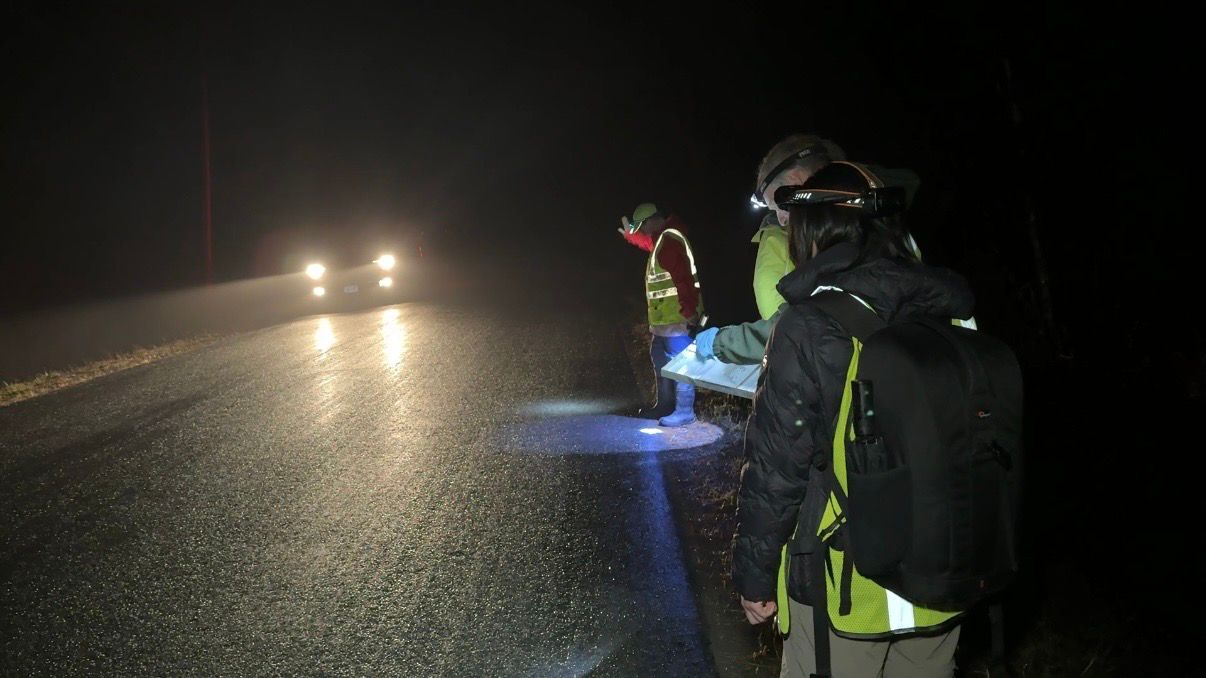
TCAMP volunteers wait patiently for a car to pass. (Spectrum News/Natalie Mooney)
“In the literature, we can see numbers of like 100%, all of them getting hit,” Bredin said. “Sometimes it’s 80, more often it’s 10, 20%, it depends on the traffic volume.”
TCAMP volunteers patrol roadways on wet spring nights, when amphibians are most active, and move the cold-blooded creatures to safety — but their work doesn’t stop there. The group is also tracking the time, temperature, traffic conditions and type of species, all in an effort to collect data that informs scientific research and future conservation efforts.
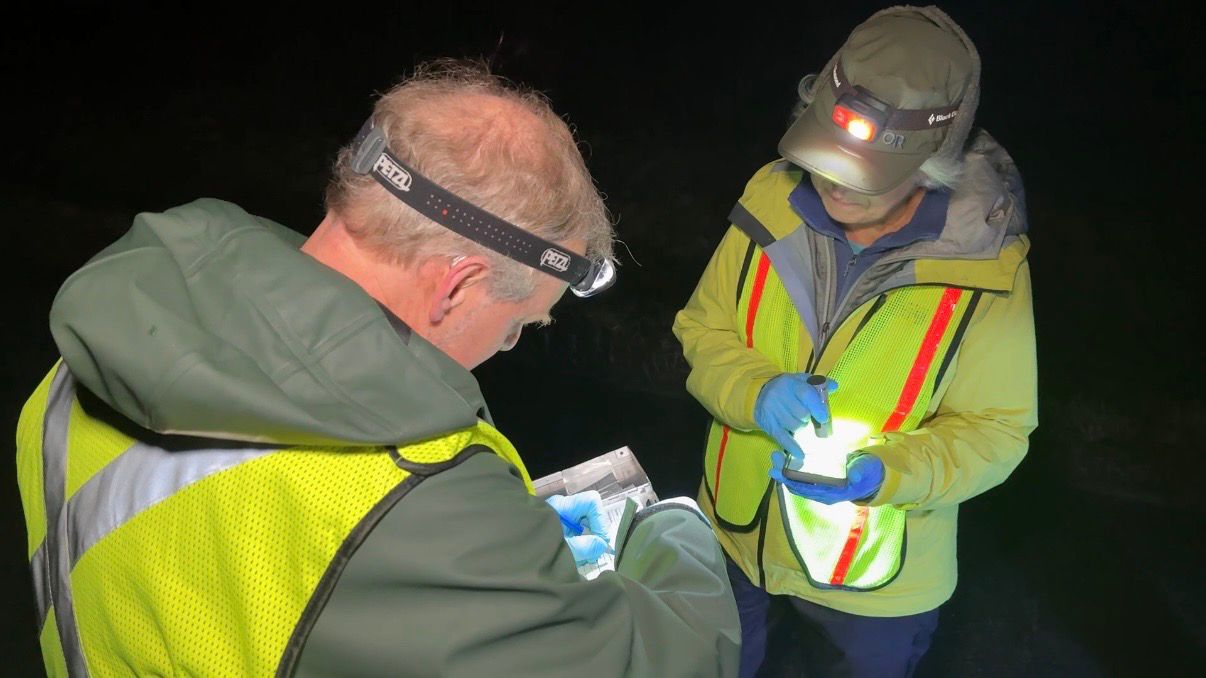
TCAMP volunteers collect data to further conservation efforts. (Spectrum News/Natalie Mooney)
So far this year, the group has counted around 8,000 amphibians. Just under half were found dead.
“I always feel bad when I see an animal of any kind, but particularly salamanders, squished on the road,” said Kurt Jirka, a volunteer and retired aquatic biologist.
The loss of amphibians doesn’t affect just one species. Bredin said amphibians are the most threatened vertebrate group on the planet, and their disappearance would ripple through the entire ecosystem.
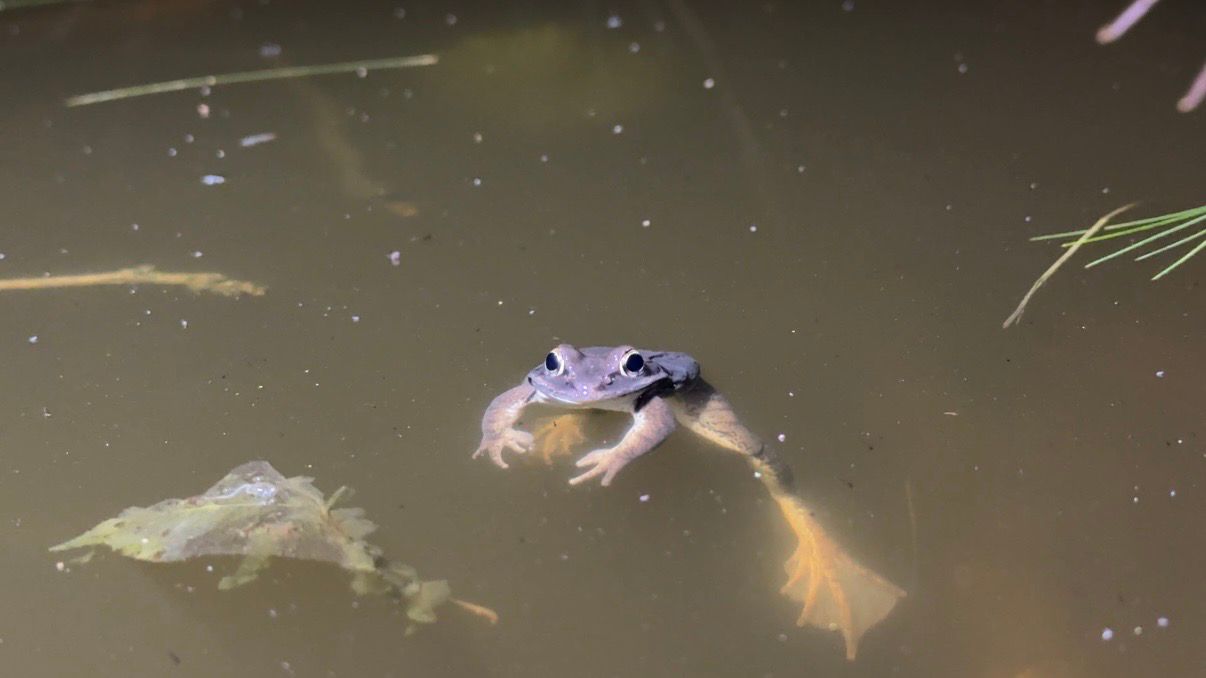
A frog eyes a Spectrum News reporter. (Spectrum News/Natalie Mooney)
“We’d have an enormous imbalance in the ecosystem. There’d be insects everywhere,” he said.
That’s why TCAMP volunteers want to lend a helping hand.
“You’re aiding them, helping to protect them a little bit from mankind,” said Debra Nero, a retired Cornell University professor and TCAMP volunteer.
When TCAMP first started in 2024, there were only about 100 volunteers from Tompkins County. Two years later, that number has tripled and their reach now extends to six counties.
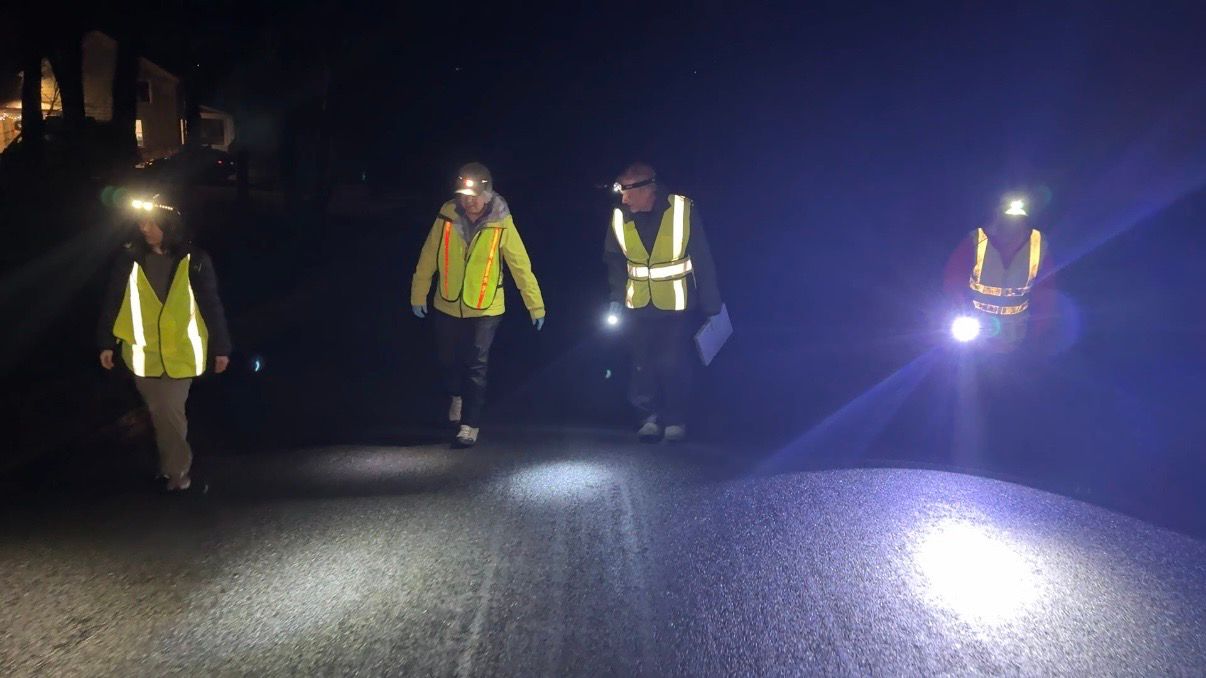
Volunteers patrol a Tompkins County road, looking for migrating amphibians. (Spectrum News/Natalie Mooney)
“It’s really kicked off,” said Steph Tran, vice president of TCAMP. “It was just a small thing at first to combine the efforts of several organizations that have been doing road patrols, kind of on and off, to try to consolidate all that information and make this a coordinated effort to actually go out and patrol.”
For the team, every amphibian that makes it safely across the road is a small win and a hopeful sign that more of these remarkable creatures will return in the seasons ahead.
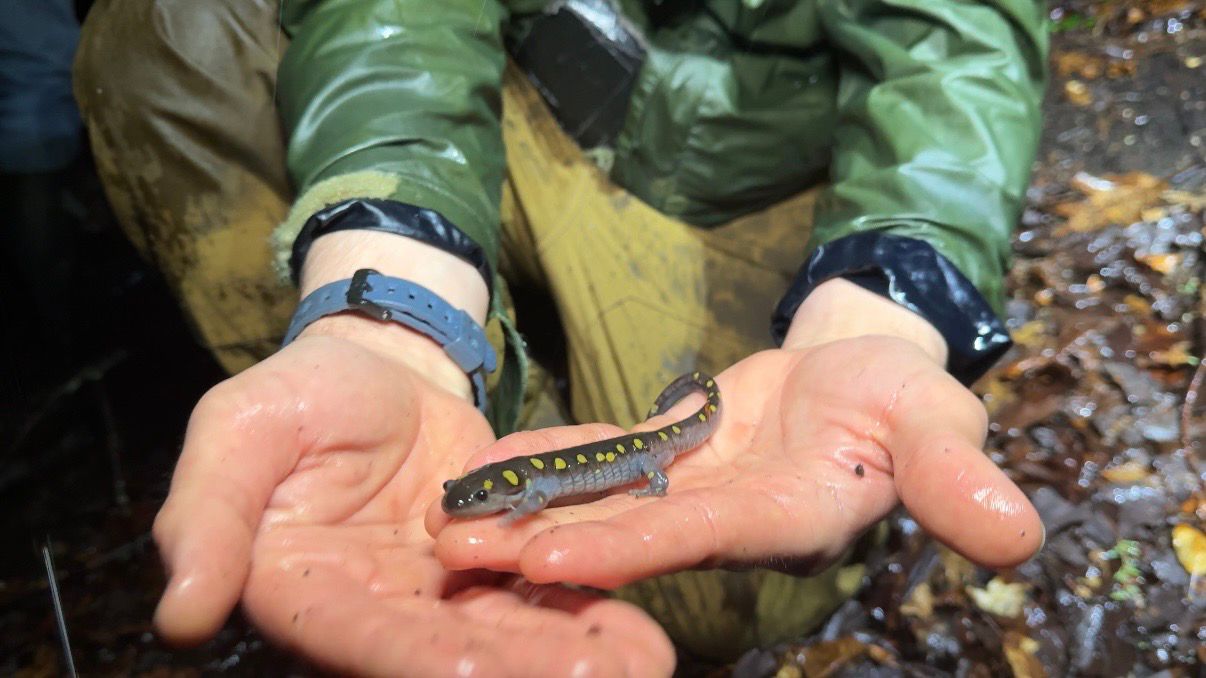
Bredin holds a spotted salamander. Bredin has natural wetness and debris from the environment on his hands. Typically, salamanders should not be picked up as oils can be absorbed into their skin. (Spectrum News/Natalie Mooney)
“It feels wonderful, and it is wonderful,” Bredin said.
TCAMP says it’s in early discussions to get an amphibian underpass at a hot spot area of crossing and mortality. It’s also working with the community science institute to start a vernal pool monitoring program to get vernal pools protected long-term.
