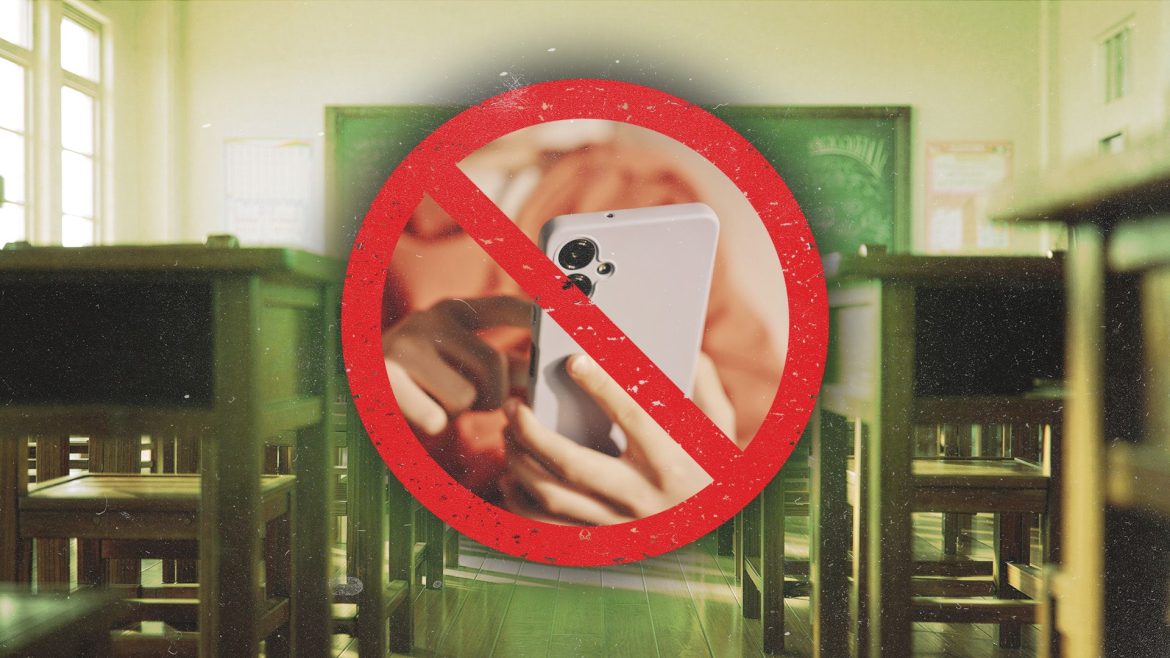
Currently, the Department of Education prohibits the use of phones and other electronic gadgets during class time, except for academic purposes and emergencies. Students can still use their devices during recess or breaks.
MANILA, Philippines – Instead of an outright ban on mobile phones and other gadgets in schools, local medical experts are recommending age-based regulation.
The Philippine Mental Health Association (PMHA) and the Philippine Psychiatric Association (PPA) raised the suggeston as the House committees on basic education and health held a joint hearing on six bills seeking to either ban or regulate on-campus gadget usage on Monday, July 20.
Dr. Carolina Uno-Rayco, PMHA national executive director, laid out what’s at stake: “Excessive screen time is fueling a youth mental health crisis. More than three hours of social media daily doubles depression and anxiety risks, while more than four hours links to ADHD (attention-deficit/hyperactivity disorder) symptoms, sleep loss, and reduced focus.”
According to the 2022 Programme for International Student Assessment, around 41% of Filipino students said they get distracted using digital devices, which has affected learning of mathematics lessons. (READ: PH still among lowest in math, science, reading in global student assessment)
Currently, the Department of Education (DepEd) prohibits the use of phones and other electronic gadgets during class time, except for academic purposes and emergencies. Students can still use their devices during recess or breaks.
Pasig City Representative Roman Romulo, chairman of the House basic education panel, described the DepEd’s policy on gadgets as unclear and ineffective, urging education officials to rethink the protocol.
Romulo said he wants to ensure that students would be more focused on lessons, following the DepEd’s assessment that around 87% of Grade 11 students were non-independent readers.
For the PMHA, the policy requires stronger legislation for uniform enforcement across schools.
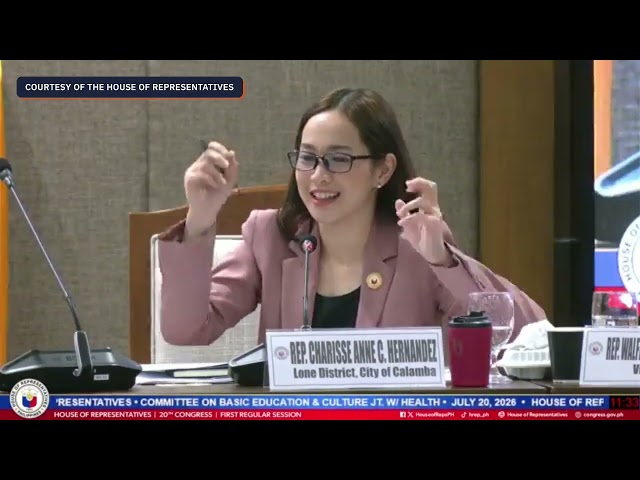
Rayco also explained that it is crucial to provide alternative activities to students instead of just enforcing a gadget ban. These activities include sports, physical and social interactions, and other group activities that hone social skills.
While aiming to primarily address the health effects of gadget use, the renewed push for a ban or regulation came following the deadly school shooting in Tacloban City.
Authorities have been looking into the influence of online extremism on two minors who carried out the June 22 shooting, where three students were killed and 20 others injured.
On June 29, the municipal government of Dumanjug in Cebu province enforced a total ban on mobile phones in schools to encourage students to read and interact with their classmates, SunStar Cebu reported.
What experts propose
PMHA’s Rayco suggested the prohibition of gadget use for children aged zero to two years old, then a one-hour cap for children two to five years old. She said this is in line with the recommendation of the World Health Organization.
Meanwhile, the PPA recommended “developmentally-tiered regulation,” which would entail prohibiting gadgets during class time for kindergarten to Grade 3 students, then a shift to “supervised, graduated, and increasingly self-directed use” for older students.

Dr. Joan Mae Perez-Rifareal, the PPA’s immediate past president, said the age group of kindergarten to Grade 3 has “the least capacity for self-regulation and the most to lose developmentally from gadget displaced learning and play.”
“Adolescence in particular is the stage in which digital literacy and self-regulation must be actively practiced under guidance and not simply deferred until adulthood,” Rifareal said.
“So, clearly defined exceptions for instructional, health, and emergency use together with due process safeguards such as parental notification and chain of custody protection in cases of gadget confiscation are consistent with clinical evidence…and therefore, visible, supervised, rule-governed use is safer for a child’s development than use driven underground by blanket bans,” she added.
For its part, the Second Congressional Commission on Education (EDCOM 2) also backs having a “differentiated model” that is determined by age and key stage.
EDCOM 2 Executive Director Karol Mark Yee recommended a “strict no personal device in school policy” for kindergarten to Grade 6, as well as a “managed access policy” for Grades 7 to 12, where devices are used only for purposes of instruction.
Yee said schools must set guidelines on how to store gadgets outside class hours.
The Teachers’ Dignity Coalition told lawmakers that it supports regulation of gadget use, and not an outright ban, as teachers and students alike have to use devices amid a shortage of textbooks.
What House bills say
Two out of the six bills being tackled have the same framework as the experts’ recommendations. However, the measure filed by Asenso Pinoy Representative Henry Oaminal Jr. seeks to regulate screen time of children even outside school premises.
Under House Bill No. 7887, Oaminal proposed prohibiting screen time for children two years old and younger, a one-hour cap for kids two to five years old, and a two-hour cap for those six to 12 years old.
For those 13 years old and above, the bill emphasizes regulation focusing on digital literacy, responsible use, and supervised independence, including measures to discourage excessive or unsupervised gadget use, particularly during nighttime.
Oaminal suggested tapping barangay health workers to help in regulating gadget use of children in home and community settings. In schools, devices would only be allowed for academic purposes during class hours, or in cases where students have health conditions that require the use of gadgets.
EDCOM 2’s Yee said other aspects of the proposals also need to be further studied, including the role of various government agencies in regulation of children’s gadget usage and parallel legislation to protect children from online harms. – Rappler.com