
The uncertainty comes despite the government’s plan to sign the agreement by August 31.
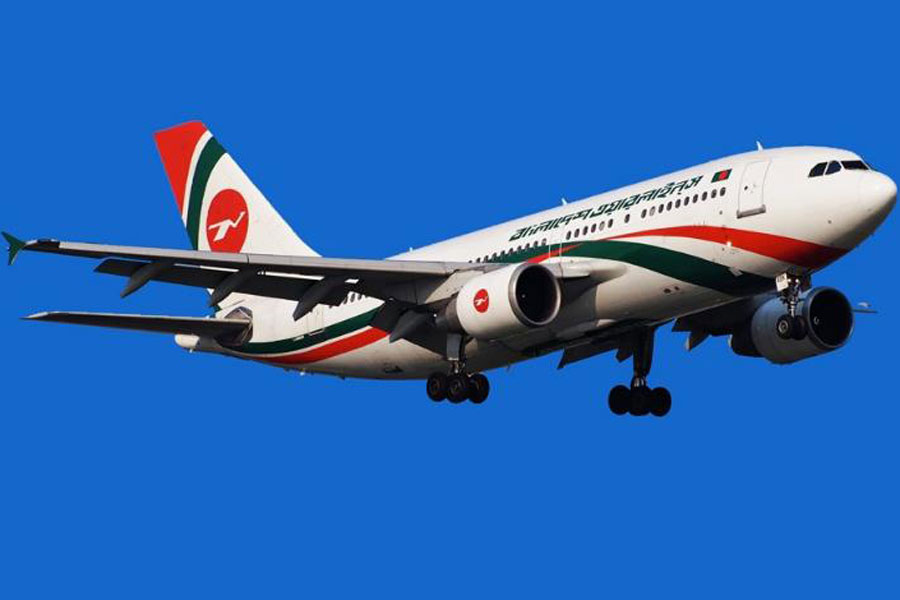
The state-owned carrier has been negotiating with European aircraft manufacturer Airbus since July based on its proposal for two types of aircraft, after the government decided to add Airbus aircraft to Biman’s fleet as part of a planned mixed-fleet strategy.
Sources said the negotiations initially centred on the purchase of 10 aircraft, but the techno-financial committee is still assessing the commercial viability of the proposed mix of the two categories before making a final recommendation.
Airbus’s latest proposal comprises four A350-900 wide-body aircraft and six A321neo narrow-body jets.
The proposal was submitted to Biman’s techno-financial committee after the airline signed a $3.7 billion agreement with Boeing in April to purchase 14 aircraft.

However, the final composition of the Airbus fleet could still change depending on the outcome of the ongoing negotiations, sources said.
“It is yet to be finalised whether the number of A321s or A350s will remain at the proposed level or change, for example, to 3:7 or 4:6,” a source familiar with the negotiations said, requesting anonymity due to the sensitivity of the matter.
Price negotiations have also not been concluded, as Biman is continuing to assess the overall commercial viability of the purchase based on the numbers proposed by the two sides during the negotiations, another source said.
“Negotiations are ongoing,” a senior Biman official said, declining to disclose a possible date for concluding the talks or signing the agreement.
The official said the purchase proposal would be placed before the Biman board for approval after the techno-financial committee completes its assessment and negotiations.
The committee is headed by Biman’s director of engineering, while officials from corporate planning and finance are among its members.
Earlier, the government had announced that it would sign an agreement with Airbus by August 31, following the initiation of negotiations after an official letter was sent regarding the proposed aircraft purchase.
However, the national carrier will place the final negotiated proposal before its board, which may approve it or form another committee for further evaluation.
The airline will also have the deal assessed by an international lawyer before starting the signing procedure.
“So, signing the deal by August 31 is difficult,” said another insider.
Biman Bangladesh Airlines recently signed an agreement with Boeing to purchase 14 aircraft following lengthy negotiations.
The aircraft deal covers eight Boeing 787-10 Dreamliners, two 787-9s and four 737-8 MAX aircraft, which are expected to start arriving in 2031, with full delivery scheduled to be completed by 2035.
The state-owned flag carrier has undertaken the aircraft acquisition programme as part of its roadmap to expand its fleet to 47 aircraft from the existing 19 by fiscal year 2034-35, with both Boeing and Airbus, reducing its dependence on a single manufacturer.
Biman considers the expansion commercially viable, citing the growing potential for international travel and trade driven by the increasing mobility of Bangladeshi nationals.
However, the national flag carrier also plans to improve its organisational and institutional capacity, operational efficiency and passenger services alongside fleet expansion. Weaknesses in these areas have contributed to Biman’s relatively low position in global airline rankings.
The fleet expansion is being pursued against the backdrop of growing demand for international air travel among Bangladeshi passengers and the government’s ambition to strengthen Biman’s international network.
But aviation experts have cautioned that fleet expansion alone will not be enough to improve Biman’s competitiveness.
The carrier will also need to strengthen its institutional capacity, operational efficiency, aircraft maintenance, route management and passenger services to make effective use of the expanded fleet.
