
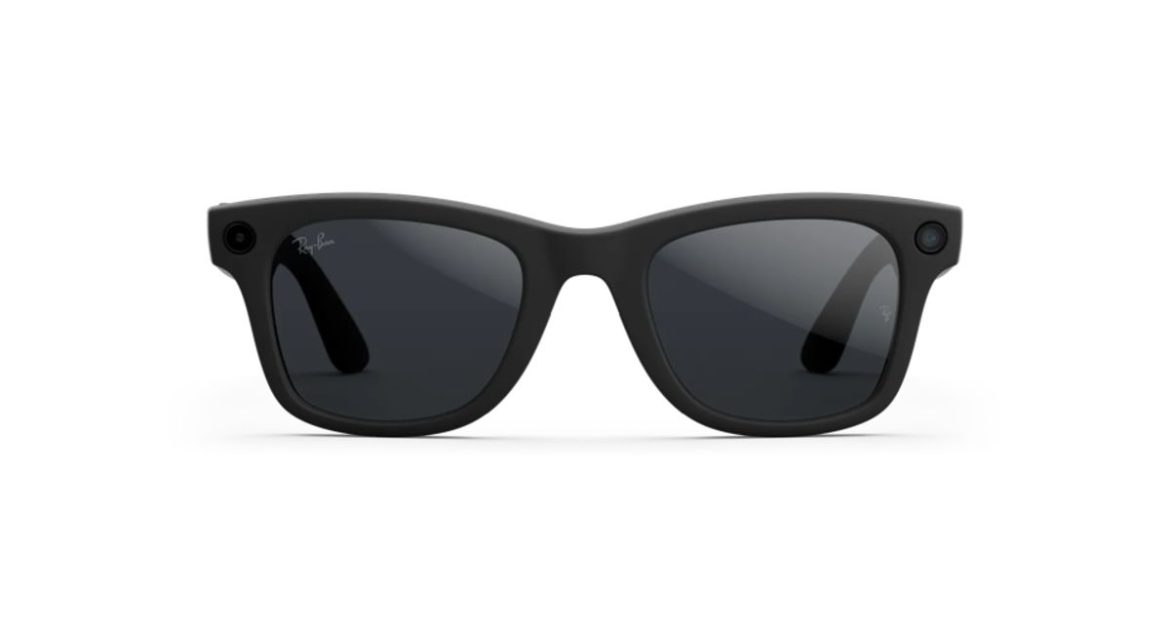
I am not creepy, I swear. Which is why I feel a little awkward admitting that I’ve spent the past couple of days wearing the new Ray-Ban Meta smart glasses. For the uninitiated, these look like standard shades, but come packed with built-in AI, phone connectivity, and a 12-megapixel camera. They allow you to discreetly shoot photos and crisp 3K video—often without anyone around you realizing it. They actually do have a tiny indicator above the lenses that lights up while the camera is active, but in sunlight it’s tough to see. This stealthy feature is precisely how they earned their unfortunate moniker: “Pervert Glasses.”
Case in point: During my first test drive, I called my daughter while out for a stroll – telling her I was testing the glasses on my walk. The call quality was surprisingly excellent, but the conversation took an immediate turn when she asked if I’d tried the camera yet.
“I’m taking a video right now,” I told her proudly.
Advertisement
Advertisement
A heavy pause followed on the line. “Dad… aren’t you standing directly in front of a school playground?”
Oh, crap. She was right. Thankfully, school wasn’t in session, but it was a quick, terrifying lesson in how an innocent tech trial can instantly look like a police report in the making.
Awkward camera moments aside, the feature set is actually impressive. Open-ear speakers tucked into the arms let you stream music or podcasts via Spotify with decent sound quality, all while keeping you aware of ambient noise around you. On that same walk, I used the built-in Meta AI to quiz the glasses on baseball statistics. It worked brilliantly for a few minutes but twice informed me it couldn’t access the internet—despite my phone boasting a full five bars of service. Classic tech behavior: brilliant one second, confused the next.
When the AI is behaving, the hands-free identification is impressive. I asked, “What am I looking at?” and after a brief pause, it described the scene in front of me with striking accuracy. It immediately struck me as a potential game-changer for the visually impaired. If the processing speed gets just a bit faster, it could easily help navigate curbs, spot obstacles, or flag approaching traffic. On top of that, it offers offline, real-time voice translation across six languages, boasts an eight-hour battery life (double the previous generation), and includes a charging case that holds up to 48 hours of juice. Mine came in the classic Wayfarer frame with standard lenses. However, they can be ordered with Transitions lenses that darken outdoors and clear up inside.
Advertisement
Advertisement
I’ve never been big on wearables—I’ve tried plenty of smartwatches and always crawl back to my analog timepieces. But these feel vastly more polished than previous attempts at smart eyewear. Living in Southern California, my car is usually too loud for speakerphone calls on the freeway, but these completely solve that problem by directing crystal-clear audio right to my ears. I could also see using these as a dashboard cam if needed. Between driving, walking while listening to podcasts, and firing off every random question that pops into my head, these might actually stick around. And because I love walking around cities while on trips, I can’t wait to try Meta’s subtle walking directions in my ears instead of staring at my phone like a tourist.
The glasses still have some quirks to work out, but the potential here is massive. I recommend them. Just… maybe don’t wear them near any playgrounds.
This article was originally published on Forbes.com
