
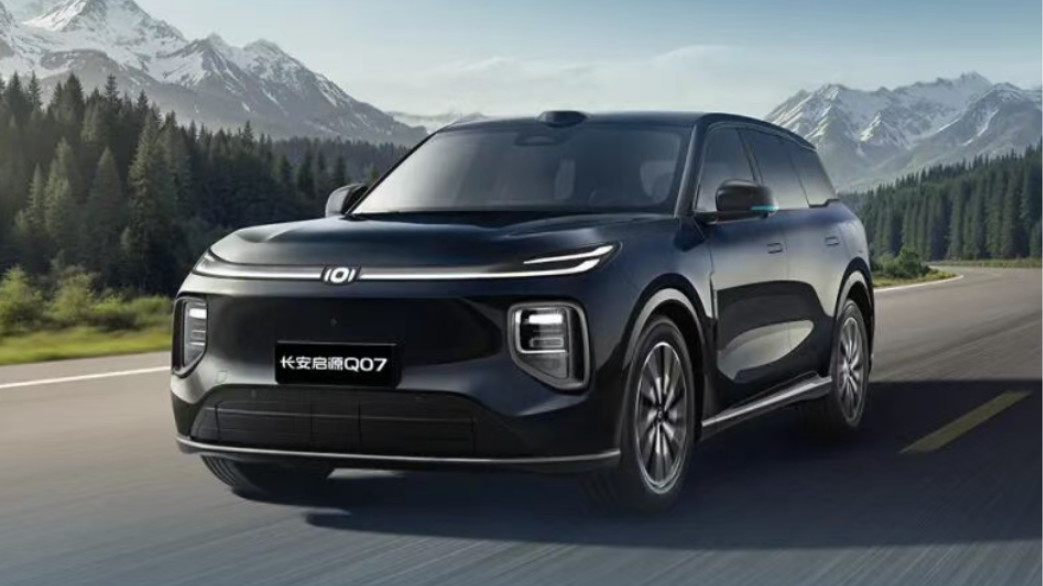
Gasgoo Munich- On April 2, Changan Automobile released its March report. As the price war continues and competition intensifies, the automaker recorded 270,600 units of sales for the month. This represents a 78% increase from February. It signals a strong recovery and growth momentum.
Notably, the company achieved strong results in both its new energy and overseas segments, selling 89,600 and 103,900 vehicles respectively. The latter figure marks the first time monthly exports have surpassed 100,000.
However, behind these aggregate figures, Changan’s brands are performing differently. While Changan NEVO and DEEPAL continue their rapid growth, AVATR is lagging behind.
This mix of overall growth and internal disparity highlights the phased success of Changan’s multi-brand strategy. It also exposes the deep challenges the company faces as it progresses through its transition.
New Energy Vehicle and Overseas Markets Reach Record Highs
In March, Changan Automobile sold 270,600 new vehicles, a 78% increase from the previous month. This figure outpaces the industry average. It demonstrates the company’s resilience in returning to a growth trajectory after the traditional slow start to the year.
Image Source: Changan Automobile
By powertrain, new energy vehicles became the primary growth engine. Monthly sales reached 89,600 units, a 112% month-on-month surge that significantly exceeds the broader market. This pushed the new energy vehicle penetration rate to 33.1% for the month. It marks an acceleration in Changan’s electrification shift.
Overseas markets also reached a milestone. March exports surpassed 100,000 units for the first time, totaling 103,900 units. This is a 60% monthly increase. The figure sets a new export record for Changan and solidifies its lead among domestic brands expanding internationally.
Notably, overseas sales exactly matched the 103,900 units of the UNI series. While coincidental, this reflects a dual growth pattern between the domestic market and international markets.
By brand, Changan’s matrix shows distinct tiers. Changan NEVO sold 36,875 vehicles in March, up 102% from February. It maintains growth since launch and solidifies its role as a key pillar of Changan’s new energy sector. DEEPAL followed with 31,742 units of sales, an 88% increase from a month earlier, showing steady performance.
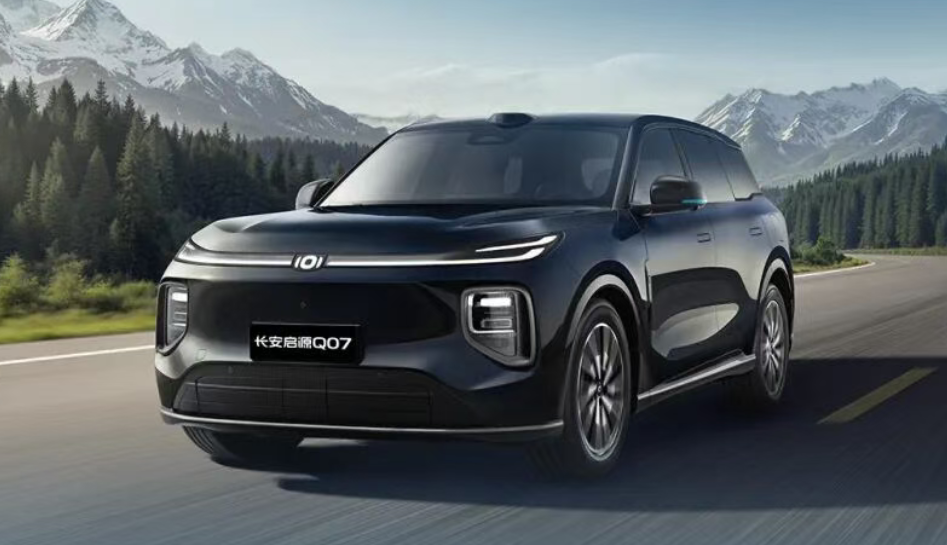
Image Source: Changan Automobile
The UNI series, including internal combustion and hybrid models like the CS75 line, continues to act as a stabilizer. March sales hit 103,900 units, a 74% rise. This proves that with the right product updates and pricing, the fuel vehicle base remains competitive. The commercial vehicle segment, Changan Kaicheng, also performed well, selling 28,100 units, up 94%.
Against this backdrop of high growth, AVATR’s performance is notably weak. The brand sold only 5,143 units in March. Although month-on-month figures were not released, the volume indicates a gap compared to NEVO and DEEPAL.
As the brand for Changan’s high-end ambitions, AVATR’s market performance does not meet its positioning or resource investment. It remains a weakness in Changan’s multi-brand layout.
Overall, March data highlights three key traits for Changan. Its electrification shift is accelerating, led by NEVO and DEEPAL. Overseas markets have become a new pillar, offsetting domestic volatility. The traditional fuel base continues to provide cash flow. However, the struggle to enter the high-end market remains a significant issue.
NEVO and DEEPAL Surge, But Why is AVATR Lagging Behind?
Analyzing March sales within Changan’s broader development, the company is in a key phase of transitioning between old and new growth drivers.
Changan has built strong capabilities in new energy technology, product layout, and overseas expansion. However, there is visible imbalance in brand positioning, resource coordination, and market performance. The growth in volume and divergence in structure stem from several deep-rooted causes.
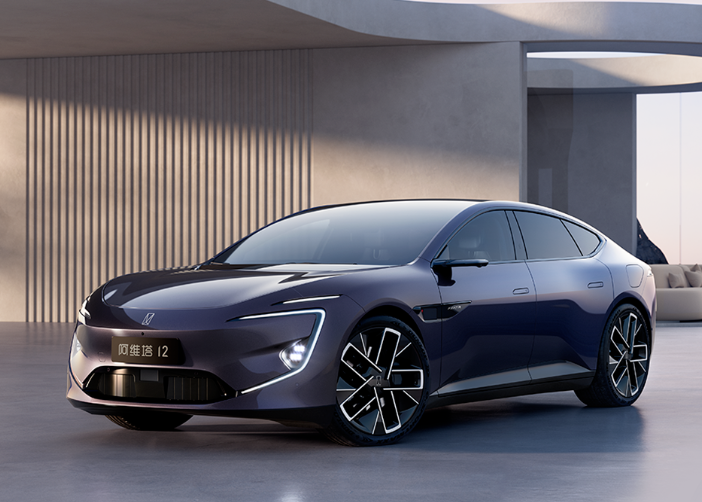
Image Source: AVATR
First, differences in product definition and target audiences have driven market feedback. NEVO’s rapid rise is largely due to its accurate targeting of the core demands of the mainstream new energy family market.
NEVO models are largely positioned in the 100,000 to 200,000 yuan price band, covering mainstream segments like compact sedans and SUVs. They offer a balanced mix of range, space, and intelligent features without weaknesses. They leverage Changan’s established supply chain for competitive pricing.
DEEPAL has taken a slightly different path. Its products emphasize design and sportiness, targeting a younger demographic. The brand aggressively pursues a dual-path strategy of both pure electric and extended-range powertrains.
DEEPAL’s rapid growth stems from two factors. Its differentiation attracts young consumers who avoid average products. Its extended-range technology addresses range anxiety, gaining acceptance in tier-2 and tier-3 cities where new energy penetration is not yet saturated.
In contrast, AVATR’s struggle stems from product issues and market mismatch in its high-end strategy. Backed by Changan, Huawei, and CATL, the brand boasts technical highlights. These include Huawei’s cockpit and driving systems, CATL’s batteries, and Changan’s manufacturing. Theoretically a strong alliance, its pricing sits in the 300,000 to 400,000 yuan range. This places it directly against established rivals like NIO, Li Auto, and Tesla.
Without an established brand premium, AVATR lacks NIO’s user ecosystem or Li Auto’s precise product definition. Combined with its avant-garde design and narrower audience, it has failed to be considered by many high-end buyers. Monthly sales of 5,143 suggest it remains in a phase of positive reviews but low sales.
Differences in product cycle and launch efficiency are also key factors. Since launch, NEVO has rapidly expanded its matrix at a pace of one new car every three to four months. It covers segments from A-class sedans to compact and mid-to-large SUVs. This is a volume strategy to build scale. DEEPAL has maintained a similar pace of iteration.
AVATR, however, has been slower to roll out new products. With a limited number of models on sale, it struggles to sustain the market attention or customer reach needed in the high-end market.
Finally, looking at the overall strategy, Changan’s layout resembles a dumbbell structure. It shows strong performance in the mid-range market with NEVO and DEEPAL, and a solid traditional base with UNI. However, there is a lack of effective breakthrough in the high-end market.
This structure supports rapid volume growth in the short term. However, over the long term, if AVATR cannot succeed, Changan’s absence from the high-end new energy market could limit its ability to build brand premium and expand profit margins.
At the same time, while NEVO and DEEPAL belong to the same new energy sector, their product positioning and price ranges are beginning to overlap. Balancing the independence of both brands while avoiding internal competition will be an ongoing challenge for Changan.
