
Robust whistling frogs (Austrochaperina robusta) are small frogs that live in the ground in the Wet Tropics of Queensland. These animals are just 2cm long and their brown bodies are difficult to spot among the leaves. So, they can be very hard to study.
Researchers tried to learn more about these elusive animals by building different types of tiny homes for them – and the frogs had a clear favourite. Concrete ‘apartments’ were far more popular than wooden dwellings, according to a new study published in Ecology and Evolution.
Robust whistling frogs usually live underneath rocks and logs so the scientists created 30 wooden homes to help them feel at home. “We found fallen trees on-site and chopped them into the right size,” says lead author Jordy Groffen, a scientist at James Cook University (JCU) in Queensland, Australia.
They also made 30 apartment-like homes out of concrete to mimic the rocks that the frogs sometimes hide under. “They’re boulder-sized and have six chambers with multiple passages,” he says. “Some of them had beautiful moss growing over them.”
Then, the researchers monitored the shelters over a two-year period to see which ones were more popular with the little amphibians. To make it a fair comparison, the little lodgings were positioned in pairs (one wooden, one concrete).


“Each chamber was accessible via a removable plug,” write the authors in the study. This allowed them to peek inside – without disturbing the animals – and even take photos of the inhabitants.
They were surprised by the results. “The frogs liked the shelters more than we expected,” he says. “It’s a new non-invasive way to monitor and help frog populations.”
The concrete shelters were the clear winner. The researchers observed the frogs using the artificial homes 801 times. In 75 per cent of the records, they chose the concrete option. “This was partly because the concrete shelters did not degrade with time, but also likely reflects thermal buffering benefits,” write the authors in the paper.
It took a little time for the frogs to get used to their new homes. “Although they used them straight away, it still took two years before they bred in them,” says Groffen. “But when they did breed in them, they loved it,” he says.
The experts found six egg clutches, all of which were under the concrete homes. This provides an exciting opportunity for scientists to learn more about the little-studied egg stage of this species.

Typically, researchers study the reproduction of these frogs by listening to the mating calls of adult males. Seeking out the eggs can put the young at risk. “Normally you only find eggs by flipping things over, which can damage the micro habitat,” says Groffen. “There’s a chance you might hurt the frogs or their eggs.”
Knowing that man-made concrete shelters make the perfect hideaway for frogs could help protect other species of ground-dwelling frogs, such as the endangered Bellenden Ker nursery frog.
Groffen adds: “This gives us new tools to help protect them.”
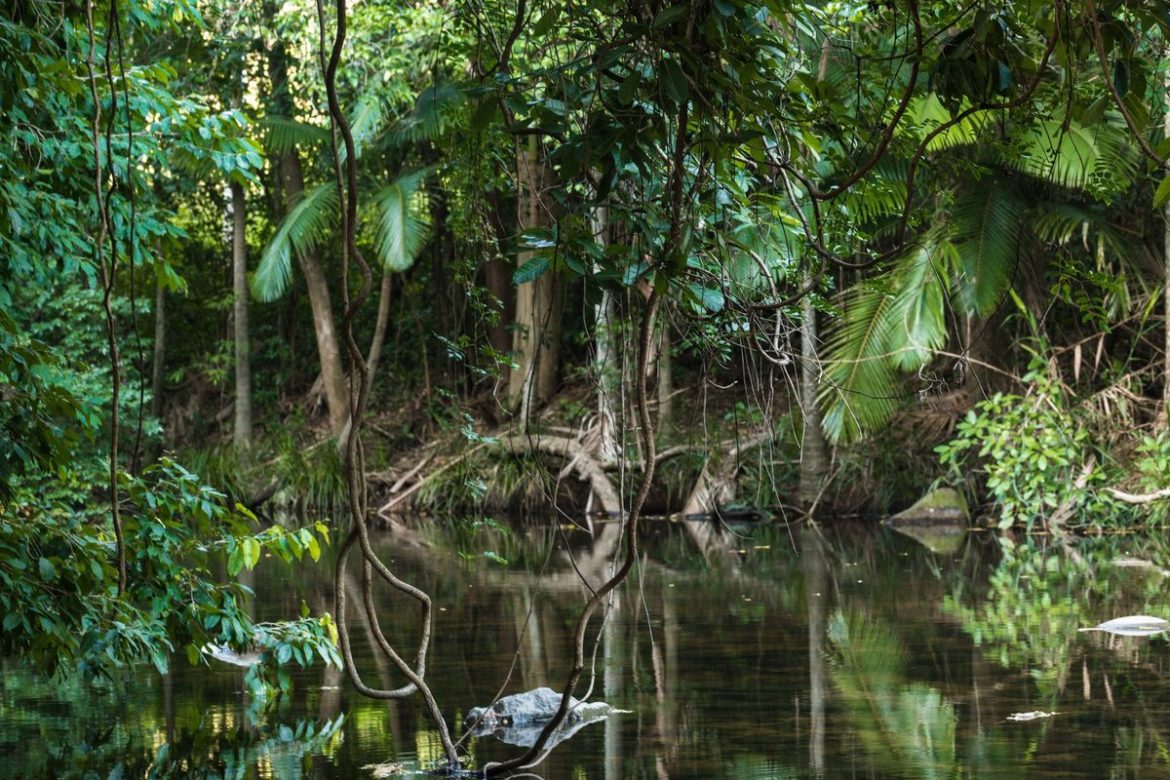
Top image: the study was conducted in the upland rainforest of the Paluma Range in the Wet Tropics of Queensland, Australia
More wildlife stories from around the world
