
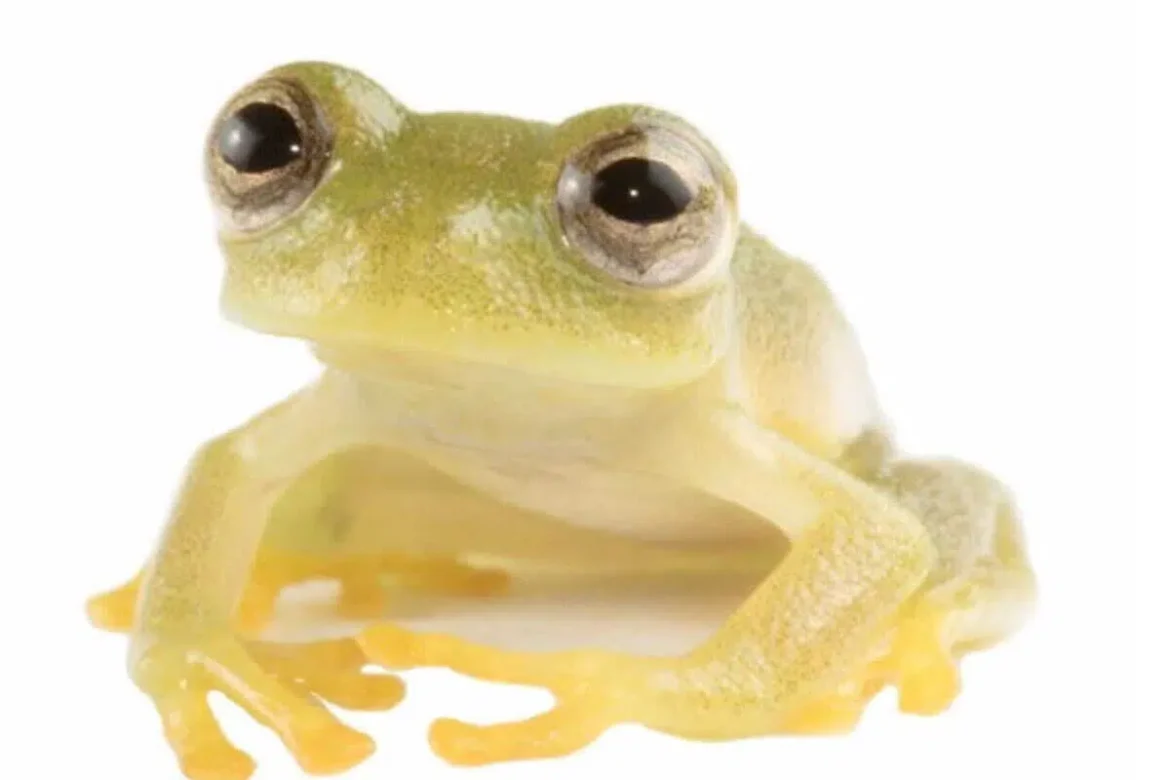
In southern Ecuador, a team of researchers identified a new species of glass frog in the El Quimi Biological Reserve, within the Cordillera del Cóndor. This discovery expands knowledge about Andean biodiversity and highlights the importance of conserving these mountain ecosystems, considered “hidden worlds” for science.
The species was named Nymphargus dajomesae, in honor of Neisi Dajomes, the first Ecuadorian woman to win an Olympic gold medal in weightlifting during the Tokyo 2020 Games. The gesture unites science and society, recognizing a figure that inspires new generations.
Characteristics of the new species
Glass frogs belong to the family Centrolenidae, known for their translucent skin that allows internal organs to be seen. Nymphargus dajomesae is distinguished by:
- Uniform green back with a rough texture.
- White membrane covering the heart, esophagus, stomach, and kidneys.
- Adult males measuring between 21 and 27 mm in length.
- Brief call, similar to a click, repeated about 34 times per minute at a frequency of 4,154 Hz.
- Absence of spines on the arms, a feature that differentiates it from closely related species.
Genetic analysis suggests that this frog originated in the Pliocene, about 4.5 million years ago, forming part of a clade with other Andean species like N. buenaventura and N. griffithsi.

Biodiversity and conservation context
Ecuador is home to 21 species of Nymphargus, 11 of them endemic. The Cordillera del Cóndor is a critical point of diversity: in expeditions conducted between 2017 and 2018, more than 85% of the amphibians observed were unknown to science.
However, the region faces threats such as deforestation and large-scale mining, which reduce local amphibian populations. The first specimen of Nymphargus dajomesae was found near an agricultural and mining area, highlighting the fragility of its habitat.
Currently, the species is classified as “Data Deficient” on the IUCN Red List, as the size and dynamics of its populations are unknown. Researchers recommend continuing biological inventories and strengthening conservation in the Cordillera del Cóndor.
Ecological and cultural importance
The glass frog plays an essential role in Andean ecosystems:
- Indicator of environmental health, as amphibians are sensitive to habitat changes.
- Cultural and symbolic connection, linking the discovery to an athlete who represents resilience and national pride.
- Conservation reinforcement, by highlighting the biological richness of a region threatened by extractive activities.
The discovery of Nymphargus dajomesae not only contributes to scientific knowledge but also raises awareness about the need to protect Andean ecosystems. By uniting science, culture, and conservation, this finding becomes a symbol of hope for Ecuadorian biodiversity and for the communities that depend on the health of their forests.
