
Bild: Thomas Padilla/AP/dpa
Suspects have been caught, but the loot remains missing. In police circles, people are talking about “cursed jewelry”. Where are the investigations six months after the Paris museum break-in?
No time? blue News summarizes for you
- Six months after the spectacular Louvre robbery in October 2025, four suspects are in custody, but the jewels worth 88 million euros remain missing.
- Indications of international clients or escape plans have so far proved unfounded.
- Experts suspect that the loot is difficult to sell due to its high profile and may have already been melted down.
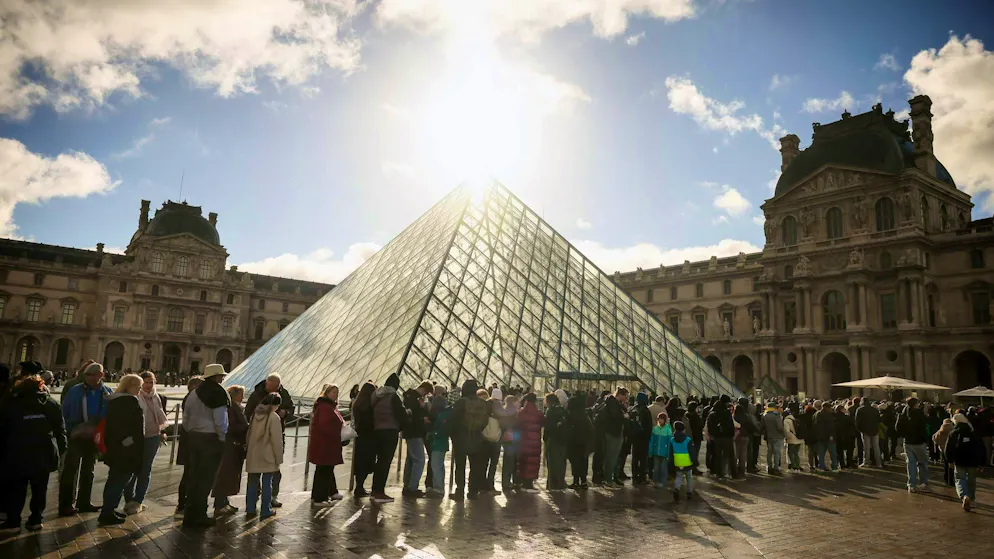
Around seven minutes. That’s all it took for one of the most spectacular robberies of recent years. Six months later, the most important piece of the case is still missing: Jewels worth an estimated 88 million euros from the Louvre.
Has some of the loot from the famous museum already been sold or melted down? Was there a client – or a fence structure in the background?
Contradictions in the case
Investigators initially had no shortage of clues after the robbery on October 19. One source spoke of a planned handover of the jewelry from the Second Empire in a hotel room. Another claimed that the perpetrators had wanted to flee in a small private plane from Lognes airport in the east of Paris. Speculation about possible Russian influence also made the rounds early on – but proved to be unfounded.
Additional confusion was caused by contradictory statements from the suspects. By the end of November, investigators had identified four alleged main perpetrators, who are now in custody. One of them has several previous convictions, including for aggravated pimping and receiving stolen goods.
One suspect initially stated that the loot had been taken from him immediately after the crime; he had been “manipulated” and did not know that it was from the Louvre. He later changed his statement and spoke of alleged “Slavic” clients. However, the investigators found no evidence of this.
A central lead?
According to information from investigators in theFrench daily newspaper “Le Parisien”, an internal security audit from 2018 is said to have played a decisive role. It is said to have described weaknesses in the museum’s security system in detail. It is unclear how the suspects obtained the document.
According to the newspaper, a simpler scenario is now emerging from the perspective of the judiciary: the coup could have been planned and executed entirely by the alleged perpetrators themselves.
Amateurs or professional gang?
In the early morning of October 19, the perpetrators struck at the Louvre – and disappeared again after just seven minutes. They entered the building via a window accessed by a lifting platform, broke open display cases in the Galerie d’Apollon and selectively removed jewelry from the collection of French queens and empresses.
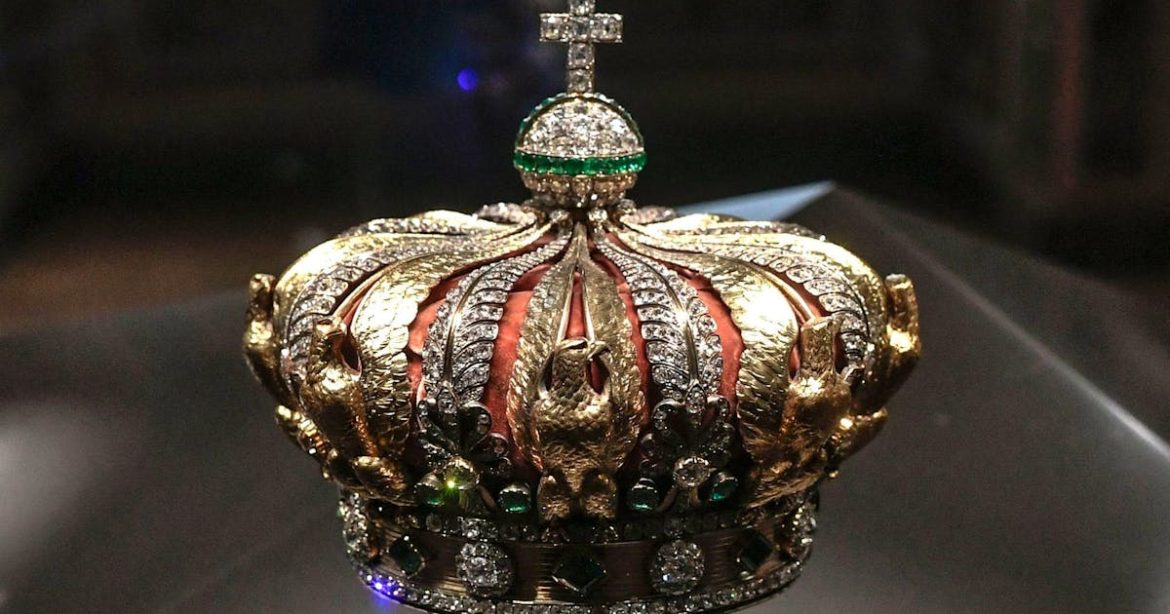
But the precise entry contrasts with the escape: a failed attempt to set fire to the getaway vehicle, numerous traces – and the crown of Empress Eugénie (1826-1920), wife of Napoleon III, which the perpetrators left behind near the museum. It was damaged but can be fully restored.
Paris prosecutor Laure Beccuau warned “Le Parisien” not to rush to judgment. She said that although the operation was often described as unprofessional, the perpetrators had in fact demonstrated coordination and efficiency.
Philippe Franchet, head of the unit specializing in organized crime in Versailles, also takes a differentiated view of the case. “I wouldn’t necessarily describe it as amateurish. There is no such thing as the perfect, ingenious coup,” he told the German Press Agency.
The open trail of the clients
If the coup was possibly planned and executed entirely by the alleged perpetrators themselves, one question remains unanswered: What role did the environment of the later exploitation play?
For Franchet, the crucial point lies less in the burglary itself than in what happens afterwards. Because even if there was no classic client structure behind the crime, the question arises as to how such loot reaches the market.
In many cases, it is not the perpetrators themselves who end up profiting, but the structures behind them. Fences organize the resale, have international contacts – and, in case of doubt, decide not to enter into a deal in the first place. “The more media coverage a case receives, the more likely it is that the loot will become a problem,” explained the police commissioner.
“Cursed jewelry”
In such cases, the scene speaks of “cursed jewelry”: too well-known, too risky, almost impossible to sell. This could be the case with the missing jewels from the museum.
Even a wealthy collector would do little to change this. Such pieces can neither be shown nor sold unchanged – their brilliance makes them valuable and at the same time unsaleable.
What has become of the jewels?
For Franchet, it is conceivable that the pieces of jewelry no longer exist in their original form – dismantled and melted down. “Melting gold is not a major technical challenge. With simple means, jewelry can be robbed of its shape and thus its origin.”
In his view, money laundering also plays a role. The traces of the case could get lost in financial systems for years – and only become visible again at a late stage. “Perhaps in 15 or 20 years, someone will still be caught in this case through very large money laundering movements.”
