
Your questions about retinol creams and serums answered
What is the best retinol cream or serum?
There is definitely something for everyone in this mix. If you’re at the start of your journey, then the Naturium retinaldehyde cream serum is a good choice. If money is tight, look to The Ordinary retinal 0.2% emulsion; I can’t overstate the effectiveness for the price.
However, if you’d prefer something a little bit more targeted to your own individual skin concerns, I can’t recommend Klira enough. The combination of a totally unique formula and tailored advice means you really can improve your overall skin health without having to see a dermatologist face-to-face.
How I tested retinol creams and serums
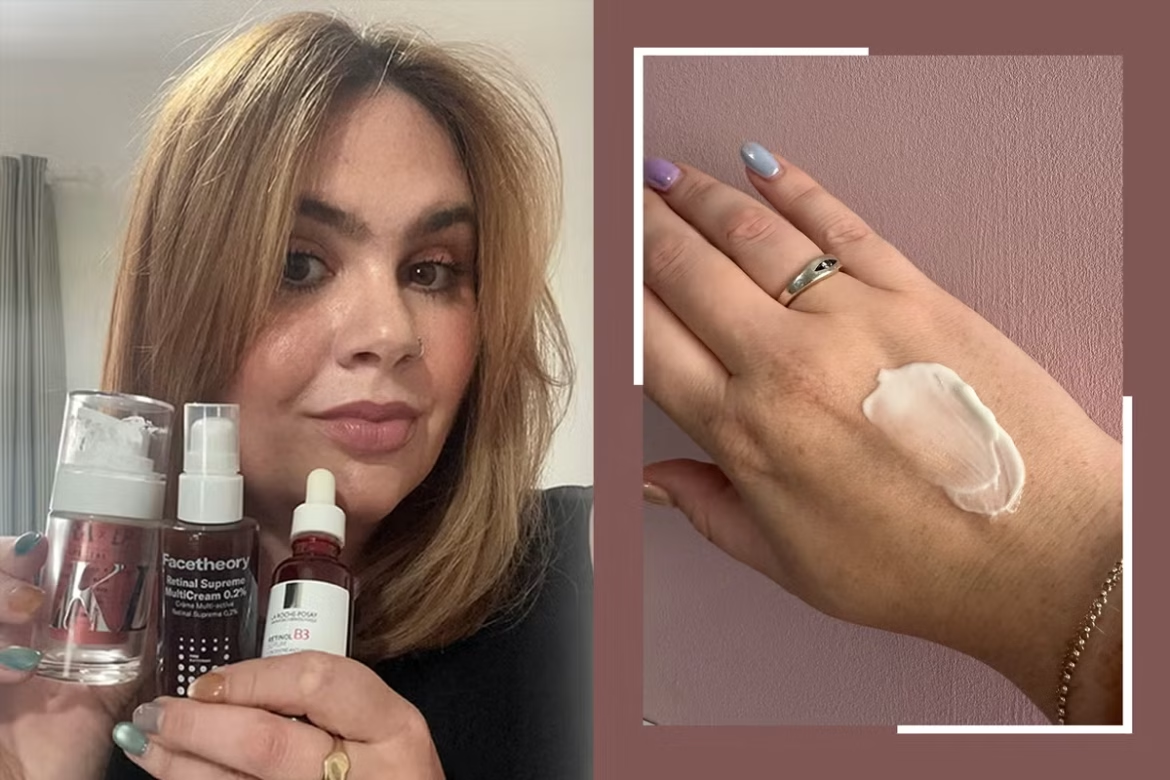
Each retinol serum was incorporated into my routine for a minimum of two weeks. I assessed each on its formula, texture, whether I noticed any early skin changes and value for money. Expanding on this, I assessed each product against the following specific criteria:
- Formula: I noted the potency of the retinol in the formula, whether the ingredients were suited to specific skincare concerns such as pigmentation, acne and fine lines and wrinkles, and I acknowledged which formulas were suitable for all skin types, including sensitive skin.
- Texture: I examined the consistency of the formula and whether it was lightweight on the skin, how quickly it absorbed, and whether it sat well with other skincare products and underneath make-up.
- Early skin changes: I assessed any immediate or early changes to the skin’s appearance, such as changes in texture, pigmentation and brightness. I noted any initial dryness or irritation.
- Value for money: I considered the price of the product and whether it felt fair and reflective of the ingredients contained, their potency, and the amount of product you get for your money.
What does retinol do to your skin?
Retinol is derived from vitamin A and works as an intense exfoliator for your skin. It can help reduce the appearance of fine lines and wrinkles as well as give your skin a plump, fresh look.
Can you use retinol in combination with other skincare products?
Generally, it’s a good rule of thumb not to mix retinol with vitamin C, benzoyl peroxide, and AHA/BHA acids. Some retinol products will include these ingredients in the product in order to make them safe for the skin. But it is certainly safe to mix with other skincare routine classics such as moisturising ingredients such as hyaluronic acid, as well as ceramides, and of course, SPF.
Does retinol help with acne?
Retinol can help with acne, but you should always check with a doctor or dermatologist where you can. Retinol can help acne by preventing clogged pores. However, retinol can be very harsh. When you first use a retinol, your skin will probably become worse before it gets better. This so-called “retinol purge” can cause redness, irritation, and peeling, so while it can help with acne, it won’t solve it immediately.
How do you introduce retinol to your routine?
If you’re curious, always remember that the key is to start low and slow, and always be both consistent and patient – visible results can take up to three months to see. Beginners should choose a low-strength product, applying it two or three times a week after a nighttime cleanse. It can be followed, or sandwiched between, a moisturiser, too. Over time, your skin will build tolerance, and it’s at that point that you can gradually increase both frequency and potency.
How do I apply retinol?
After a gentle cleanse, apply a pea-sized amount in a thin layer across your face, making sure to avoid the eye area and ensuring you don’t get it in your mouth, nose or eyes. Some dermatologists recommend the “sandwich method” for sensitive skin. Start with a layer of moisturiser, then apply the retinol, and then add another layer of moisturiser over the top to make the product slightly less intense on your skin.
How long does retinol take to have an effect?
If you’re looking for a speedy skin fix, then retinol is probably not for you, but it is certainly effective. Most users start to see results between three to six months, and the most noticeable results will happen at around six to 12 months.
What’s the difference between retinal and retinol?
Retinal and retinol are forms of vitamin A; both are retinoids. These products convert into active retinoic acid, which is what makes these products effective. Retinal is only one step away from its conversion into retinoic acid, unlike retinol, which takes longer. However, retinal is harder to stabilise, which is why retinals tend to be rarer and more expensive.
Hypothetically, this means retinal is faster and stronger. It should mean that it’s more effective, but also more likely to irritate your skin than retinol. However, it actually varies from brand to brand. Many retinals are sold as encapsulated formulas, so the active retinoic acid is eked out over the course of a day, making them less irritating.
Why you can trust IndyBest reviews
The Independent’s reviews section, the expert testers at IndyBest test a huge variety of beauty products as you would in your own home.
With more than a decade of experience under her belt, Lucy Partington is a well-versed and respected editor in the beauty industry. She’s covered everything from Medik8’s retinoate to The Ordinary’s retinal and, when it comes to the wider anti-ageing sphere, has tested her fair share of peptides and LED masks. For this review, Lucy selected retinol creams and serums for every skin type and budget.
Brighten your skin and soothe redness with the best vitamin C serums, tried and tested by a beauty editor
