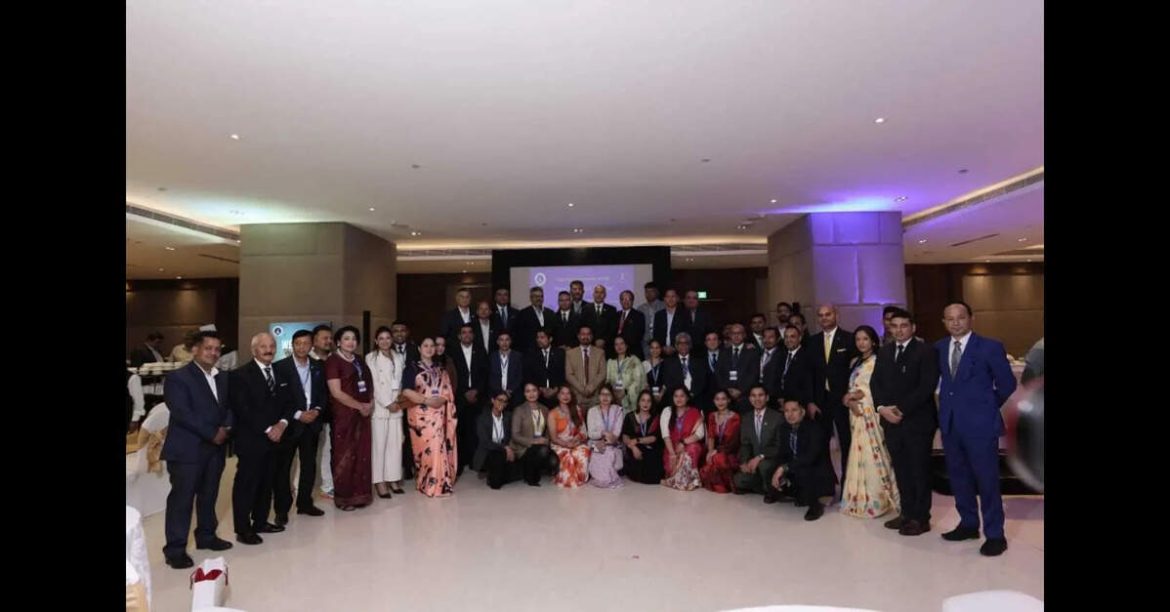
With a new government and a young leadership at the helm in Nepal, the tourism industry in the country is also taking a cue to steer the Himalayan nation’s tourism in a new direction. Making the first move, the Hotel Association of Nepal (HAN), has organised a two-day road show and B2B meet in Delhi this week, targeting the burgeoning Indian destination wedding market and the young Gen Z travellers, and to share the message how Nepal with its improving road connectivity and infrastructure and improved hotel infrastructure makes itself a compelling proposition for Indian travellers as international travel budgets are going through the roofs literally.
“A lot of new properties have come up close to the Indian border attracting a lot of Indian weddings and social events. The Middle East crisis has made air travel and international holidays expensive. Nepal is quite affordable, the climate is very good and hospitality is one of the best,” said Binayak Shah. He said that the Association has suggested “easing of rules and policies” for Indian wedding groups to the new leadership of the country. “Tourism is a priority area for the new government. They have a lot of new ideas and programmes for tourism,” he said.
Flagging a critical gap in outreach to young Indian travellers, Prabin B Panday, senior vice president of the Association, said Nepal is intensifying efforts to reposition itself as an experiential, adventure and trekking destination, particularly for India’s GenZ demographic, which remains largely untapped despite the country’s proximity and diverse offerings.
“Youngsters actually… have no idea about Nepal,” Panday said candidly, adding that even basic awareness about visa-free access remains low among Indian youth, underlining the need for stronger digital storytelling and influencer-led campaigns, as he noted that “we have not been able to communicate that particular group,” a gap HAN now plans to address through collaborations with social media creators and youth-focused marketing strategies.
The renewed push comes alongside a broader revival strategy driven by Nepal’s new political leadership following what Panday described as a “GenZ revolution,” with tourism identified as a priority sector, and the government already rolling out a 100-point agenda to accelerate economic growth, while working closely with industry bodies to strengthen global positioning and outreach.
At the same time, Nepal’s improving infrastructure is expected to play a key role in boosting arrivals from India, especially among young adventure seekers, with Panday highlighting that a new six-lane highway connecting the India border to Pokhara and further to Kathmandu is nearing completion, which will significantly cut travel time to “two to three hours” from the border, making road trips more convenient and affordable, while also opening up access to high-altitude destinations such as Mustang, Manang and Jomsom.
“Nepal is no more just three places… Kathmandu, Pokhara and Chitwan. Nepal is beyond this,” he said, pointing to the rapid expansion of tourism infrastructure across border regions, which are increasingly becoming hubs for destination weddings and leisure travel, especially among Indian families seeking accessible yet exotic venues.
Hospitality capacity has also expanded significantly, with more than 50 branded hotels either operational or in the pipeline, reflecting growing investor confidence and improved private sector participation, while enabling Nepal to cater to diverse segments, from luxury weddings to adventure tourism and wellness retreats.
Capitalising on this momentum, HAN has revived its India outreach after nearly three decades, organising a roadshow in Delhi—its first since the Visit Nepal 1998—to engage wedding planners, travel agents and tour operators, with Panday indicating that member hotels will roll out “special deals for Indians,” including bundled offers and incentives aimed at boosting destination weddings and group travel.
Looking ahead, Nepal is also aligning its positioning with emerging travel trends, with the government declaring 2027 as the Year of Wellness Tourism, a move that complements growing demand among young Indian travellers seeking escapes from urban stress, pollution and rising temperatures, while Panday stressed that Nepal’s climate, natural beauty and cultural diversity make it an ideal year-round destination.
However, he emphasised that unlocking this potential will depend on how effectively Nepal communicates its evolving identity, especially to digital-first travellers who “search their own… make their own rules,” making influencer marketing and social media engagement central to the next phase of growth, as the country looks to reclaim lost ground and emerge as a preferred short-haul destination for India’s new generation of travellers.