
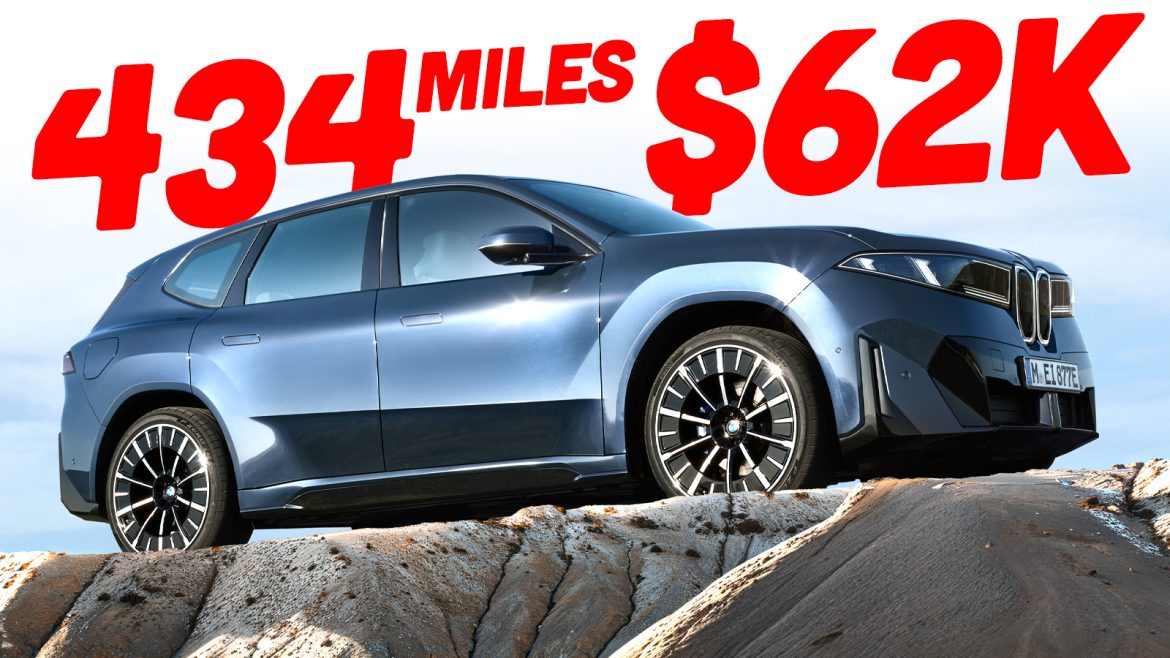
The iX3 is a really important car for BMW. Not only is it leading the charge for the company’s “Neue Klasse” design scheme, but it’s also the first vehicle to feature BMW’s sixth-generation electric drivetrain system, with new high-voltage batteries and an 800-volt architecture. Being a mainstream global product, it’s the German carmaker’s best shot at making serious inroads through the highly competitive EV market.
BMW’s just revealed final range numbers and a starting price for the iX3 in America, and going by these figures, I think the company is off to a good start. The iX3 50 xDrive will start at $62,850 including destination, and gets an official EPA-estimated range of 434 miles—the fourth highest range of any pure EV on sale in America today.


A starting price of over $62,000 might sound like a lot—and for many people it is—but in the grand scheme of EVs, it’s a pretty damn good price if range is a priority for you. The next highest-range vehicle, the Lucid Gravity, can travel 450 miles on a charge, but it starts at $81,550. Want more range than that? You can get a Silverado EV, but with the long-range battery pack and its 493 miles of range, you’re looking at around $78,000 out the door.

Even if you want to compromise a bit on range, you’ll still be spending more for some of the better performers out there. The Rivian R1T gets up to 420 miles on a charge, but the cheapest examples start at $74,885. Its SUV equivalent, the R1S, is slightly worse, with a starting price of $78,885 and a maximum range of 410 miles.
Here’s another way to look at this: dollars spent per mile. Simply divide the car’s price by its EPA-estimated range, and you get an idea of the value you’re getting for every dollar you spend (this isn’t a definitive ratio to live by, but it gives you a rough idea). With the iX3, that figure works out to $144 per mile. For the Gravity, that figure is $181 per mile. And for the R1T, that figure is $178 per mile. For the longest-range car on sale, the Lucid Air Grand Touring, the number is a whopping $219 per mile of range (higher is worse).
It’s only when you get to more budget-friendly options like the Tesla Model 3 or the Chevy Bolt that you get a dollars-spent-per-mile figure that’s actually lower than the BMW’s. The Model 3’s figure is $121 per mile, for example. But for its most direct competitors, the Mercedes-Benz GLC-Class EV and the Audi Q6 e-tron, the BMW blows those cars out of the water, either beating or matching them on price and handily outperforming them on range. The only car that you could argue comes close is the Tesla Model Y, though I don’t think that car can match the iX3 on creature comforts.
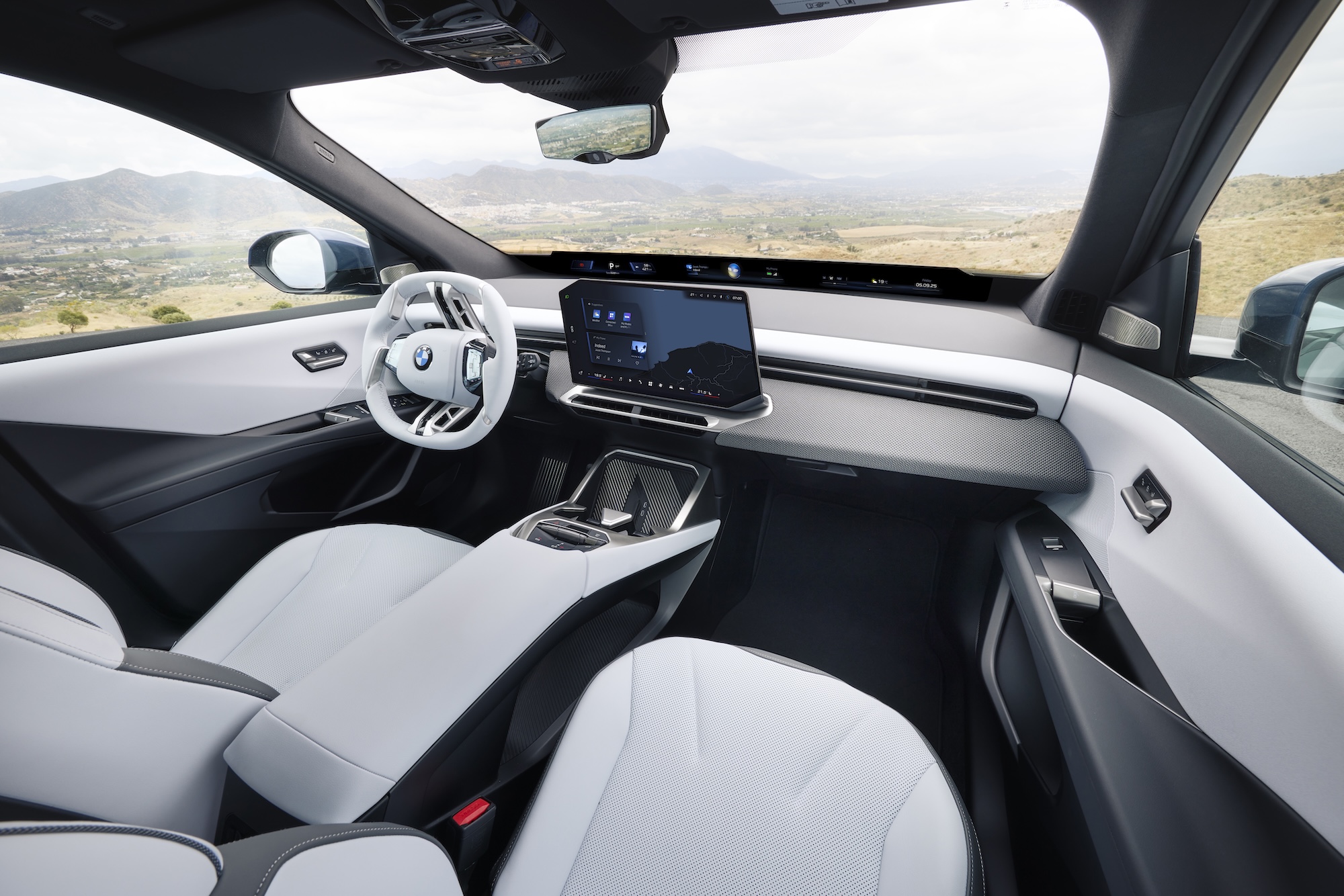
The iX3 isn’t some bare-bones, stripped-out box on wheels prioritized to save weight by cutting out features. It’s a real-deal electric X3 equivalent, with a massive head-up display spanning A pillar to A pillar acting as the instrument display, as well as a 17.9-inch infotainment screen that features wireless Apple CarPlay and Android Auto—something the Model Y doesn’t have. The Tesla also doesn’t have an 800-volt architecture, which means its max charging speed is limited to 250 kW. The BMW, meanwhile, can charge at up to 400 kW, able to recouperate 185 miles of range in just 10 minutes, or a 10-80 percent charge in 21 minutes—provided you can find a charging station that outputs a constant 400 kW, that is.
It’s also worth noting that the iX3’s range figures vary wildly depending on which wheels and tires you choose. And the tire that most people will choose, the 20-inch all-season, actually slices the most range from the EPA estimated numbers. Here’s the full chart:
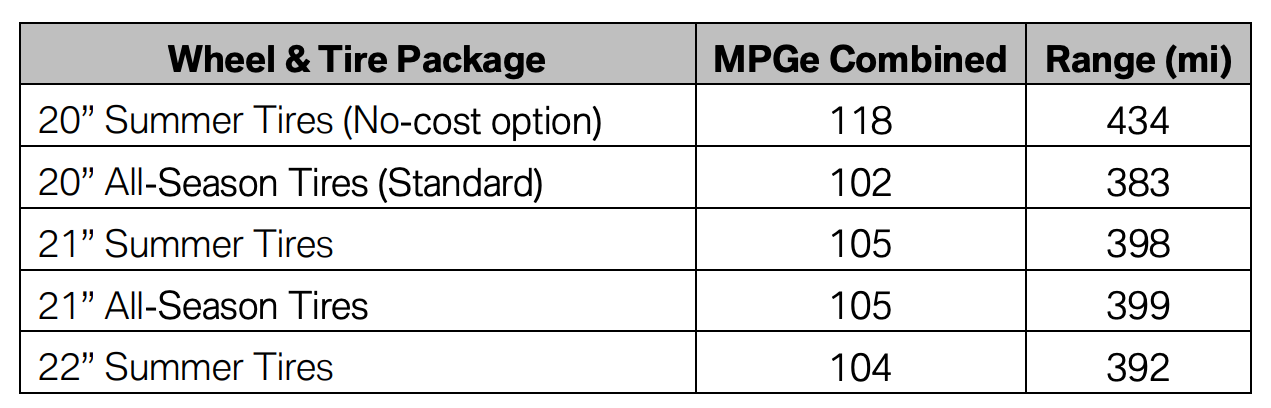
While this isn’t a problem if you live in a place where it doesn’t snow, customers in the Rust Belt might be pretty miffed to learn 11 percent of their range gets instantly deleted if we choose rubber we can actually use when there’s a bit of slush on the ground. It just goes to show how important tires are for efficiency.
Either way, I think the iX3 will be a hit. It’s already proving to be of interest to buyers even before production begins, with over 50,000 preorders for the car racked up as of March, according to BMW Blog. For U.S. buyers, you can build your car on BMW’s configurator right now and put down a $1,000 deposit before deliveries start in late September, in case you want to reserve your spot.
Top graphic image: BMW
