


GN Diamond: Where great prices lead to true partnerships. The diamond source that thousands of jewelers trust.

For this week’s Saturday Long Read, we speak with Marjorie Griffith, who for years was one of the top jewelry buyers at Home Shopping Network (now HSN).
Griffith started her career working in major department stores—including Hecht’s, Gfoxx, and Bambergers—before working at HSN for 18 years. She retired from the company in 2020.
In the wake of QVC’s bankruptcy filing, Griffith—who in 2012 was inducted into the Fashion and Accessories Benefit Ball Hall of Fame—discusses what made home shopping special, why jewelry became so important on the channels, and why she thinks QVC can still reinvent itself.

The Jewelry Wire: You originally worked in apparel and sportswear. How’d you get into jewelry?
Griffith: My introduction to jewelry came unexpectedly. A headhunter called about a buying position in budget jewelry at Bamberger’s. She asked me, “How do you think you can buy jewelry when your background is in apparel?
I said, “In any category, the merchant has to understand how customers buy.” To me, jewelry and apparel were not that different—one was fabric, the other was metal.
Customers either bought collections or basics. In apparel, if a woman loved Jones New York, she bought the ensemble. Jewelry worked the same way. If she loved a Monet or Napier piece, she bought the entire collection.
The same was true with basics. In apparel, women always needed staple pieces in black, beige, or brown. In jewelry, that meant pearl strands, pearl studs, gold hoops, button earrings, or classic drops—timeless pieces that belonged in every wardrobe. When I explained that, the executive paused and said, “I’ve never looked at it that way before, Marjorie.”
I got the job. That interview changed my career. It was the start of my reputation in jewelry, and it taught me something I carried throughout my career: understanding customer behavior matters more than understanding the product.
The Jewelry Wire: You spent years as a jewelry buyer at department stores before joining HSN in 2001. What made you go there?
Griffith: One of my competitors, the silver jewelry buyer at Macy’s, had already gone to HSN. She told me it was a buyer’s dream job. In department stores, buyers were constantly dealing with markdown support, vendor chargebacks, and coupon promotions.
When I interviewed with HSN and saw the concept firsthand, I thought, “This is the future of retailing.” What stood out was the relationship between the host and the customer. The host wasn’t just selling a product—they were educating, demonstrating, entertaining, and building trust. It was unlike anything I had experienced in traditional retail.
The host wasn’t just selling a product—they were educating, demonstrating, entertaining, and building trust. It was unlike anything I had experienced in traditional retail.
The Jewelry Wire: What was different about selling jewelry at HSN?
Griffith: In department stores, especially in jewelry, the biggest challenge was getting customers to see the merchandise. You could spend money on a newspaper ad, but the jewelry still sat in a locked case waiting for someone to ask about it.
Earlier in my career at Gimbel’s, before computers, I kept handwritten records tracking product performance. At HSN, everything changed. You knew within minutes whether a product resonated with customers. Sales happened in real time, so buyers could see what worked immediately and make faster, smarter decisions. That kind of feedback simply didn’t exist in traditional retail.
The Jewelry Wire: What did you think you contributed to HSN??
Griffith: The first thing I did was study QVC’s jewelry business. I wanted to understand where they were strongest and where there was room to grow.
At the time, QVC was very successful with gold jewelry and devoted every Saturday to sterling silver.
What I noticed was that colored gemstones weren’t getting the same attention.
Instead of competing head-to-head, I focused on transparent and opaque colored gemstones set in sterling silver. That became our point of difference and the foundation for growing HSN’s jewelry business
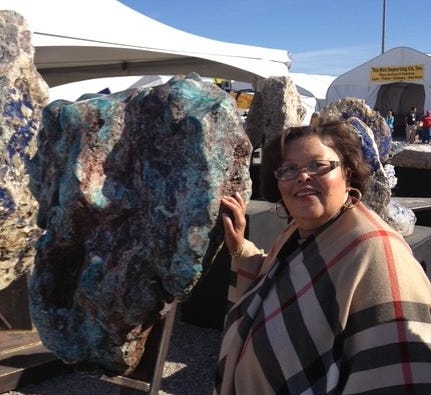
The Jewelry Wire: What always made HSN and QVC interesting is that there was an entertainment component.
Griffith: I realized early on that customers weren’t just buying jewelry—they were buying the experience behind it. A great example was Jay King and what became Mine Finds by Jay King. Originally, the brand was called Discovery in Gems.
Jay traveled all over the world searching for unusual gemstones. I told him customers needed to go on that journey with him. The stories he would tell me; they were really exciting.
I said, “You should tell the customers these things. I want to hear the birds chirping in the jungle. I want to see the jeep traveling through rough terrain. Then, at the end of the story, you open the box and reveal Today’s Special.” I had him become the Indiana Jones of jewelry.
When customers felt they had shared the adventure, they formed an emotional connection with the jewelry. They weren’t just buying a necklace—they were buying the story behind it. That approach made Mine Finds one of the top jewelry lines at HSN.
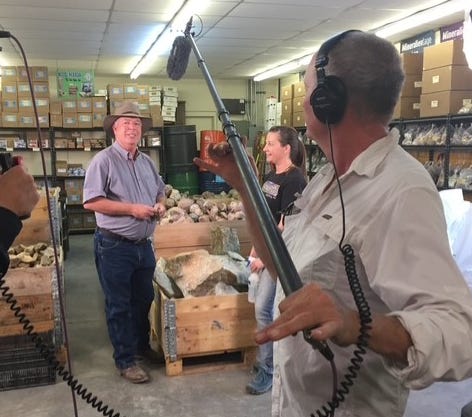
The Jewelry Wire: How important were the hosts?
Griffith: Customers developed real relationships with the hosts. They trusted them. I’ve often compared it to walking into a department store and working with your favorite personal shopper. If you trust that person, you’re much more likely to buy from them.
That trust mattered even more because customers couldn’t touch or try on the jewelry. They had to rely on the person presenting it.
I also think management made a mistake by eliminating live customer phone calls. Some believed they wasted airtime, but we consistently saw sales increase when customers shared their experiences live. Those testimonials built confidence for viewers at home.
Today they read customer texts on air, which is better than eliminating interaction altogether, but live calls had a special power.
The Jewelry Wire: Eventually, jewelry became less important at HSN. What changed?
Griffith: Jewelry had always been one of HSN’s strongest businesses, but over time management stopped understanding what made the category work.
Whenever a new category came along, airtime was taken from jewelry. Yet many of those newer categories never produced the margins or customer loyalty that jewelry did.
Another change was shortening jewelry programming. We used to sell jewelry in two-hour blocks. The first hour gave customers time to browse and learn; the second hour was when many made their purchase decisions. When programming was cut to one hour, it wasn’t as effective. Customers didn’t have enough time to connect with the products or the stories behind them.
The Jewelry Wire: In 2017, QVC and HSN merged. Do you think that should have happened?
Griffith: I don’t think either company was broken before the merger.
Each had its own loyal audience and merchandising philosophy, and I saw those differences as strengths.
The idea was that customers from one network would naturally shop the other, but the two businesses appealed to different audiences. QVC focused more heavily on national brands and appealed largely to middle-income families. HSN leaned into celebrity partnerships, familiar personalities like Susan Lucci and Suzanne Somers, and value-oriented price points. Those differences were advantages. I believe the merger diluted what made each brand unique.
The Jewelry Wire: Last year, HSN closed its St. Petersburg headquarters. Do you think that’s made a difference?
Griffith: When the St. Petersburg campus closed, HSN lost many experienced hosts who had spent years learning the jewelry business. Replacing them wasn’t easy. Many newer hosts didn’t have the same depth of jewelry knowledge, and it showed on air.
Jewelry isn’t just another product. Customers want someone who can explain why one gemstone is rare, why one setting is better than another, or why a piece is a good value. That knowledge builds confidence.

The Jewelry Wire: You have said that “influencers” are doing what HSN hosts used to do.
Griffith: At HSN, we didn’t call them influencers, but that’s exactly what our hosts were. Baby Boomers trusted those personalities completely, just as younger consumers trust creators on TikTok today.
The biggest difference is the platform. Today’s influencers have huge audiences, create their own product lines, and can reach millions of followers with one recommendation.
I give them a lot of credit. They figured out how to build brands around themselves and connect with customers in a very authentic way.
The Jewelry Wire: QVC is about to leave Chapter 11. Where do you think HSN and QVC need to go from here?
Griffith: I think both companies became too comfortable relying on their Baby Boomer audience and didn’t adapt quickly enough as younger consumers changed how they shop.
Today’s customer isn’t sitting in front of a television all day. She’s on TikTok, Instagram, YouTube, and other digital platforms.
From what I understand, QVC has started partnering with influencers and expanding on TikTok. I think that’s a smart move and a good way to reach a younger audience.
Retail is always evolving. Successful retailers have to stay ahead of where customers are going—not where they’ve been. You almost have to anticipate the next shift before your customers do.

The Jewelry Wire: Is there anything from your career you’re particularly proud of?
Griffith: I’m proud that we proved jewelry could be much more than a product on a screen.
My philosophy never changed. Success comes from understanding how customers think, what inspires them, and what gives them confidence to buy.
At HSN, we combined education, storytelling, entertainment, and trust. We didn’t just sell jewelry—we built brands and created experiences customers looked forward to.
Success comes from understanding how customers think, what inspires them, and what gives them confidence to buy.
The technology has changed, but the fundamentals of retail are the same. If you earn a customer’s trust, tell an authentic story, and deliver real value, they’ll come back again and again.
All photos courtesy of Marjorie Griffith unless otherwise indicated.
Jewelry marketing in the age of AI
The joys of being a female self-purchaser
Brands are everywhere. But not in the diamond industry. Why not?
How partners and family members in the jewelry business work together without killing each other
The luxury industry has lost millions of customers. Can it bounce back?
Exit interview with Ellen Fruchtman
Interview with De Beers CEO Al Cook (with questions from Jewelers Helping Jewelers)
How annoying “corporate speak” is ruining the jewelry industry
19 tips to keep your merchandise (and yourself) safe during trade shows
Exit interview with Dick Abbott, founder of The Edge for Jewelers
Why Mejuri and gorjana are winning younger shoppers—and other jewelers aren’t
Lab-grown diamonds: what consumers want to know
Just what is a Desert Diamond?
Five reasons for Charles & Colvard’s bankruptcy
Why synthetic colored stones are viewed differently than synthetic diamonds
