
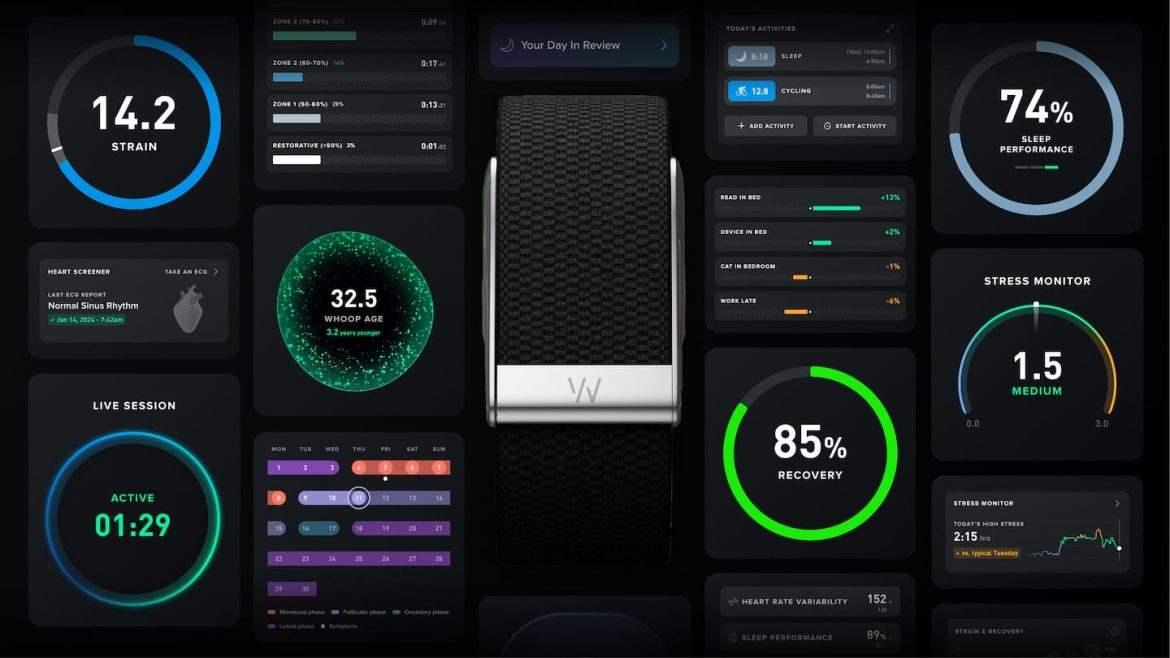
In January, FDA updated its guidance on general wellness products to include those that provide information about blood pressure, provided they are not intended to treat and diagnose disease. To avoid being classified as medical devices, these products also must meet other criteria, including that they be non-invasive and that they “do not include values that mimic those used clinically unless validated.”
Though the agency’s guidance was broadly viewed as a victory for Whoop, the company still has not resolved the warning letter.
“We’ve had a lot of really productive conversations with the FDA,” said Alex Vannoni, head of health care products at Whoop, during STAT’s Breakthrough Summit West on Tuesday. He said the company has shared the validation studies it did before releasing the feature.
The dispute between FDA and Whoop turned up the heat in a simmering debate about how the agency ought to oversee low-risk products. Proponents of deregulation argue that the time and expense required for FDA authorization impede innovation and that FDA review is unnecessary to ensure the safety of many products that potentially benefit consumers.
Vannoni said there’s evidence the feature is already having an impact in alerting people of their high blood pressure. Before using the feature, users must calibrate it by inputting readings from a blood pressure cuff. Vannoni said that 40% of users who believe they have healthy blood pressure report readings that are elevated or hypertensive.
“If nothing else, there’s a public health benefit there,” he said, adding, “Just with the calibration itself, we’re giving people insight that they might otherwise not have, and then they get a daily estimate where they can continue to monitor how their blood pressure changes are affecting their sleep and their exercise and their recovery.”
Asked about concerns that cuffless blood pressure measurements are not reliable, Vannoni said he believes the Whoop feature is “highly accurate.”
Ricky Bloomfield, chief medical officer of smart ring maker Oura, said the FDA general wellness update was necessary, because technology has evolved significantly from when the initial guidance was released in 2019.
The 21st Century Cures Act passed in 2016 specified that the definition of a medical device does not include products intended “for maintaining or encouraging a healthy lifestyle and is unrelated to the diagnosis, cure, mitigation, prevention, or treatment of a disease or condition.” The general wellness guidance is an FDA interpretation of that language.
Just before the FDA updated its guidance, Oura released a proposal for a separate regulatory pathway for “digital health screeners” that alert users of possible medical conditions. This would allow companies to be more specific about guiding users toward actions to confirm a diagnosis.
Bloomfield said the FDA took an important step in January by allowing wellness products to provide notifications that physiological measurements suggest a potential abnormality. But manufacturers can’t specify what the medical concern might be.
“We’re in this weird world right now, where you can do most of it, but at a subpar user experience,” he said. Going any further would require a change in the law.
The Oura and Whoop executives also discussed new offerings from both companies that test for dozens of biomarkers, possibly several times a year. There’s been pushback to such expansive testing without systematic evidence of its value. Bloomfield said the company was deliberate about which tests to include.
“There are lots of tests you could recommend people get that you don’t really do anything about,” he said. While some tests can be helpful in specific scenarios, they are not useful at a population level, “so you have to approach it from an evidence-based perspective to make sure you’re doing the right thing, especially when you offer it to anyone.”
He said Oura has not offered preventive body scanning to users precisely because there’s no evidence of the benefit to patients. The American College of Radiology does not recommend the practice.
Bloomfield said that when he joined Oura a year ago, he set about building a team to research clinical outcomes related to its products.
“If we’re going to be serious about this, if we really want to know how we’re improving health, we have to measure it,” he said. The team is currently putting together studies that Bloomfield hopes will demonstrate outcomes within a year or two.
“No matter what you learn, whether you learn that it helps or whether you learn that it doesn’t, either way that’s useful information to help you either double down on the things that work and stop doing the things that don’t work,” he said. “Because there’s actually harm in continuing to do something that you don’t know is useful, and people think that it might be … they could be spending their energy doing something else.”
