
The answer, in a word, is “culture”, a catch-all for anything not considered economic. We can be much more specific. When the television was introduced in Brazil, it was found that fertility rates fell. But it was not the existence of the all-consuming box in the corner in itself that made a difference. Careful study showed that people really started to reduce their family sizes when soap operas were introduced.
Glamorous women wearing designer clothes in stylish apartments, beautifully groomed men driving expensive cars: while such lifestyles were well out of the reach of the vast majority, suddenly there was something very visible and imaginable to aspire to. But nothing close to such a lifestyle was compatible with having six or seven children.
Urban life had for a long time been associated with smaller family size, but now the urban and urbane were within the reach of anyone with a television signal, and that meant just about anyone. Brazil’s fertility rate has been below replacement level for a generation and today is not that different from Britain’s.
As technology changes and advances, so its impact on behaviour develops, but when it comes to childbearing and family formation, it is all, unfortunately, in the same direction.
A recent piece of work by the estimable John Burns-Murdoch at the Financial Times shows a striking fall in births precisely as the smartphone was introduced, in countries as different as Australia and Egypt.
The data alone does not show exactly how the smartphone acts to depress fertility but we can certainly speculate. Perhaps increased self-absorption and habitation of a virtual world has reduced the social – and sexual – interaction necessary for the next generation to be created.
And just as social media polarise political views in general, so they polarise them specifically among the young by gender, further undermining the natural and historically normal coming together of young women and young men.
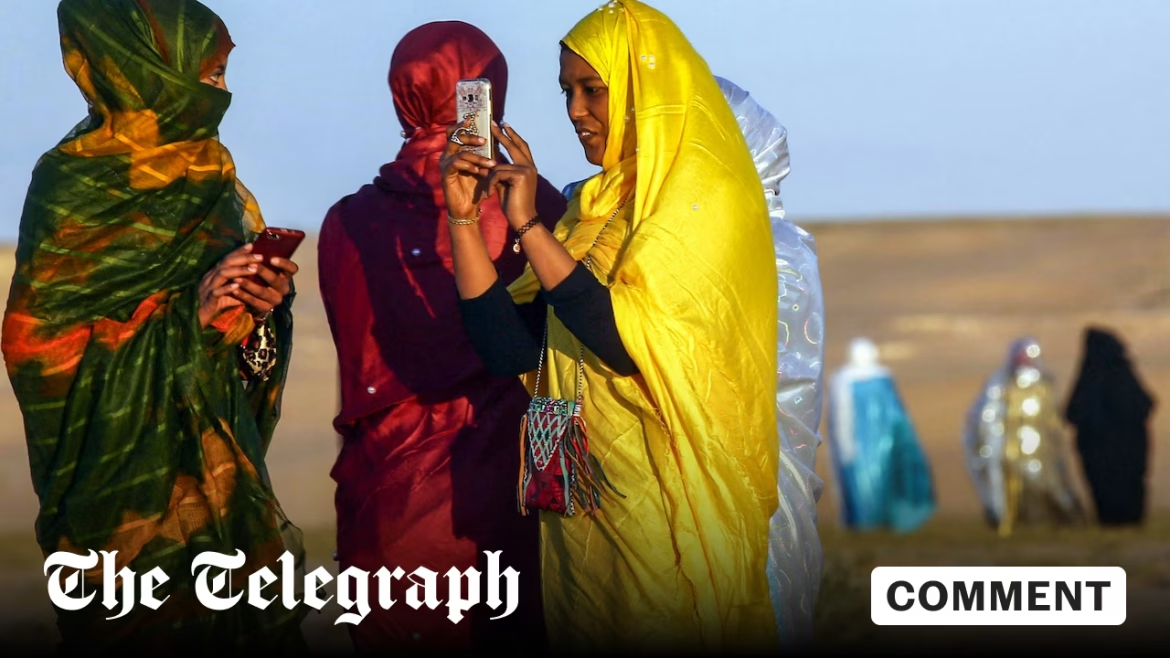
Like the Brazilian soap operas but more so, the smartphone makes its sudden appearance in the remotest villages more or less at the same time as in the big cities, and in developing countries at the same time as the rich.
That is why we have seen its powerful impact among the rural and urban, poor and rich, at the same time. The infrastructure is no barrier. On a recent visit to Chile, I was astonished at how good the connectivity was in the most far-flung locations – better than in much of London!
