
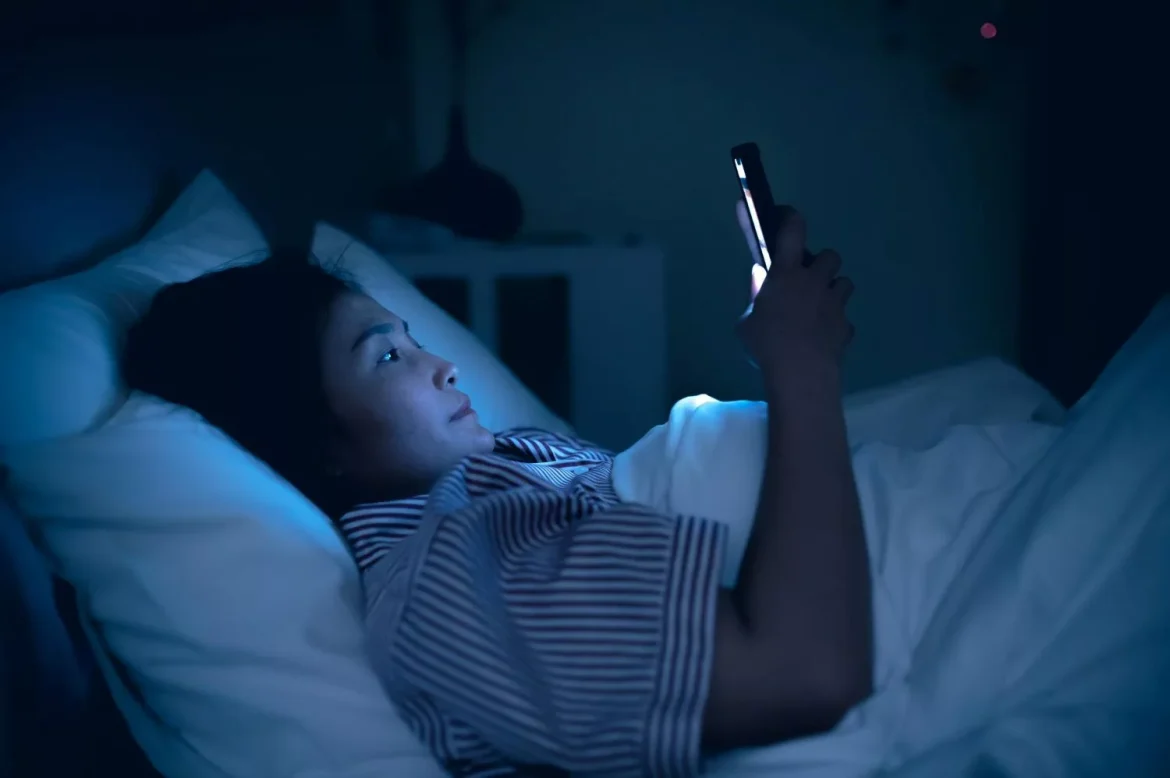
Nighttime media use becomes like dominoes; once the first one tips, the rest keep falling. Scrolling before bed doesn’t just steal sleep in that moment; it can spark a cycle where the phone calls you back again later in the night.
Researchers wanted to test this ‘usage begets usage’ idea: does picking up your smartphone before bedtime make you more likely to reach for it again after midnight?
To find out, they tracked real smartphone activity in a large, diverse group of teens across the country. The results showed that bedtime scrolling wasn’t just harmless winding down; it predicted a greater chance of late-night wake-ups with more screen time.
The study shows that late-night phone time is independently and strongly associated with later bedtimes, which in turn is correlated with a shorter time asleep for adolescents. Researchers noted that even small increases in smartphone use before sleep had measurable effects.
In particular, when teens spent an extra 20 minutes on their phones right before bed, they logged an additional 8 to 9 minutes of smartphone use between midnight and morning. Adolescents who scrolled for 20 minutes before sleep spend, on average, 37 to 41 minutes awake late at night using their phones.
Participants committed an average of 46 minutes to the smartphone during those late-night hours, the minutes that could have been invested in recovery sleep, throughout the study.
“On evenings when adolescents used their smartphone more before bed, they used it for a longer time later that night, potentially leading to later bedtimes and greater sleep disruption,” said lead author Gina Marie Mathew, senior post-doctoral associate in biobehavioral health at Stony Brook University. “Limiting smartphone use before bed may help reduce nighttime phone use and thereby improve sleep among teens.”
According to the American Academy of Sleep Medicine, teenagers aged 13 to 18 should get an average of 8 to 10 hours of sleep every day for optimal physical development, cognitive function, and emotional well-being. Also, this study strongly supports the AASM recommendation to stop using electronics 30 to 60 minutes before bed.
The research recruited 230 adolescents across the U.S., each of whom owned or primarily used a personal smartphone (46% female, 47% male, 7% other). Participants completed surveys on demographics and sleep timing, then installed RealityMeter, an app that passively tracked their smartphone use for about 17 days.
Passive tracking provided the researchers with a more accurate measure of screen time than self-reported data, which tends to underestimate actual usage.
“Using passively measured, objective smartphone data allowed us to examine these associations at the within-person, nightly level, providing a granular look at how pre-bedtime phone use predicts additional late-night use in adolescents’ daily lives,” Mathew explained.
The findings highlight a cycle: bedtime scrolling primes late-night wake-ups, which in turn erode sleep quality. For teens already juggling school, social life, and stress, this digital domino effect could have lasting consequences.
The message is clear: the glow of the screen before bed doesn’t fade; it lingers into the night, stealing minutes of rest that add up over time.
Journal Reference:
- Gina Mathew , Issac Rodriguez , David Reichenberger , Dimitri Christakis , Lauren Hale. 0242 Pre-Bedtime Smartphone Use Predicts Higher Within-Person Likelihood of Late-Night Smartphone Use Among Adolescents: The SBU MEDiA Study. Sleep. DOI: 10.1093/sleep/zsag091.0242
