
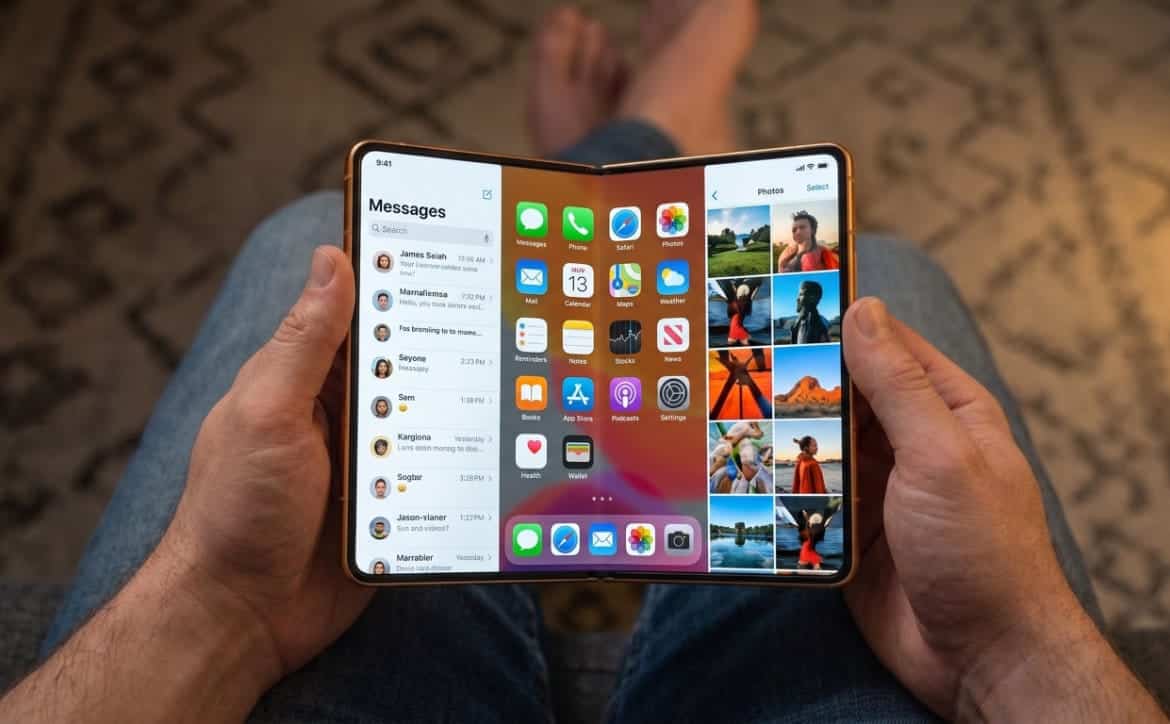
The smartphone industry has reached a point of peak stagnation. Enter the foldable smartphone. For the better part of a decade, we have been living in the era of the glass slab: a design philosophy that has been refined to its absolute limit. When every new flagship release focuses on slightly faster silicon or a marginally better camera sensor, the hardware itself begins to feel like a solved problem.
Estimated reading time: 6 minutes
However, the rise of foldable smartphone technology represents the first genuine disruption to this cycle since the original iPhone. Whether it is the refinement of the Samsung Galaxy Z Fold7, the nostalgia-fueled innovation of the Motorola Razr (and now the Razr Fold), or the looming shadow of the 2026 iPhone Fold, the message is clear: the foldable smartphone is not a niche experiment. They are the inevitable future of mobile computing.
I have been bullish on this category since the first clumsy prototypes hit the lab, and my conviction has only grown as the engineering has caught up to the vision. This is not a gimmick that will fade like 3D televisions or modular phones. Though, I admit, I could be totally wrong. It is a fundamental shift in how we interact with our digital lives. Here are six reasons why the foldable smartphone revolution is just getting started.
Editor’s Note: Some images in this editorial were created with artificial intelligence.
The Foldable Smartphone May Be the Future

1. Explosive Market Momentum
While the traditional smartphone market struggles with flat growth and longer upgrade cycles, the foldable segment is operating on a different trajectory. According to recent forecasts from IDC, foldable smartphone shipments are projected to see a massive 30 percent year-over-year growth in 2026. This isn’t just a flash in the pan; the category is expected to maintain a compound annual growth rate of approximately 17 percent through 2029.
In an industry where a 2 percent gain is considered a victory for standard flagship phones, these numbers represent a massive migration of consumer interest. The introduction of triple-fold devices, like the Samsung Galaxy Z Trifold, is pushing the boundaries even further, proving that there is plenty of room for innovation beyond the standard book-style fold.
2. The Apple Validation Catalyst
Historically, like it or not, a product category is not truly “mainstream” until Apple decides to enter the arena. We saw it with tablets, we saw it with smartwatches, and we are about to see it with foldables. The anticipated launch of the first foldable iPhone in 2026 is widely seen as the tipping point for the entire industry.
Analysts are already predicting that Apple could capture over 22 percent of the unit share and a staggering 34 percent of the value share in its debut year alone. When Apple moves, the entire ecosystem follows:
- Supply Chain Investment: Component manufacturers will pour billions into foldable display and hinge R&D to meet Apple’s strict quality standards.
- App Optimization: Developers who previously ignored foldable layouts will finally optimize their software for variable screen sizes.
- Mainstream Awareness: The “iPhone Fold” will move foldables from a tech-enthusiast curiosity to a must-have fashion and productivity status symbol for the general public.
3. The Ultimate Convergence Device
The primary value proposition of a foldable smartphone is deceptively simple: it offers the utility of a tablet with the portability of a phone. In a world where we are increasingly mobile, the friction of carrying multiple devices is a genuine pain point. A device like the Z Fold7 allows you to handle a quick email on the outer screen while walking to a meeting, then unfold into an 8.0-inch canvas for deep work, media consumption, or intensive gaming.
This adaptability addresses the consumer’s insatiable desire for bigger screens without making the device impossible to fit in a pocket. For professionals who live in spreadsheets or creative types who need a larger viewfinder for mobile editing, the ability to summon a tablet out of thin air is a game-changer. It is the first time since the “Phablet” era that the physical dimensions of our devices have evolved to match our data-heavy lifestyles.

4. Engineering the Impossible: Durability and Design
The “fragility” argument is quickly becoming a relic of the past. The leap in engineering from the first-generation foldables to the current crop of devices is nothing short of miraculous. We are now seeing hinges rated for hundreds of thousands of folds, which is far beyond the expected lifespan of the average smartphone.
The Evolution of Foldable Hardware
| Feature | Early Foldables | Modern Standards (2026) |
| Hinge Longevity | ~50,000 folds | 300,000+ folds |
| Display Material | Fragile plastic | Ultra-Thin Glass (UTG) with high scratch resistance |
| Water Resistance | None | IPX8 or better |
| Crease Visibility | Prominent “valley” | Nearly invisible in standard viewing angles and improving |
As devices get thinner and lighter, the “bulkiness” trade-off is disappearing. We are entering an era where a folded Z Fold7 is barely thicker than a standard smartphone in a protective case, removing the last physical barrier to entry for many users.
5. The Shift in Consumer Psychology
We are witnessing a transition where foldables are moving from “cool tech” to “essential utility.” As manufacturing yields improve and prices gradually decrease, more affordable models are emerging to capture the mid-to-high-end market. The novelty factor still provides a sense of status and excitement, but the long-term trend is driven by genuine productivity gains.
In a stagnating market, consumers are looking for a reason to be excited about their next upgrade. The foldable smartphone offers that “wow” factor that hasn’t been felt in the mobile space since the transition from physical keyboards to touchscreens. They represent the next logical step in mobile design, providing a level of multitasking that a static slab simply cannot replicate.
6. The Economic Engine of Innovation
From a business perspective, the foldable smartphone is a gold mine for manufacturers. They command high Average Selling Prices (ASPs), often reaching three times the cost of a standard smartphone. This premium pricing creates a virtuous cycle of innovation:
- Profitability: Higher margins provide the capital necessary for aggressive R&D into next-generation displays and materials.
- Carrier Support: Mobile carriers are heavily incentivized to push foldables because they drive higher revenue and encourage users to stay on premium data plans for media consumption.
- Supply Chain Maturity: The massive investment from brands like Samsung, Motorola, and soon Apple ensures that the technology becomes cheaper and better at an accelerated pace.
The Final Verdict

The foldable smartphone is not a fad; it is the culmination of our desire for a truly versatile computing device. We are moving away from the era of “one screen fits all” and into a future where our hardware adapts to our environment. As the 2026 iPhone Fold joins the ranks of the Samsung and Motorola powerhouses, the “niche” label will finally be stripped away for good. The traditional candy-bar smartphone isn’t going anywhere, but the future is flexible, and it is already unfolding right in front of us.
In some of our articles and especially in our reviews, you will find Amazon or other affiliate links. As Amazon Associates, we earn from qualifying purchases. Any other purchases you make through these links often result in a small amount being earned for the site and/or our writers. Techaeris often covers brand press releases. Doing this does not constitute an endorsement of any product or service by Techaeris. We provide the press release information for our audience to be informed and make their own decision on a purchase or not. Only our reviews are an endorsement or lack thereof. For more information, you can read our full disclaimer.
