
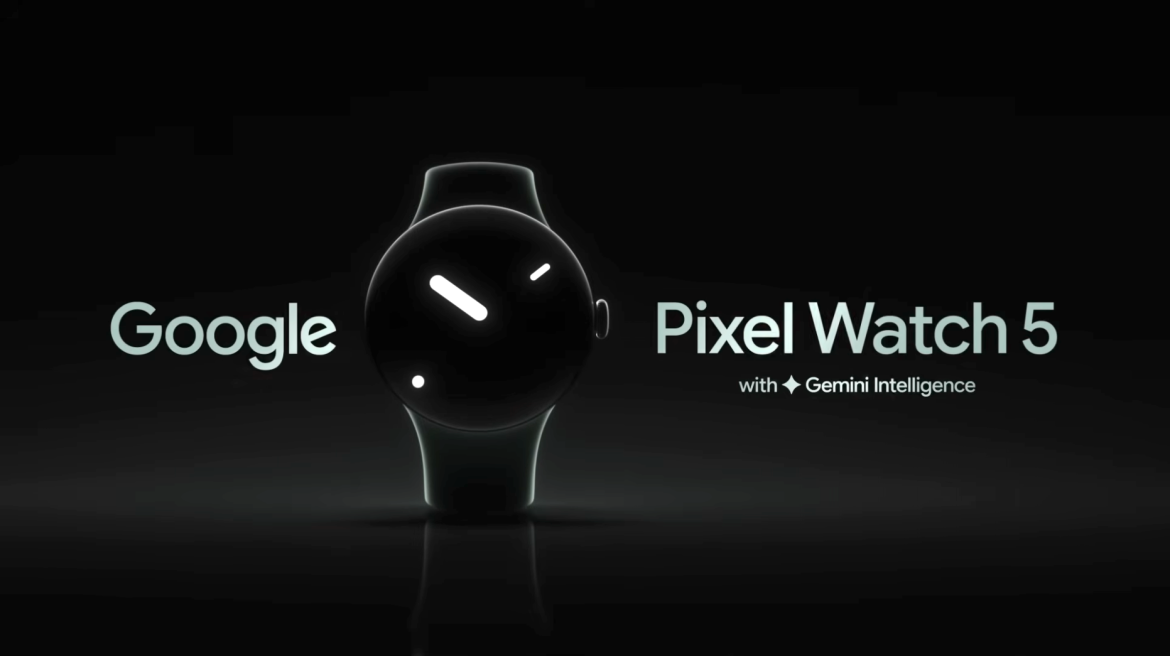

Google has announced the Pixel Watch 5 today, August 12, and for the 115.2 million adults with prediabetes — 8 in 10 of whom don’t know they have it — the watch’s headline feature may be more consequential than any smartwatch announcement in recent memory: a monthly insulin resistance trend report delivered from a wrist sensor, no blood draw required. Backed by a Nature-published research study this March, the Pixel Watch 5’s Health Guardian suite also brings cloud-corrected GPS that independent reviewer DC Rainmaker — who traveled to New York City specifically to break the watch — compares in magnitude to Garmin’s introduction of multi-band GNSS on the Fenix 7. Pre-orders opened this morning at $399; general availability begins August 20. The formal Made by Google 2026 keynote is scheduled for 6 PM ET tonight.
Health Guardian: What Wrist-Based Insulin Resistance Monitoring Actually Means
The central question every metabolically at-risk reader should ask about the Pixel Watch 5’s Health Guardian is not whether the feature sounds impressive — it sounds extraordinary — but what it actually does, and how well it works without the component that made the research behind it tick.
Google is not claiming the Pixel Watch 5 can measure blood sugar. What it claims is that the watch can track “insulin resistance trends” — a monthly signal derived from your heart rhythm, sleep quality, physical activity patterns, skin temperature, and accelerometer data, all processed through an AI model. Insulin resistance, as defined clinically, is the condition in which cells stop responding effectively to insulin, forcing the pancreas to work harder to maintain normal blood sugar levels. If left unaddressed, it is the primary pathway to type 2 diabetes. Catching it early, when lifestyle interventions (exercise, weight loss, dietary change) can reverse it, is the entire public health argument for this feature.
The scientific grounding is real. In March 2026, Google Research published the WEAR-ME study in Nature — authored by Ahmed A. Metwally, Conor Heneghan, Shwetak Patel, David B. Savage of Cambridge’s Institute of Metabolic Science, and colleagues at Google Research — showing that wearable and blood data could predict insulin resistance with an auROC of 0.80, sensitivity of 76%, and specificity of 84%. That study enrolled 1,165 participants — the largest and most geographically diverse dataset assembled for wearable-based insulin resistance research — and partnered with Quest Diagnostics for in-person blood biomarker collection.
Here is where the honest caveat belongs: the research model combined wearable sensor data with routine blood biomarkers. The consumer Health Guardian feature uses wearable sensors alone, omitting the blood biomarker component. Google has not publicly disclosed the accuracy figures for the sensor-only version that consumers will receive. The gap between a research model validated against HOMA-IR lab measurements and a consumer product that estimates the same signal from a wrist is exactly the gap that regulators and clinicians will be watching closely. DC Rainmaker, who covered the GPS features in exhaustive independent testing, noted in his Pixel Watch 5 hands-on that he remains somewhat skeptical overall of the health features, comparing the approach to how Whoop has pushed wearable health monitoring with “very little medical certification or backing.”
Google’s own language is careful and appropriate: the features are described explicitly as wellness tools, not diagnostic instruments, and are not a substitute for clinical advice. The FDA’s 2026 wellness device guidance — which Commissioner Marty Makary announced at CES 2026 specifically to “get out of the way” as a regulator for low-risk wearable innovation — explicitly covers noninvasive wrist-worn monitors like Health Guardian under its wellness-device exemption.
What users receive is a monthly summary, not a continuous reading, and the appropriate use is treating a worsening trend as a signal to schedule a blood draw — not as a clinical measurement in itself. For the majority of Americans who will not schedule a lab visit unless something prompts them to, a wrist-derived early warning may be exactly sufficient to drive the action that prevents a prediabetes diagnosis from progressing to type 2 diabetes.
Blood Pressure Trends and Sleep Breathing Quality
The Pixel Watch 5’s Health Guardian umbrella includes two additional monthly trend reports arriving alongside insulin resistance this fall. Blood pressure trends are estimated from pulse wave and motion data — not a cuff, and not calibrated against one, which distinguishes Google’s implementation from Samsung’s cuffless blood pressure approach that requires periodic cuff-based calibration. Sleep breathing quality trends round out the trio, monitoring for changes associated with respiratory strain during sleep.
Both features are designed to surface the kind of gradual shifts that a single doctor’s office reading typically misses. Google frames all three Health Guardian reports as pattern-detection tools, not clinical measurements — a framing consistent with the FDA 2026 General Wellness exemption and with the evidence base available for current-generation wearable sensors.
All three Health Guardian monthly reports will arrive on the Pixel Watch 3, 4, and 5 as well as the new Google Fitbit Air, later this fall.
Breathing Emergency Detection: An Industry First That Won’t Work in the US Yet
The sharpest new safety feature in the Pixel Watch 5 is Breathing Emergency Detection — and it is also the one that American buyers cannot use yet.
Powered by PPG (photoplethysmography), accelerometer, and barometer sensors, plus an on-device AI model, the watch continuously monitors for persistent, critical drops in blood oxygen saturation. When such a drop is detected and the wearer is unresponsive, the sequence is: vibration and full-screen alert first, then an audible signal, then a 30-second countdown, then an automatic call to emergency services with exact location transmitted. The target scenarios are drug toxicity accidents, severe pneumonia, and choking — events where the window between symptom onset and irreversible harm can be measured in minutes.
The feature launches immediately — but only in Europe. It has not yet received FDA clearance, and US availability requires completing that regulatory process. This is the correct regulatory path for a feature that could trigger emergency services calls; the FDA’s 2026 General Wellness guidance exemption specifically does not extend to features intended to diagnose or respond to acute medical events. American users should watch for FDA clearance news before expecting this capability.
Does Pixel Watch 5 Actually Have the Best GPS on the Market?
Before any health feature, the question every athlete and runner considering the Pixel Watch 5 will have is whether the GPS claim holds up to independent scrutiny. The answer, from the most rigorous independent test run on launch day, is a qualified yes — with specific and documented limits.
Ray Maker of DC Rainmaker flew to New York City — a city he describes as “arguably the most difficult GPS location on earth” — and spent hours running, cycling, and walking specifically to break the watch. He tested against Garmin and Apple — specifically the Garmin Fenix 8 Pro and Apple Watch Ultra 3 — in New York City’s dense high-rise corridors.
How Google Corrects GPS Signals That Bounce Off Buildings
The technical mechanism behind the GPS improvement is worth understanding, because it is architecturally different from what Garmin and Apple do — and that difference explains both its strength and its limit.
GPS watches fail in urban canyons for two reasons. The first is satellite occlusion: tall buildings block the watch’s line of sight to satellites, reducing the number of signals available. The second, and more damaging, is multipath error: satellite signals reflect off glass and metal facades, arriving at the watch via a bounced path that is longer than the direct path. The watch interprets the reflected signal as if it traveled directly, producing a pseudorange error that can place the wearer inside a building or on the wrong side of the street.
Standard approaches — multi-constellation GNSS (the Pixel Watch 5 tracks GPS, Galileo, GLONASS, BeiDou, and QZSS simultaneously), multi-band reception, and on-device sensor fusion with the accelerometer and gyroscope — all help, but hit a ceiling regardless, especially in extreme urban environments.
Google’s approach adds three layers of cloud-based post-processing that competitors do not have access to:
First, it uses Google’s global 3D building model database — the same data that powers Google Earth — to determine whether each satellite’s signal could have arrived directly at the watch’s known location, or must have been reflected by a building. Satellites whose signals were almost certainly reflected are deprioritized or excluded from the position calculation.
Second, it applies DGNSS (Differential GNSS) corrections from Google’s global network of GPS reference stations, which measure real-time atmospheric conditions — cloud cover, precipitation, ionospheric disturbance — and apply those corrections to the workout file.
Third, the corrected satellite selection and atmospheric data are fused with the on-device sensor data (accelerometer, gyroscope, barometer) and reprocessed server-side. The watch compresses raw GPS data during a workout and transmits it to Google’s servers, where the full correction pipeline runs. The final corrected route appears in the Google Health app.
Google verified its accuracy claims by equipping testers with centimeter-level reference backpacks and sending them across 4,000 miles in multiple cities and countries. In a July 2026 internal GPS study, comparing against the Apple Watch Ultra 3 and Garmin Fenix 8 Pro across sessions lasting three hours or less in challenging urban environments, Google found the Pixel Watch 5 is twice as accurate by mean track-point distance from ground truth.
DC Rainmaker independently confirmed the general picture, block by block. In Times Square, while running a tight loop around a building in the center, Google led all three watches tested while Garmin “gives the 4yo toddler version” and Apple “just makes a mark across the building.” For a deliberate test under a highway overpass with no visible sky, all three watches performed creditably. For an intentional detour through an underpass and cross-street loop designed to fool snapping algorithms, “Google absolutely nailed this” while Apple decided the route wasn’t plausible and ignored it entirely.
The Pixel Watch 5 is not perfect. In a handful of blocks, Apple’s snapping algorithm placed the track more accurately. In one bridge section, Apple correctly placed the route in the bike lane while Google had the wearer on the train lines below. But the overall pattern, across hours of testing, led Maker to conclude the GPS improvement is a generational leap for urban accuracy, comparable in significance to Garmin’s introduction of multi-band GNSS on the Fenix 7 devices three to four years ago.
One critical limitation: the GPS correction applies to pedestrian and cycling activities only. Open water swimming and other sport modes are not improved. Speed and pace during a workout remain uncorrected in real time; only the route map is corrected in post-processing. For users who care about live pacing, the in-workout numbers are the same as any other multi-band GPS watch; the accuracy advantage is visible in the activity map after the fact.
A question Maker raises: will the algorithm extend to older Pixel Watches? The Pixel Watch 4 also has multi-band GPS, and Maker notes Google has not fully confirmed whether the post-processing improvement is exclusive to Watch 5 hardware, saying the company offered its standard “more information in a future update” response. The antenna design on the Watch 5 has minor tweaks, but Google engineers described them as not materially different for the post-processing correction.
Gemini, Strength Training, and Sleep: What Else Is New
Beyond Health Guardian and GPS, the Pixel Watch 5 brings several updates that matter for everyday use.
The Gemini experience on the watch is anchored by Raise to Talk — lift the wrist, and Gemini can launch a workout, set a timer, or pull reservation information from Gmail. On-device AI handles core actions with low latency, even offline. Gemini Proactive Suggestions work with Pixel 11 phones to surface calendar events and draft replies as one-tap watch actions. These features represent Google’s standard Gemini assistant (which routes through the phone or cloud), not the full Gemini Intelligence capabilities advertised in marketing materials — those require a dedicated neural processing unit that the Snapdragon W5 Gen 2 chip in the Pixel Watch 5 does not include. Gemini Intelligence is deferred to “later in 2026” with no confirmed date.
A new on-wrist strength training experience — step-by-step workout guidance with rep and weight logging — arrives shortly after launch, built around the Google Health Coach AI’s ability to generate customized routines. Sleep tracking has been refined, with Google claiming 15% more accurate sleep stage detection (this is Google’s claim and has not been independently verified at launch). A Smart Wake alarm monitors heart rate and movement in the 30 minutes before the alarm and targets lighter sleep phases for waking.
The hardware changes: Snapdragon W5 Gen 2 “Accelerated” processor with a 12% CPU boost and a RAM increase from 2GB to 3GB — Google claims 20% faster overall operation. Battery life is rated at 30 hours for the 41mm and 40 hours for the 45mm. The band material changes from the fluoroelastomer used on Watch 3 and 4 — which generated documented skin irritation complaints in a subset of wearers — to HNBR (hydrogenated nitrile-butadiene rubber), a material used widely in medical device seals and considered less allergenic.
Pricing, Sizing, and What Arrives on Launch Day
The Pixel Watch 5 is available for pre-order now at the following prices — representing the first price increase in the Pixel Watch lineup’s four-year history:
- 41mm Wi-Fi: $399 | 41mm LTE: $479
- 45mm Wi-Fi: $449 | 45mm LTE: $529
- Stephen Curry Special Edition (45mm LTE): $579 — ships September 3
Both sizes come in 100% recycled aluminum cases with Corning glass displays rated at 3,000 nits. Color options include Fog, Canyon (41mm exclusive), and Olive with a Pyrite housing.
What arrives on August 20: the GPS post-processing improvements, Raise to Talk Gemini, strength training, sleep improvements, band material change, and Breathing Emergency Detection (in Europe only). What arrives later: Health Guardian monthly reports (blood pressure trends, insulin resistance trends, sleep breathing quality) — this fall, with a specific date not yet confirmed.
For buyers whose primary motivation is the health monitoring features: those features are functional and do not require additional payment, but they are not Day 1 features. For buyers motivated by GPS accuracy: that arrives on Day 1 and has been independently validated.
Frequently Asked Questions
Does the Pixel Watch 5 measure blood sugar or provide a blood glucose reading?
No. The watch does not measure blood sugar or glucose levels. The insulin resistance trend feature estimates metabolic trends — specifically whether the body appears to be working harder to manage blood sugar regulation — using wearable sensors including heart rate, sleep data, skin temperature, and physical activity. It does not produce a blood sugar number. The feature is a wellness trend indicator designed to prompt users to schedule a clinical lab test if the trend worsens; it is not a substitute for a blood draw or a continuous glucose monitor. The underlying research (Metwally et al., Nature 2026) used both wearable data and blood biomarker lab values to achieve its validated accuracy figures; the consumer product uses wearable data only.
How is Google’s GPS accuracy improvement different from what other watches already do with multi-band GNSS?
Most GPS watches, including the Garmin Fenix 8 Pro and Apple Watch Ultra 3, already use multi-band GNSS (tracking signals in multiple frequency bands to reduce atmospheric error) and multi-constellation tracking. Google’s improvement adds three layers that competitors cannot replicate: 3D building models from Google Earth that identify which satellite signals were reflected off buildings before reaching the watch; DGNSS corrections from a global network of reference stations for real-time atmospheric calibration; and cloud-based reprocessing that applies both corrections to your workout file after the session ends. The correction happens in post-processing, not in real time — the route map in your app is corrected; your live pace numbers during a run are not.
When does Health Guardian actually arrive, and does it cost extra?
Health Guardian’s monthly reports — insulin resistance trends, blood pressure trends, and sleep breathing quality — are scheduled to arrive “this fall” for the Pixel Watch 3, 4, and 5, as well as the Fitbit Air. No specific date has been confirmed. The features do not require a subscription or additional payment. Breathing Emergency Detection (the automatic 911 call feature for acute oxygen drops) is available immediately in Europe but has not been reviewed or cleared by the FDA; US availability is pending regulatory clearance.
Is the Pixel Watch 5 worth buying if Gemini Intelligence isn’t available at launch?
The advertised Gemini Intelligence features — on-device autonomous AI, multi-step task automation, voice-built widget dashboards — require dedicated neural processing hardware that the Snapdragon W5 Gen 2 chip does not include and are deferred to “later in 2026” with no confirmed date. What the watch does on Day 1: standard Gemini assistant (phone-relayed or cloud-connected), GPS post-processing accuracy, strength training, updated sleep tracking, and the full sensor suite. If your purchase is primarily motivated by the full Gemini Intelligence experience, the honest answer is to wait for a confirmed launch date before buying. If GPS accuracy, metabolic monitoring, and the broader hardware improvements justify $399 to $529, the watch delivers those on its own.
