
For the fiscal year ended March 31, the Geneva-based luxury conglomerate reported sales of €22.4 billion ($26 billion), up 5 percent year-over-year at actual exchange rates (11 percent at constant exchange rates).
In the fourth quarter, sales increased 4 percent year-over-year at actual exchange rates (13 percent at constant exchange rates) to €5.4 billion ($6.3 billion).
“In a persistently volatile geopolitical environment, the group delivered strong growth and solid results, reflecting the resilience of its business model, the strength of its maisons, the enduring agility and creativity of its teams, and the benefits of its balanced regional footprint,” Richemont Chairman Johann Rupert said in a statement.
Sales in the Americas, Richemont’s second-largest market, were up 8 percent (17 percent at constant rates) for the year, led by a double-digit increase in jewelry and watch sales, and up 7 percent (18 percent at constant rates) in Q4.
The company’s jewelry brands—Cartier, Van Cleef & Arpels, Buccellati, and Vhernier—benefited from saw higher demand in all regions.
Fiscal-year sales in the jewelry division increased 8 percent year-over-year (14 percent at constant exchange rates) to €16.5 billion ($19.2 billion).
In Q4, jewelry sales grew 7 percent year-over-year (16 percent at constant exchange rates) to €4 billion ($4.64 billion).
Richemont said it implemented “measured” price increases for its jewelry brands last year because of the higher price of gold and “unfavorable” currency movements.
“In parallel, they demonstrated agility in managing their operating costs, all while continuing to build brand desirability and selectively expand their retail footprint,” Rupert said.
In the Americas, jewelry sales were up 11 percent year-over-year at actual exchange rates, the largest increase of any region.
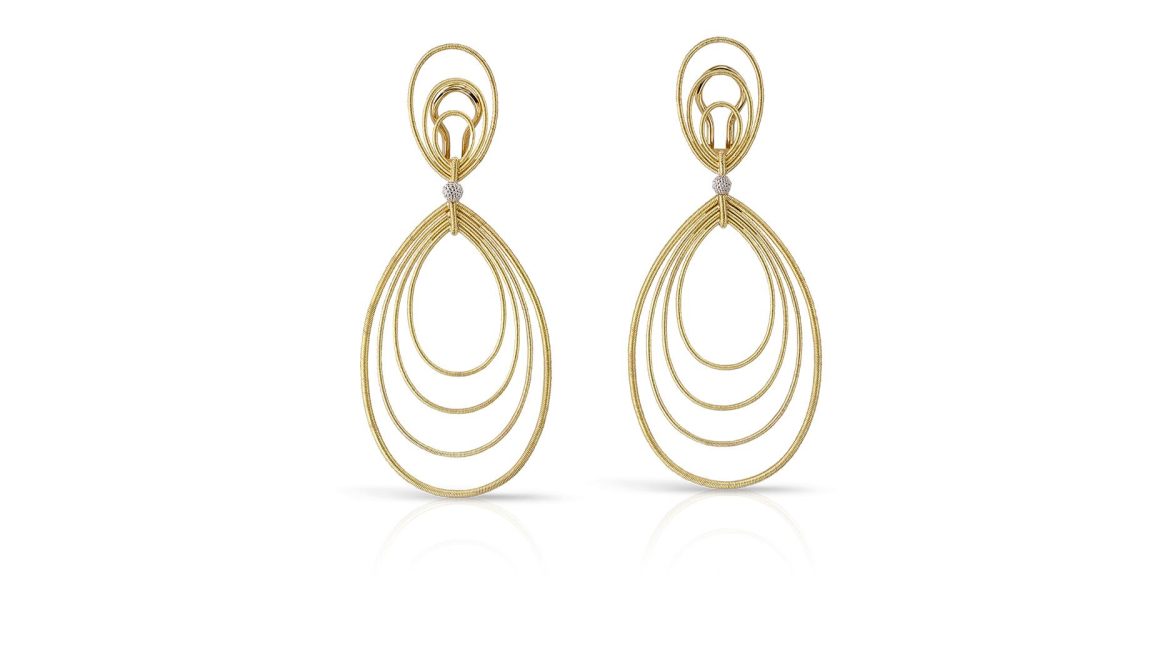
Buccellati’s “Opera Tulle” and “Macri” lines performed well, complementing the brand’s “Étoilée” line with haute couture bejeweled bags.
Cartier’s “Love” and “Panthère” lines remained popular. The brand unveiled new “Love Unlimited” pieces, colored additions to “Clash,” and new “Panthère” and “Santos” watches.
Van Cleef & Arpels’ “Alhambra” and “Perlée” collections did well, with the brand introducing new Alhambra pieces and launching the “Flowerlace” and “Fleurs d’Hawaï” lines.
The brands’ high jewelry collections also had a solid year, boosted by exclusive events showcasing the jewels.
Van Cleef & Arpels opened stores in Florence, Italy, and Frankfurt and Hamburg, Germany.
Cartier opened a new store in Tokyo and renovated its space in Miami’s Design District, while Buccellati expanded its flagship in Hong Kong.
Richemont is also “reshuffling” Vhernier’s retail footprint in key cities.
Richemont’s watch brands, which have struggled in recent quarters, continue to show “encouraging” signs after two challenging years for the watch market, Rupert said.
Its watch portfolio consists of A. Lange & Söhne, Baume & Mercier, IWC Schaffhausen, Jaeger-LeCoultre, Panerai, Piaget, Roger Dubuis, and Vacheron Constantin.
Sales in the division fell 4 percent year-over-year for the fiscal year (up 1 percent at constant exchange rates) to €3.1 billion ($3.6 billion).
Q4 watch sales were down 5 percent year-over-year (up 2 percent at constant exchange rates) to €719 million ($834 million).
The watch division’s stabilization was supported by growth outside of China, with strong growth in the Americas, up 12 percent year-over-year at actual rates.
The ongoing recovery was led by sequential improvement in the second half of the year, particularly at A. Lange & Söhne, Jaeger-LeCoultre, and Vacheron Constantin.
Notable standouts include A. Lange & Söhne’s “1815 Tourbillon” in platinum, Jaeger-LeCoultre’s “Reverso Tribute” in various references, and Vacheron Constantin’s “270th Anniversary Traditionnelle” and “Patrimony” watches.
A. Lange & Söhne opened a new store on London’s Old Bond Street, while Piaget renovated its flagship in Place Vendôme in Paris.
In January, Richemont announced that it had signed an agreement to sell Baume & Mercier to Damiani Group.
“Together with the Damiani Group, we firmly believe that Baume & Mercier’s long-term potential will be best realized as part of the Damiani Group, given the Maison’s strong footprint in Italy, its predominantly multi-brand wholesale distribution model, and its accessible positioning in the luxury watch segment,” Rupert said.
The deal is expected to close this summer, subject to certain conditions.
Richemont’s “Others” segment, which includes Watchfinder, Montblanc, Chloé and other fashion and accessory brands, put on a muted performance.
Sales in the division were down 2 percent (up 3 percent at constant exchange rates) for the fiscal year while Q4 sales were flat (up 7 percent at constant exchange rates) in Q4.
Looking at Richemont’s distribution channels, sales were higher than last year across all channels.
Retail sales were up 5 percent (12 percent at constant exchange rates) year-over-year this year and 5 percent (14 percent at constant exchange rates) in Q4.
Online sales were up 2 percent (8 percent at constant exchange rates) year-over-year in the year and 5 percent (13 percent at constant exchange rates) in Q4.
Wholesale sales and royalty income increased 4 percent year-over-year (9 percent at constant exchange rates) for the fiscal year and ticked up 2 percent (8 percent at constant exchange rates) in Q4.
Richemont did not provide any financial guidance for the remainder of its fiscal year.
“Looking ahead, uncertainty is likely to persist, not least in relation to developments in the Middle East,” Rupert said.
“Against this backdrop, the group remains vigilant and will continue to rely on its long-term orientation and disciplined operating approach to enchant clients, maintain the desirability of its maisons, and deliver sustainable value over time for all stakeholders.”
Richemont’s Q1 results are set to be reported July 15.
