
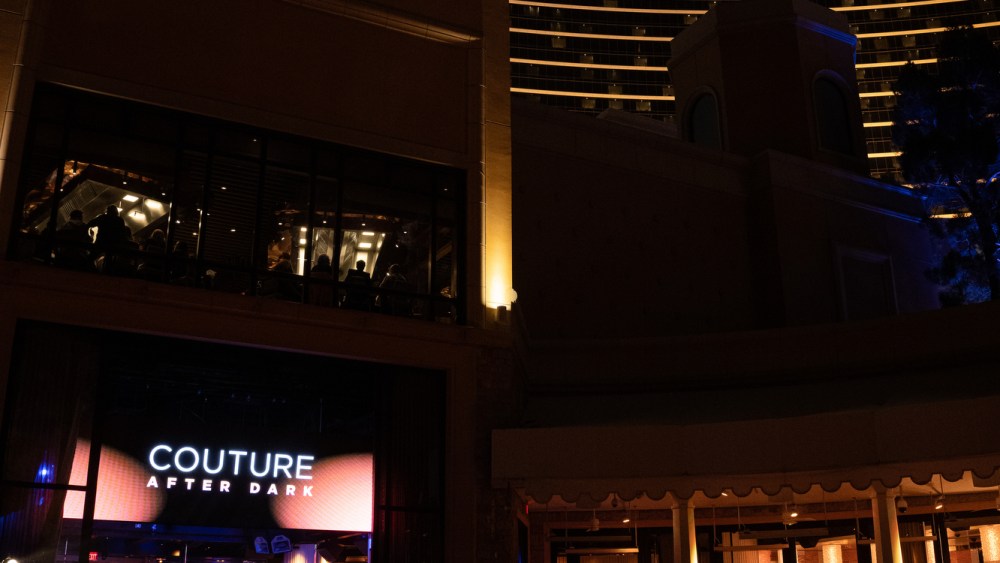
The effects of a K-shaped consumer are becoming increasingly visible in the fine jewelry market, according to retailers attending this year’s Couture show, as demand remains strong at both the highest and lowest ends of the category but less so in the middle.
“We definitely felt the effects of the K-shaped consumer this year,” said Alysa Teichman, co-owner of Ylang 23.
At one end of the spectrum, retailers reported continued demand for important diamonds, substantial gold jewelry and exceptional colored gemstones. At the other, designers are finding success with innovative designs incorporating alternative materials, mixed-media construction and more accessible entry points.
Ylang 23 noted that the $5,000 to $10,000 retail sweet spot felt less prominent across this year’s show floor, reflecting a broader luxury trend in which consumers gravitate toward either investment-level purchases or more attainable points of entry.
That dynamic formed the backdrop for many conversations taking place in Las Vegas this year, where buyers from stores across the U.S. described a customer who remains willing to spend but is becoming increasingly selective about where and how those dollars are allocated.

Inside The Couture Show at Wynn Las Vegas.
Courtesy
“Clients are shopping more thoughtfully than they were a year ago,” said Randi Udell-Alper, vice president of London Jewelers.
Across interviews, retailers repeatedly pointed to a consumer who is taking more time to make purchasing decisions, placing greater emphasis on longevity, craftsmanship and personal significance. Rather than accumulating jewelry indiscriminately, buyers said clients are increasingly focused on building collections with intention.
At Elyse Walker, Alexandra Lippin, senior vice president of jewelry, described customers as more discerning than they were a year ago and increasingly focused on pieces that feel truly special.
Greenwich St. Jewelers reported similar behavior, with clients gravitating toward fewer but more significant purchases. “Overall clients are investing in fewer, more expensive pieces rather than many small, trend-driven items,” said Jennifer Gandia, co-owner of Greenwich St. Jewelers. “They’re looking at the jewel as an investment, not just a fashion item.”

Luis Morais small padlock gold link bracelet.
Courtesy
That emphasis on value comes as elevated gold prices continue to reshape conversations throughout the industry. Yet despite the sharp rise in precious metal costs over the last several years, most retailers reported little resistance among affluent consumers.
Matthew Rosenheim, president of Tiny Jewel Box, said his clientele remains primarily motivated by originality and exceptional design rather than price alone. “The high-end client still wants what they want,” he said. “They are driven by originality, creativity and standout design rather than price.”

Couture Jewelry Show
Material Good reported a similar experience. “Honestly, the gold pricing didn’t feel as jarring as we expected going in,” said Teresa Panico, director of marketing and fine jewelry at Material Good. “We weren’t as taken aback as we thought we might be.”
While buyers acknowledged the need to be strategic about pricing across their assortment, they said current gold levels were less disruptive than expected.
For many retailers, the issue is no longer simply cost but perceived value. Lippin said elevated gold prices are pushing designers to become increasingly thoughtful about how they use precious metals, encouraging greater emphasis on craftsmanship, innovation and design rather than weight alone.
“We’re prioritizing pieces that feel innovative and thoughtful and that offer a strong design narrative relative to their price,” Lippin said.
The changing pricing environment has also created opportunities for alternative materials and mixed-media approaches. Hamilton Jewelers’ Anne Russell pointed to growing use of titanium, while Ylang 23 highlighted increased experimentation with leather cords and mixed-material designs. At a time when consumers are scrutinizing purchases more carefully, these materials allow designers to introduce fresh aesthetics and additional price points without sacrificing creativity.
Still, if there was one category that generated nearly universal enthusiasm among retailers, it was vintage. Multiple retailers pointed to growing demand for estate jewelry, signed vintage pieces and one-of-a-kind acquisitions.
Greenwich St. Jewelers reported that the category quickly became one of the store’s strongest-performing businesses. “We introduced vintage last year and within a few months it was in our top three categories for the store,” Gandia said.

Inside the Couture Jewelry Show in Las Vegas.
Courtesy
Tiny Jewel Box said it is actively expanding both its estate jewelry and vintage watch offerings, while London Jewelers recently launched a dedicated vintage department in response to growing client interest, which Udell-Alper called an “exciting addition” to their business.
At Hamilton Jewelers, vintage has long been part of the business. The retailer operates a stand-alone vintage store and e-commerce platform and continues to see growing interest in historical design references and archival aesthetics.
Material Good, where vintage has been a core pillar of the business from the beginning, reported rising demand for signed vintage pieces and jewels with strong provenance and distinctive points of view. “What we’re seeing in the vintage market is a continued focus on rarity and pieces that feel truly distinctive,” Panico said.

For Future Reference Vintage blue 14-karat yellow gold and turquoise necklace.
Moda Operandi, Inc.
The appeal extends well beyond nostalgia since vintage jewelry offers scarcity in a marketplace where consumers increasingly value individuality. Buyers said customers are drawn to the history, craftsmanship and sense of discovery associated with older pieces, particularly those that cannot easily be replicated. “One of the reasons vintage jewelry is so appealing is that it’s inherently rare,” Gandia said. “Clients love the feeling of finding a unique piece that can’t be easily replicated.”
Retailers also noted growing interest in antique diamonds, historical settings and archival design language. Rather than treating vintage and contemporary jewelry as separate categories, consumers appear comfortable mixing the two, creating collections that feel layered, personal and unique.
That desire for rarity extends beyond vintage with a growing demand for customization, bespoke commissions and one-of-a-kind creations. At London Jewelers, Udell-Alper said clients are placing greater importance on exclusivity and personalization, while Tiny Jewel Box reported strong interest in custom projects that allow customers to participate in the creative process.
For retailers, those shifts reflect a broader evolution in luxury spending. The strongest-performing categories are often those that offer something difficult to find elsewhere, whether that is a significant gemstone, a signed vintage piece or a bespoke design.
But if this year’s show revealed anything about the state of the market, it is that today’s consumer is more informed, more deliberate and more selective than ever before. In an increasingly polarized luxury landscape, rarity, craftsmanship and originality are proving just as important as the materials themselves.
