
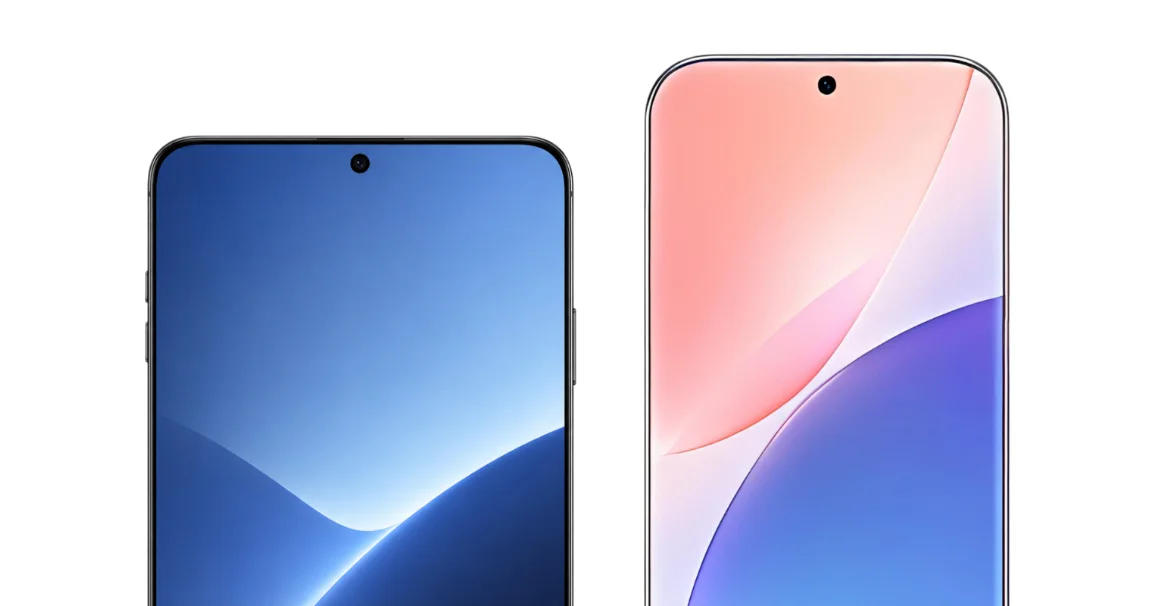
The smartphone market is already crowded and fiercely competitive, but the next two years could become one of the industry’s most transformative periods yet.
The coming wave of flagship phones from the two tech giants is rumored to bring bold changes, not only for Apple and Samsung themselves but for the entire mobile industry.
More importantly, many of these new ideas could quickly become industry-wide trends, forcing Android manufacturers to adapt in order to stay competitive.
Foldable phones are entering a new era
For years, foldable smartphones have largely followed the same formula: a standard-looking outer display that unfolds into a larger square-shaped screen inside.
While functional, the category has struggled to deliver truly fresh ideas.
That now appears to be changing.
Huawei kicked off a new trend with the launch of the Pura X and Pura X Max earlier this year.
Instead of the traditional vertical fold, the devices use a wider horizontal folding design that makes watching videos, reading and entertainment feel more natural. Folded shut, the phones are also easier to hold with one hand compared to today’s Fold-style devices.
If recent leaks are accurate, Samsung is preparing to push this concept further during its foldable phone event expected in July.
Alongside the standard Galaxy Z Fold 8, Samsung is reportedly developing a second version called the Galaxy Z Fold 8 Wide, also referred to as the Galaxy Z Wide Fold.
The device is said to adopt a similar horizontal folding approach to Huawei’s latest concept.
Meanwhile, Apple is rumored to finally enter the foldable race with its first foldable iPhone, tentatively called the iPhone Ultra, expected later this year.
Following the surprisingly strong reception of Huawei’s Pura X Max in several markets, both Samsung and Apple reportedly believe the wider folding format could resonate strongly with users.
If the design succeeds commercially, other Android brands are likely to follow quickly.
Some analysts even believe this new generation of horizontal foldables could gradually replace the traditional Fold-style devices dominating the market today.
The era of the truly borderless iPhone
The most significant change, however, may not involve foldables at all.
According to multiple industry sources, Apple is preparing a major design milestone with the iPhone 20 Pro, expected to launch next year.
The device could become Apple’s first truly uninterrupted display smartphone – with no bezels, no notch, no Dynamic Island and no visible camera cutout.
If under-display camera technology matures on schedule, users could finally experience a completely seamless screen, something the smartphone industry has pursued for nearly a decade.
Apple is not alone in this ambition. Several Android manufacturers are also developing similar full-screen concepts for future devices.
Industry observers believe the “borderless” trend could spread rapidly, much like the explosive rise of notch displays several years ago.
Once smartphones achieve truly uninterrupted displays, the experience of watching videos, gaming and daily use could change dramatically.
It may become the biggest design leap since smartphones abandoned physical keyboards in favor of full touchscreens.
Smartphones may soon look completely different
Beyond foldable displays and disappearing bezels, smartphone makers are also experimenting with entirely new screen proportions.
Several reports suggest future phones may become shorter and wider instead of the tall, narrow designs common today.
The shift indicates that Apple, Samsung and other tech companies are fundamentally rethinking smartphone ergonomics and usability.
The goal is to create devices that feel more intuitive, more comfortable and better suited to modern entertainment habits.
At the same time, screens continue growing larger. In the near future, smartphones with displays exceeding 7 inches may become completely normal.
That would give consumers a wider range of options, from ultra-compact devices to products that blur the line between smartphones and mini tablets.
Are we approaching the end of the smartphone era?
Despite smartphones remaining the world’s most important personal tech devices, some experts are beginning to ask whether the industry is approaching the final peak of the traditional smartphone era.
The idea that smart glasses could eventually replace phones once sounded unrealistic. But the landscape is changing quickly.
Meta has already made major progress with its Ray-Ban Meta smart glasses featuring AI integration and display technology. Compared to earlier smart glasses that only offered cameras and speakers, the experience now feels significantly more practical.
More importantly, the world’s biggest smartphone companies are now entering the category.
Samsung recently introduced its Android XR smart glasses platform after years of development, while Apple is also rumored to be quietly building its own augmented reality glasses ecosystem.
Once smart glasses from major brands can display notifications, navigation, translation and AI assistance directly in front of users’ eyes, everyday technology habits could change completely.
Smartphones will not disappear overnight. But the industry may already be entering its biggest transition period since the original iPhone debuted in 2007.
And before AR glasses become mainstream consumer devices, the next two years in the smartphone world could become the most exciting, creative and unpredictable period the industry has seen in a very long time.
Hai Phong
