
- Eye-catching looks
- Fastback body boosts practicality
- Tech and powertrains lag behind class best
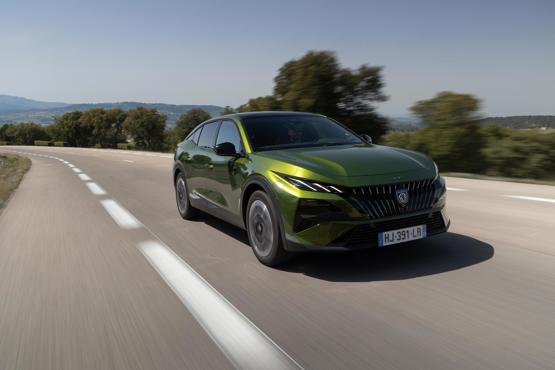
Peugeot’s latest 408 majors on looks and has decent practicality, but its powertrains let it down. It’s very reasonably priced, however, which may tempt drivers away from new-to-market Chinese alternatives.
Overview
The fastback concept isn’t exactly new, but Peugeot certainly does it with a bit more flair. Essentially, a large hatchback, the 408 sits in a segment that was once a fleet staple but is now largely abandoned. There’s no Ford Mondeo, no Renault Laguna and no Vauxhall Inisgnia, because the customers for those cars have now got SUVs.
That’s why the 408 sits a little taller and has some plastic wheel arch cladding. It’s a halfway house between a saloon and an SUV, offering practicality and comfort along with a slightly raised driving position.
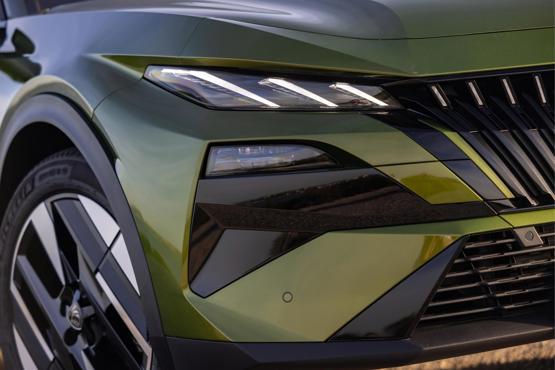
For 2026, the 408 has been updated. It’s now sharper in the looks department, with big bulging bumper vents and a distinctive light signature. The technology has been given a lick and the car’s powertrains have been revised.
There are three versions of the 408 to choose from: hybrid, plug-in hybrid and electric. The latter is known as the E-408. Each are offered in Allure, GT or GT Premium trim levels.
Prices start at £31,995, for the hybrid, or £38,495 for the plug-in hybrid. The E-408 is £34,195 – or £32,695 with the Governments electric car grant.
While it doesn’t have many direct rivals, these days, the car is slightly cheaper than a Skoda Superb and the E-408 is great value, costing around the same as a VW ID3.
Comfort and practicality
With a similar footprint to a Skoda Octavia, the 408 is well-proportioned to offer a decent level of interior space. It’ll seat five adults and has a more-than-reasonable 536-litres of boot space.
The materials feel high-end, largely, and the seats are comfortable and supportive. There are a good mix of textures and a slightly unconventional dashboard design. The air vents are placed high up, which is smart, then there’s a large swooping section that runs through the middle and joins the door panels. Controls are consolidated into a centre panel that sits in easy reach of the driver.
Finding a suitable driving position in the 408 takes a fair bit of work due to its ‘i-cockpit’ layout. This is a standard Peugeot innovation that really needs to be consigned to the history books. You get a small oval steering wheel that basically sits in your lap, while the instrument cluster sits in the higher-than-usual place. The problem is, once you set the seat to a position you like, and have the wheel where you want it, you can’t see the dials. It’s then back to square one, before eventually compromising in just about every possible way – at least that’s my experience.
As such, instead of sitting low in the car, like its sportier design would encourage, immersing you in the driving experience, you sit high up and it makes the car feel top heavy.
Allure models get the same sporty front seats as the rest of the line up, but they lack heating (unless you get the E-408) and lumbar support. Only the top spec GT Premium gets heated seats, along with electric adjustment and a massage function.
Safety and technology
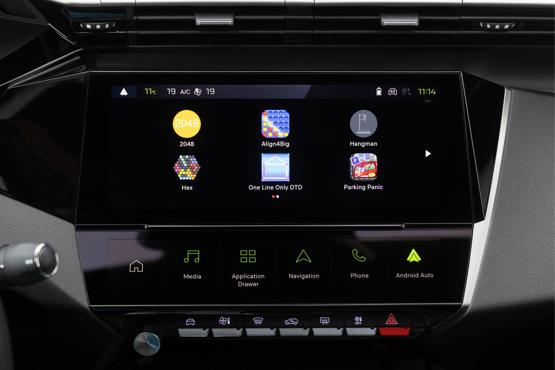
The 408’s infotainment system is carried over from the old car and pairs a 10-inch touchscreen with a second customisable switch panel. The lower screen features shortcuts to key functions and you can choose which ones appear. The main screen lacks finesse and is a bit slow and clunky by the latest standards. It’s not the same system that comes in the 3008 and 5008, which is better but still a little underwhelming.
You have to mess around with the screen a fair bit, most irritatingly for the climate controls. It does, at least, support Android Auto and Apple Carplay so you can use Google Maps instead of the built-in TomTom system that seems to operate at a slower pace than that with which you’re driving the car.
Equipment levels are fair with keyless entry across the range, along with rear parking sensors, reversing camera and adaptive cruise control. The GT gains Matrix headlights over the regular LED units, ambient interior lighting, front parking sensors and a lane keeping system.
The flagship version has blind spot monitoring, surround view cameras and a rather excellent Focal sound system.
Driveability and efficiency
Peugeot has got the balance of the 408 well dialled in. It’s smooth and comfortable in most situations, without a noticeable lack of dynamic capability. It’s relatively nimble and can carry speed along a country road without much bother. There is a noticeable difference between all three powertrains, however.
The hybrid car, with its 1.2-litre petrol engine is the lightest and feels the best to drive. It is, however, woefully slow. There’s no eagerness at all from the 145PS engine as it meanders its way up to the speed limit. However, the unit is pretty frugal and far more refined than the plug-in hybrid’s (PHEV) 1.6-litre lump.
The PHEV gains a more powerful motor as part of this facelift, so total power is up to 240PS and feels much more substantial. With a 14.6kWh (useable) battery, the new 408 PHEV also provides a longer electric range. It can manage, officially, 53 miles per charge. Driveability is improved as a result of the new motor, which makes life in EV mode more pleasurable. Once the petrol engine kicks in it’s a bit punchier than before, thanks to a new seven-speed dual clutch gearbox.
And in the electric corner sits the E-408 with its 210PS electric motor and rather small 58kWh battery. While the car, in theory, is perfectly decent, it simply doesn’t offer enough range. Maybe 200 miles at a push, but there’s simply far more options in the segment, including the Kia EV6, that can go a lot further. The E-408 is cheap, though, if you can live with a measly range and a maximum charging power of 120kW. It’s the heaviest of the three and feels the least engaging to drive, despite being the quickest from 0-62mph (7.2secs).
The 408 might not be the most dynamic thing on the road, but it certainly feels more polished than some of the Chinese models available at similar prices.
Company car tax and running costs
For a company car driver the E-408 makes the most financial sense, unequivocally. It comes with a decent specification and is among the cheapest large electric cars on the market. Running costs are just 38p per mile and benefit-in-kind tax starts at £25 per month for a 20% taxpayer.
Running costs for the hybrid and plug-in hybrid are aligned at 52p per mile, although the latter attracts a 10% Bik rate for the 2026/27 tax year while the hybrid sits in the 28% band.
