
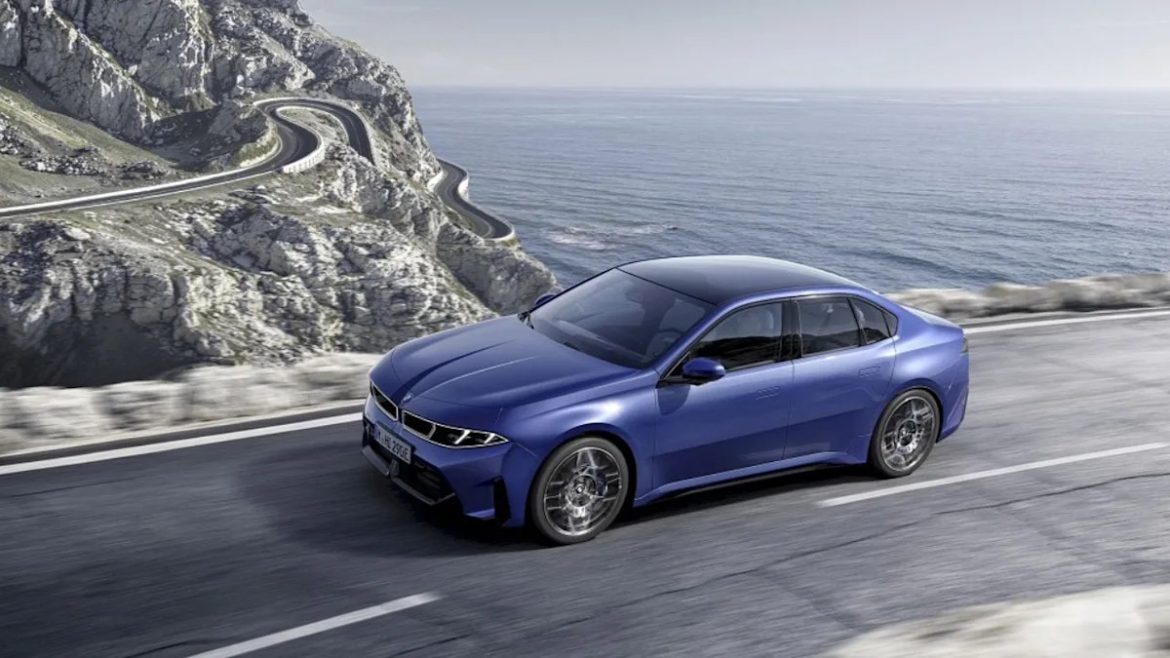
BMW has officially pulled the wraps off the all-new electric i3, and the numbers suggest this could be one of the most significant EV launches of the decade. Built on the company’s new Neue Klasse architecture, the sedan introduces a host of next-generation technologies that promise major gains in range, charging speed, efficiency, and driving dynamics.
For BMW, the stakes could hardly be higher. The 3 Series has been the brand’s cornerstone model for more than five decades, serving as both its best-selling sedan and the benchmark for countless competitors. Rather than creating an electric vehicle that merely wears a familiar badge, BMW says it set out to build a true electric successor to the 3 Series legacy.
The result is a car that combines traditional sports sedan proportions with cutting-edge EV hardware. From its 800-volt electrical architecture to an entirely new battery design, nearly every major component represents a clean-sheet approach.
Advertisement
Advertisement
If BMW’s provisional figures hold up in real-world testing, rivals from Tesla, Mercedes-Benz, Hyundai, and others may suddenly find themselves chasing a new benchmark in the premium electric sedan segment.
Massive Range And Ultra-Fast Charging
Photo Courtesy: Autorepublika.
The headline figure is range. BMW claims the dual-motor i3 50 xDrive can travel up to 900 kilometers (559 miles) on the WLTP testing cycle, placing it among the longest-range electric vehicles ever announced.
While EPA figures are expected to be lower, the car could still comfortably exceed 450 miles of range under U.S. testing standards. That would put it well ahead of many current competitors in the segment.
Charging performance appears equally impressive. The i3 utilizes an 800-volt architecture capable of accepting up to 400 kW of DC fast charging power, allowing the battery to gain approximately 249 miles of range in just 10 minutes under ideal conditions.
Advertisement
Advertisement
Those figures represent a significant leap forward for BMW and demonstrate the advantages of the company’s sixth-generation battery technology.
A New Electric Heart For The 3 Series
Power comes from electric motors mounted on both axles, producing a combined 469 horsepower and 476 lb-ft of torque. BMW has not released official acceleration figures, but performance is expected to be firmly in sports sedan territory.
Unlike some EVs that prioritize dramatic styling, the i3 retains classic 3 Series proportions. The design features a long wheelbase, short overhangs, muscular wheel arches, and a traditional sedan silhouette rather than the crossover-inspired shapes increasingly common in the EV market.
The front end introduces a modern interpretation of BMW’s signature kidney grille, integrated with a new headlight design that references the brand’s traditional four-eye appearance. Around back, slim horizontal taillights emphasize the car’s width while maintaining a clean and understated look.
Advertisement
Advertisement
The overall design signals BMW’s intention to make the transition to electric power feel familiar to existing 3 Series buyers rather than radically different.
The “Heart Of Joy” Changes Everything
Photo Courtesy: Autorepublika.
Arguably the most important innovation isn’t the battery or charging system, but the vehicle’s new computing architecture. BMW’s new “Heart of Joy” control unit manages acceleration, braking, steering, and torque distribution while processing vehicle dynamics inputs up to ten times faster than previous systems. The goal is to deliver more precise handling and a driving experience that feels distinctly BMW despite the shift to electric power.
The sedan is supported by four high-performance computers that oversee various vehicle functions. BMW says the architecture allows the car to react more quickly and naturally to driver inputs while improving overall efficiency.
The interior also benefits from the company’s latest technology suite. BMW Panoramic iDrive serves as the centerpiece of the cabin, while AI-assisted driving systems can learn driver preferences over time.
Advertisement
Advertisement
Vehicle-to-Load, Vehicle-to-Home, and Vehicle-to-Grid functionality are also supported, allowing the car to supply power to external devices, homes, or even the electrical grid when needed.
Neue Klasse Signals BMW’s Future
The i3 is one of the first vehicles built around BMW’s Neue Klasse platform, which introduces a completely new battery design using cylindrical cells and a cell-to-pack architecture. By eliminating traditional battery modules, BMW has improved energy density while reducing weight and increasing packaging efficiency.
The platform will serve as the foundation for the brand’s next generation of electric vehicles, making the i3 far more significant than a single model launch. It effectively serves as a preview of where BMW’s entire EV strategy is headed.
Production will begin in August 2026 at BMW’s historic Munich plant, which has undergone a major modernization program to prepare for the transition. First customer deliveries are expected later in the year.
Advertisement
Advertisement
BMW has yet to announce final pricing or EPA-certified specifications, but the early figures are enough to generate considerable attention. If the production model delivers on its promises, the electric i3 may become one of the most important BMW sedans since the 3 Series first arrived half a century ago, and a serious challenge for every premium EV currently on the market.
If you want more stories like this, follow Guessing Headlights on Yahoo so you don’t miss what’s coming next.
