
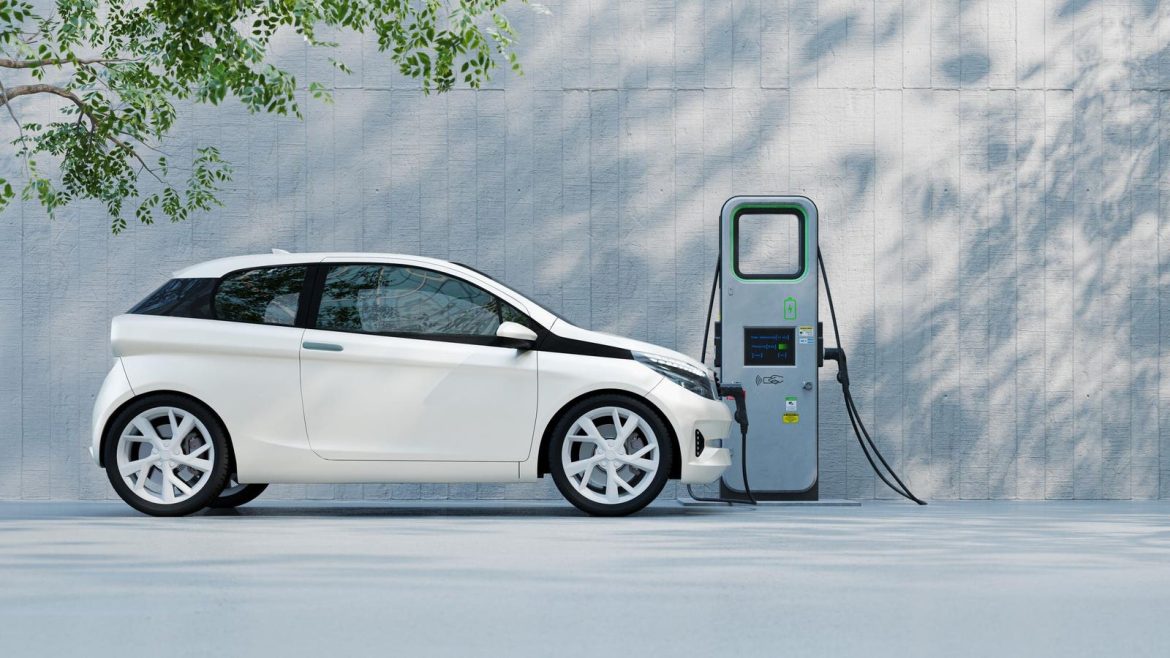

A small electric car at a charging station against a concrete wall.
getty
Cries for mercy by Britain’s automotive industry from what it considers to be lethal new electric vehicle sales mandates have finally been heard, only to trigger claims of foul play by the nation’s EV enthusiasts.
For months the auto industry, joined by labor unions, has been pointing out that Britain’s plan to force an EV new car monopoly on its citizens by 2035 and 80% by 2030 is impossible and will cause bankruptcies and job losses.
The current government plan insists that EVs win new car market share of 33% in the U.K. this year, 38% in 2027, 52% in 2028, 66% in 2029 and 80% in 2030. So far this year, EVs have won 22.4% of the market. Manufacturers have been forced to hold back highly profitable internal combustion engine vehicles in favour of often loss-making EVs to avoid penalties for failure to match the mandate.
According to the Society of Motor Manufacturers and Traders, Britain’s auto industry lobby, this policy has cost the industry over £10 billion ($13.5 billion) in incentives over the last two years.
Dilute the mandate
Press reports over the weekend said the government has decided to dilute the mandate, allowing EVs to account for 50% of the market by 2030, with hybrids making up the difference. EVs will still have a monopoly by 2035. The government hasn’t confirmed or denied the reports.
Representatives of organizations producing EV infrastructure and advice, battery makers and charging organisations are unhappy. A typical response has been – “how can the EV industry invest in the future if the targets are inconsistent”.
One analyst had no time for this argument.
“If the EV charging firms are really basing investment decisions on an 80% EV take up by 2030 then their business planning has gone badly wrong. They know really it will be way less than this,” this analyst said.
But leading the cries of anguish was Andy Palmer, who launched the Nissan Leaf, the world’s first mass-market EV.
“(a report of a weakened zero-emissions vehicle mandate) is another sign of a government drifting from conviction to populism,” Palmer said.
Palmer was the Chief Planning Officer for Nissan and CEO of Aston Martin. He is now CEO of Palmer Energy and serves on the boards of a number of high-innovation businesses.
Genuinely admired for policy consistency
“The U.K. was once genuinely admired for policy consistency. Investors could make long-term capital decisions with reasonable confidence that the regulatory framework would hold. Today, we appear to be executing more U-turns than a London taxi,” he said in an article for Transport +Energy.
“Whatever your view on electric vehicles, a country cannot build a world-class manufacturing sector if its industrial strategy shifts every time the political weather does,” Palmer said.
There was no shortage of support for Palmer.
Lexus electric car (Photo by Spencer Platt/Getty Images)
Getty Images
“Investors back certainty. Weakening the ZEV mandate risks sending exactly the wrong signal to businesses backing the U.K.’s EV transition,” said Matt Adams, head of electrical transport systems at BEAMA .
“Manufacturers have committed to the U.K. because government set out a clear and ambitious direction of travel for electrification. Moving the goalposts now risks undermining confidence just as demand for electric vehicles and charging infrastructure continues to grow,” Adams said.
Practical challenges
Russell Olive, U.K. Director, of vaylens, said adjusting the ZEV mandate won’t remove the practical challenges businesses face when trying to electrify their vehicles.
“Policy can influence the pace of change, but successful electrification still depends on practical planning, better data and infrastructure that aligns with how vehicles are actually used. Many businesses aren’t being held back by a lack of ambition. They’re trying to understand which vehicles can transition today, what infrastructure they need and how charging fits around the way they operate.”
“Confidence is what will ultimately drive fleet electrification. Businesses need clarity on what vehicles can transition today, how charging will support their operations and whether their infrastructure can support growth over time if they are going to commit to electrification at scale,” Olive said.
But there were also powerful voices saying the U.K industry desperately needed relief from overambitious EV rules.
“I think this new rule will mean 50% full hybrids will be a welcome relaxation of the targets for U.K. manufacturers and overseas manufacturers importing into the U.K., with the exception of the Chinese,” said British automotive analyst Dr Charles Tennant.
Chinese at the ready
“The Chinese are already prepared with their massive portfolio of electric cars and are currently making big inroads into the U.K. with more affordable product offerings. But this will also give time for U.K. consumers to come around to the idea of giving up their internal combustion engine cars and make the switch to electric. It is all less draconian and to me it makes sense to relax the targets in this way,” Tennant said.
Professor David Bailey of the Birmingham Business School said if the reports are true, it could be one of the best industrial policy decisions by the Labour government.
Red hood of the Range Rover.
getty
“The key point is this: supporting net zero and supporting a more gradual EV transition are not contradictory positions. In fact, if we get the transition wrong, we risk undermining both our climate goals and the future of British manufacturing,” Bailey said in his “Boys from the Blackstuff” blog.
The drive to zero emissions from cars and SUVs is part of the government’s long-term climate change mitigation drive.
Concerning everybody who cares about jobs
“If manufacturers are required to hit sales percentages regardless of underlying market conditions, they have limited options. They discount vehicles heavily. They absorb losses. They divert investment elsewhere. Or, in the worst-case scenario, they reduce UK operations altogether. That should concern anyone who cares about jobs, production and industrial strategy.”
“We have already witnessed years of uncertainty surrounding Brexit, energy costs, supply chain disruption and global competition. The last thing the industry needs is a regulatory framework that appears disconnected from market realities.”
“Net zero remains essential. But so does keeping Britain’s car industry alive long enough to help deliver it,” Bailey said.
