
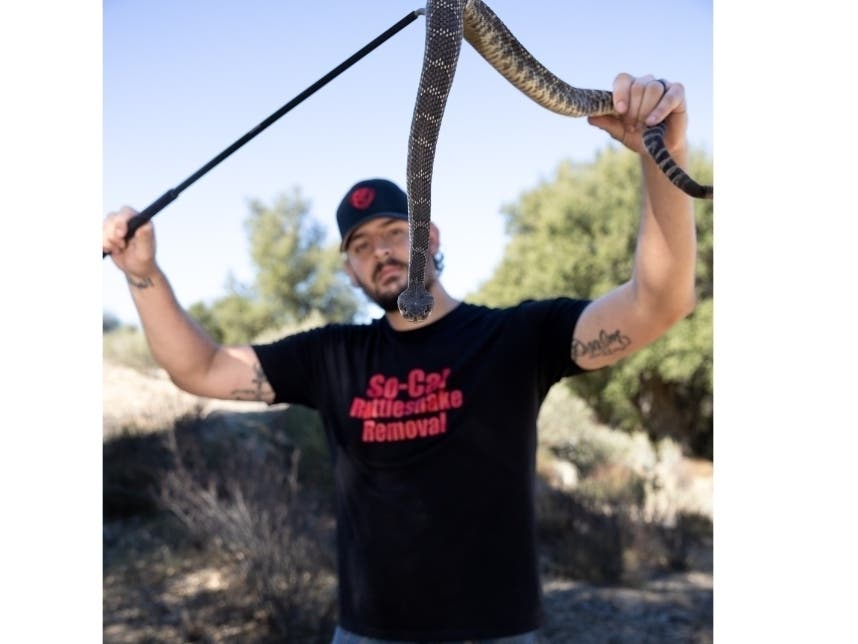
SAN DIEGO, CA — An early surge in rattlesnake activity across California is keeping Alex Trejo busier than ever as he removes snakes from homes and educates residents on how to stay safe.
Trejo, who has more than 15 years of experience handling wildlife, runs a licensed business specializing in the humane removal and relocation of rattlesnakes from homes and businesses in Southern California.
He specializes in rattlesnakes, but his mission goes beyond removing the venomous reptiles.
Find out what’s happening in San Diegofor free with the latest updates from Patch.
“Our main focus is the proper and professional removal of them, plus educating the community and keeping the community safe,” Trejo told Patch.
That education is especially important this year. The Golden State has already seen multiple rattlesnake bites, including three fatalities, amid an early season of snake activity driven by warm weather.
Find out what’s happening in San Diegofor free with the latest updates from Patch.
Thousands of people are bitten by venomous snakes in the country each year, but only around five typically die, according to the U.S. Centers for Disease Control and Prevention.
So far this year in California, a 78-year-old woman from Redwood Valley was walking April 8 in a rural area where she was bitten three times before being taken to a hospital and later dying, according to reports.
A 46-year-old woman was bitten by a rattlesnake March 14 in Wildwood Regional Park in Thousand Oaks and died five days later. A 25-year-old man was bitten by a rattlesnake Feb. 1 while mountain biking with his father at Quail Hill Trailhead in Irvine. He lived for several weeks after the incident but eventually died.
“There’s a lot of early activity because of the weather we’ve had, so that’s caused snakes to move and move earlier,” Trejo said. “Most people are unaware of rattlesnakes and the dos and don’ts. That’s going to lead to a lot of incidents where people get bit.”
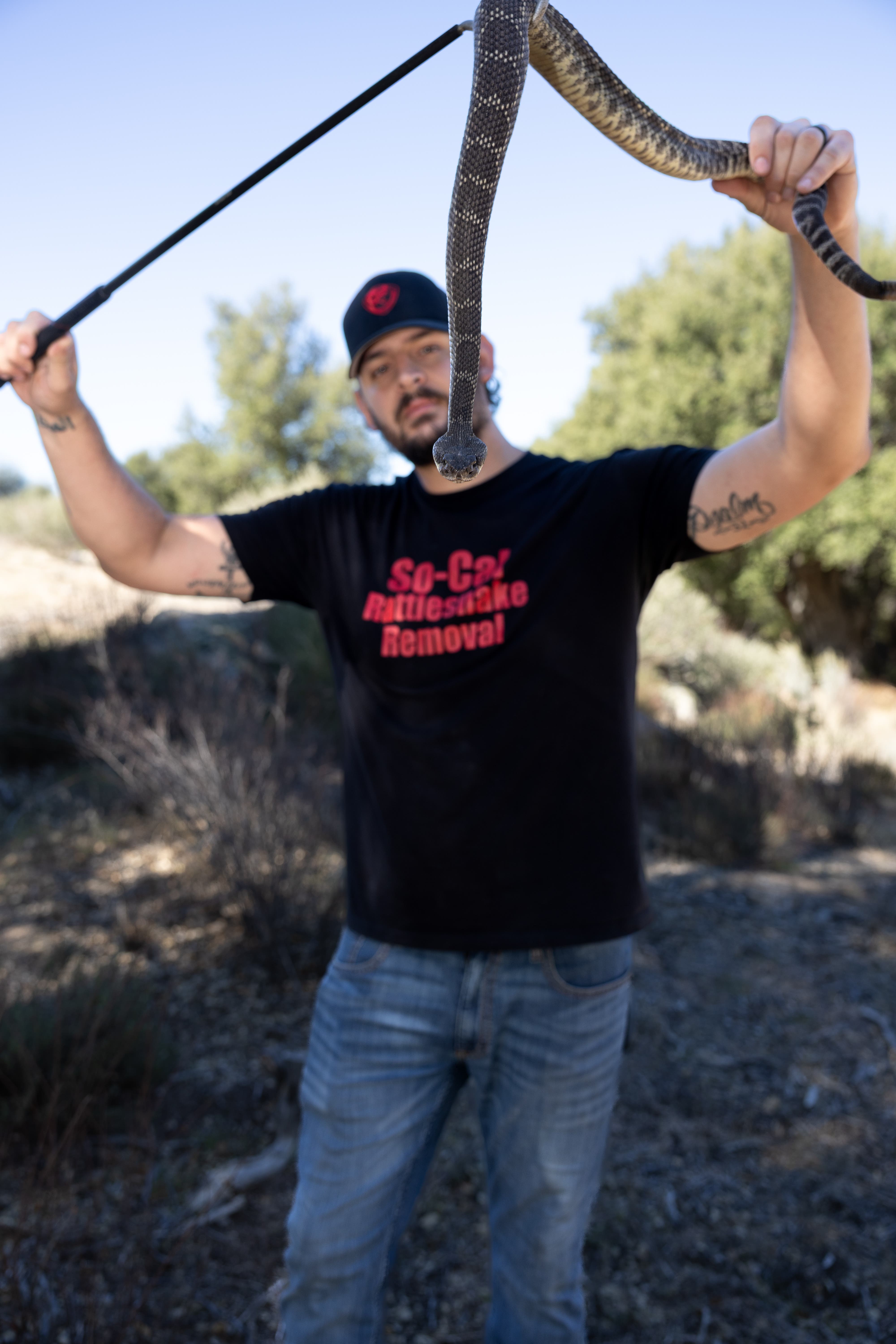
Trejo’s path to his profession started long before he turned it into a business around 2020 during the COVID-19 pandemic. As a child, he caught snakes, lizards, frogs and spiders. He even tried, unsuccessfully, to keep a captured snake as a pet. It escaped.
“I’ve been catching snakes my whole life,” he said. “I love wildlife and that’s been a big part of me ever since I was a kid.”
Before launching his business about six years ago, Trejo worked in sales and managed a moving company. Trejo said his break into the industry came after fellow snake catcher, Len Ramirez, owner of Northern California-based Ramirez Rattlesnake Removal, saw one of his snake-catching videos online and encouraged him to pursue it professionally.
Known on Instagram as “Alex the Critter Catcher,” Trejo has built a following of more than 122,000 people on the platform, where he has shared videos of his work capturing and relocating snakes.
His San Diego-based company, So-Cal Rattlesnake Removal service areas stretched as far north as Fresno and east to the Arizona border.
Much of his job is routine but still risky. Most calls involve rattlesnakes spotted around the perimeter of homes, he said.
“Either the snake is on the move, or he’s just kind of coiled up having himself a good time,” Trejo said.
Other calls are more unpredictable.
In one case, a Fallbrook homeowner reported a snake in her attic, which is something Trejo said he had never encountered before. After climbing through the hatch, he found a rattlesnake coiled in insulation.
“I have no idea how that snake got in there,” he said. “That was one that was definitely very, very unique because I’ve never seen a rattlesnake in somebody’s attic.”
Navigating the cramped space was just as challenging as the capture, he said.
“If I stepped through anything I was going to go straight through her roof,” he said. “I had to do some acrobatics and plank walking to get the snake.”
Even in tight quarters, including crawling beneath homes where visibility is limited, Trejo said preparation and awareness are what keep him safe. In fact, he has never been bitten by a rattlesnake.
“There’s no fear,” said Trejo, who stands about 6 feet 7 inches tall. “I know that if I’m lackadaisical or lazy, then I’m at risk of getting bit. But if I keep my awareness up, in most cases, I’m going to be OK.”
That same awareness, he said, is key for the public.
“The difference between a rattlesnake bite and no bite is visibility,” Trejo said. “If you can see that snake, you’ve just saved yourself a very expensive trip and a painful one.”
He advised people to avoid placing their hands or feet into areas with limited visibility, such as dense vegetation. Hikers should also stay in the middle of trails and away from dense thick brush when hiking.
“People sit down on a rock and boom, they get bit by a rattlesnake because they didn’t scan their area,” he said. “Awareness and alertness are super important.”
Trejo also emphasized hiring qualified professionals when a snake is found on a property.
“You need to trust whoever’s coming to your property,” he said. “It’s important that whoever’s coming to your house is licensed and insured.”
For Trejo, the work remains as much a passion as a profession.
“It doesn’t feel like it’s work,” he said. “It feels like I’m getting to be a little kid still, just in a grown-up body. It feels like every day it’s a fun adventure.
“I don’t ever get tired of doing this because it’s what I love to do,” he added. “I get to educate people and share my passion with the community.”
Get more local news delivered straight to your inbox. Sign up for free Patch newsletters and alerts.
