
Robert L. Hill
July 23, 2026
One way that zoos help in conserving species is using a tool known as “head starting.” Head starting is essentially rearing animals up to a certain age or size so that they are past their vulnerable young stages to, in theory, give them a better chance to survive and reproduce when released into the wild. Zoo Atlanta has been involved with a number of these programs over the years, including the eastern indigo snake reintroduction project.
While these programs are common tools to bolster or even restart wild populations, in some amphibian head-start projects, the success rate is not very high. There are many factors that might explain why a program might struggle. These can be environmental (is the habitat just not right), or disease-related, or perhaps even behavioral (the released amphibians don’t do what we expected). A new paper in the journal Ecology and Diversity authored by amphibian conservation experts, including myself, offers some ideas on how to improve success for head-started amphibians.
Environments for zoo animals are designed to meet every one of their needs as much as possible in as stress-free a way as possible. However, the wild world offers many challenges that all animals, including amphibians, must navigate to survive. Where is the best part of the pond to find food? What to do if a predatory dragonfly nymph or snake is nearby? These are the kinds of challenges wild amphibians must figure out. The paper suggests the development of neurons that help build healthy fear-based behaviors in amphibians happens very early in life. Without the ability to build those neuronal pathways and associated responses to a predator, amphibians released into the environment may not recognize the threat of natural predators the first time they encounter them. So, one example of a change to existing practices may be to expose head-started amphibian larvae to a natural predator in a “safe” manner (maybe just chemically and/or visually) so they can develop the skills to avoid them once they are out of our care. Another example could be to offer different kinds or qualities of food throughout their habitats, so they are challenged to search for their preferred food instead of the food always being in the same, easy-to-find place over and over.
This paper highlights one of the great things about conservation science, which is always evolving. While head-start programs for amphibians are wonderful tools in the conservation toolbox and, in many cases, necessary to help some species survive, there may be ways that we can tweak our methods to offer these animals the best possible shot at bringing about the next generation of wild amphibians.
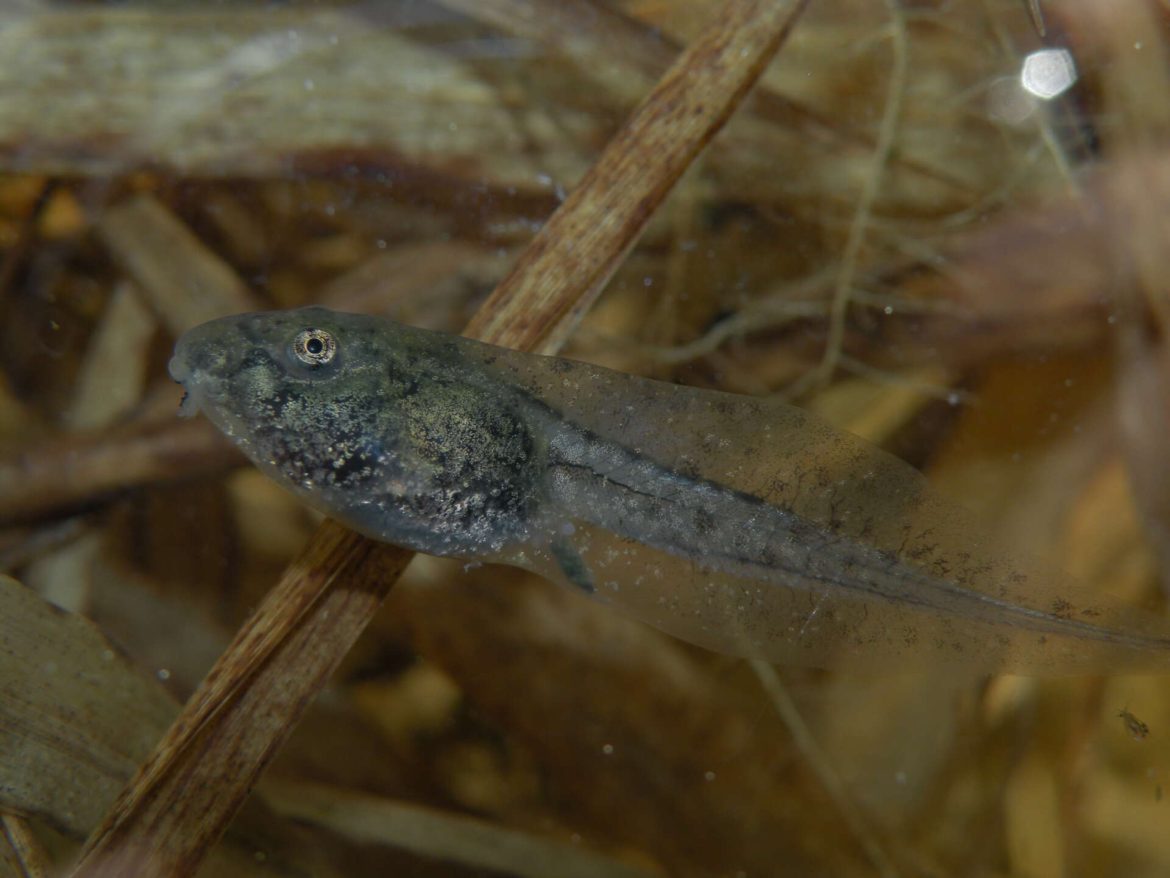
(Pictured: Gopher frog tadpole; photo by Robert Hill)
Full paper reference: https://www.sciepublish.com/article/pii/1081
Robert Hill
Curator of Herpetology
