
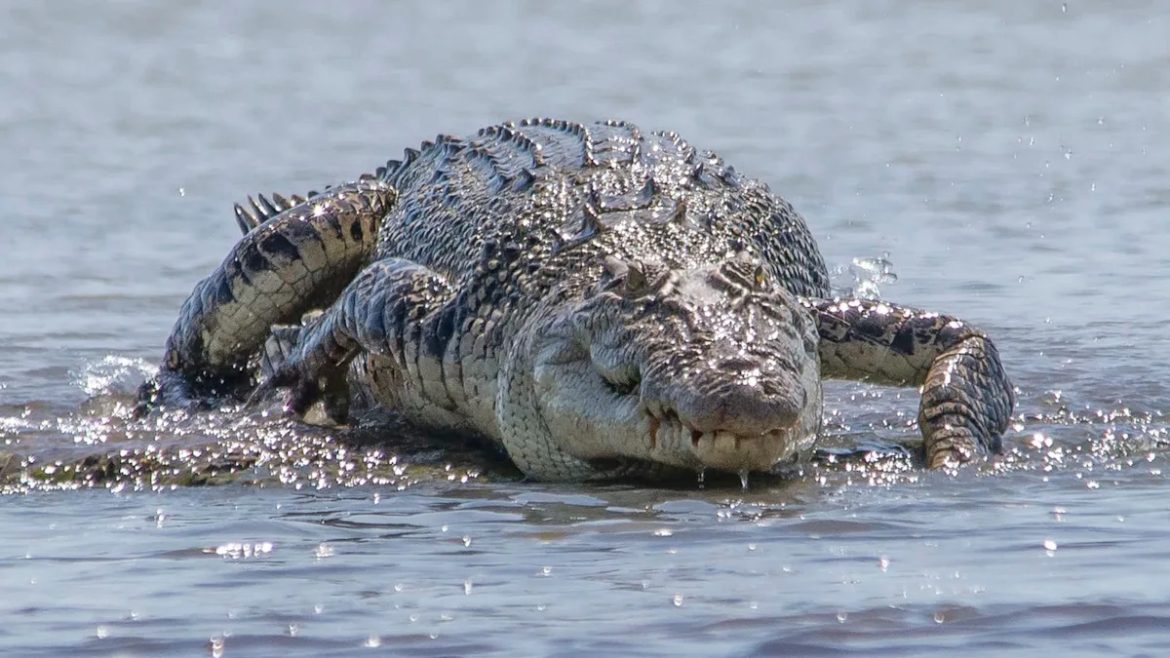
For generations, the crocodiles that once lived in the Seychelles were something of a mystery.
Now, a study has revealed that scientists have finally identified the vanished reptiles, and their story involves an astonishing ocean journey.
What happened?
The research, published in Royal Society Open Science, found that the crocodiles wiped out in the Seychelles were not a unique species after all.
A press release from the Bavarian State Collection of Zoology stated that they were instead the westernmost known population of the saltwater crocodile, Crocodylus porosus.
A news release from Staatliche Naturwissenschaftliche Sammlungen Bayerns also noted that these crocodiles are the largest living reptiles on Earth, per ScienceDaily.
Researchers from Germany and the Seychelles matched DNA from living crocodiles with genetic material from historical museum specimens. They included rare preserved remains from the Seychelles population, which disappeared around 200 years ago.
Explorer accounts spanning more than 250 years described crocodiles as a familiar sight along the Seychelles, according to the ScienceDaily news release. But after people settled permanently in 1770, the population declined quickly and died out within 50 years.
“The founders of the Seychelles population must have drifted at least 3,000 kilometers [about 1,800 miles] across the Indian Ocean to reach the remote archipelago, perhaps even much further,” said Frank Glaw, a reptile expert and the study’s senior author.
The results supported an earlier idea based only on physical traits. The genetic evidence showed the Seychelles animals were closely related to saltwater crocodiles living thousands of miles away.
Why does it matter?
The study is a reminder of how quickly humans can erase a population that took generations and hundreds of miles to establish itself.
It also gives scientists a clearer picture of how wildlife disperses across oceans as ecosystems come under growing pressure from habitat loss and climate shifts.
Saltwater crocodiles are especially capable of marine travel because specialized salt glands help them tolerate long periods in seawater.
“The genetic patterns suggest that saltwater crocodile populations remained connected over long periods and across great distances, pointing to the high mobility of this species,” said first author Stephanie Agne.
Before the Seychelles population disappeared, that ability allowed the species to span more than 12,000 kilometers (over 7,400 miles). They ranged from Vanuatu in the Pacific to the Seychelles in the Indian Ocean.
What’s being done?
This kind of research can improve conservation planning for living crocodile populations and other island wildlife.
The findings also reinforce the importance of preserving museum specimens and local ecological history. Those resources can reveal lost connections between places and species, helping researchers understand how animals adapt and disappear.
That combination of better science and stronger habitat stewardship gives conservationists a better chance of protecting today’s species before they become tomorrow’s mysteries.
Get TCD’s free newsletters for easy tips, smart advice, and a chance to earn $5,000 toward home upgrades. To see more stories like this one, change your Google preferences here.
