
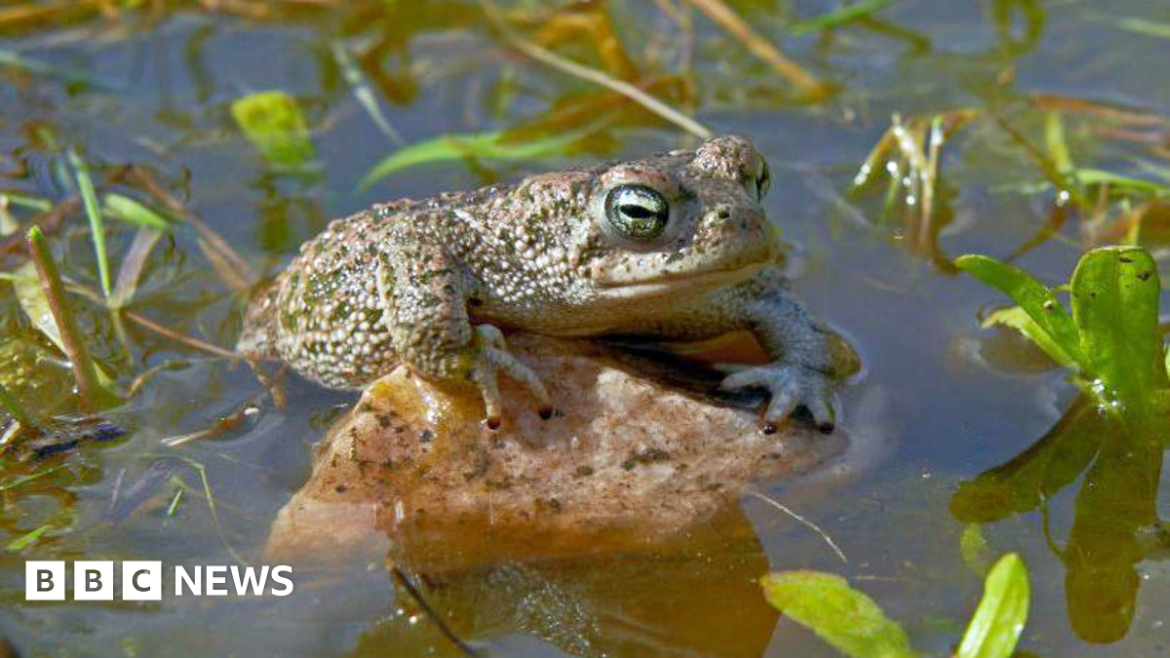
Orton said: “Some of the former breeding sites had such a high level of salinity that no embryos survived to hatching.
“Some weren’t as lethally salty, but what we saw there was that the toads were much smaller.
“That doesn’t sound like a big deal, but when you’re a frog, size really does matter. 95% of tadpoles are eaten by predators.
“For the 5% that make it to the next stage of development, they need to be as big as possible for a chance at survival.”
She said the findings could help improve work to revive numbers.
“Until now, a lot of natterjack toad restoration efforts have focused on improving terrestrial habitat, like clearing scrub or controlling vegetation,” she said.
“That’s still important, but now we know that unless the salinity of the water is tackled, the tiny toads will have no chance of survival.”
