
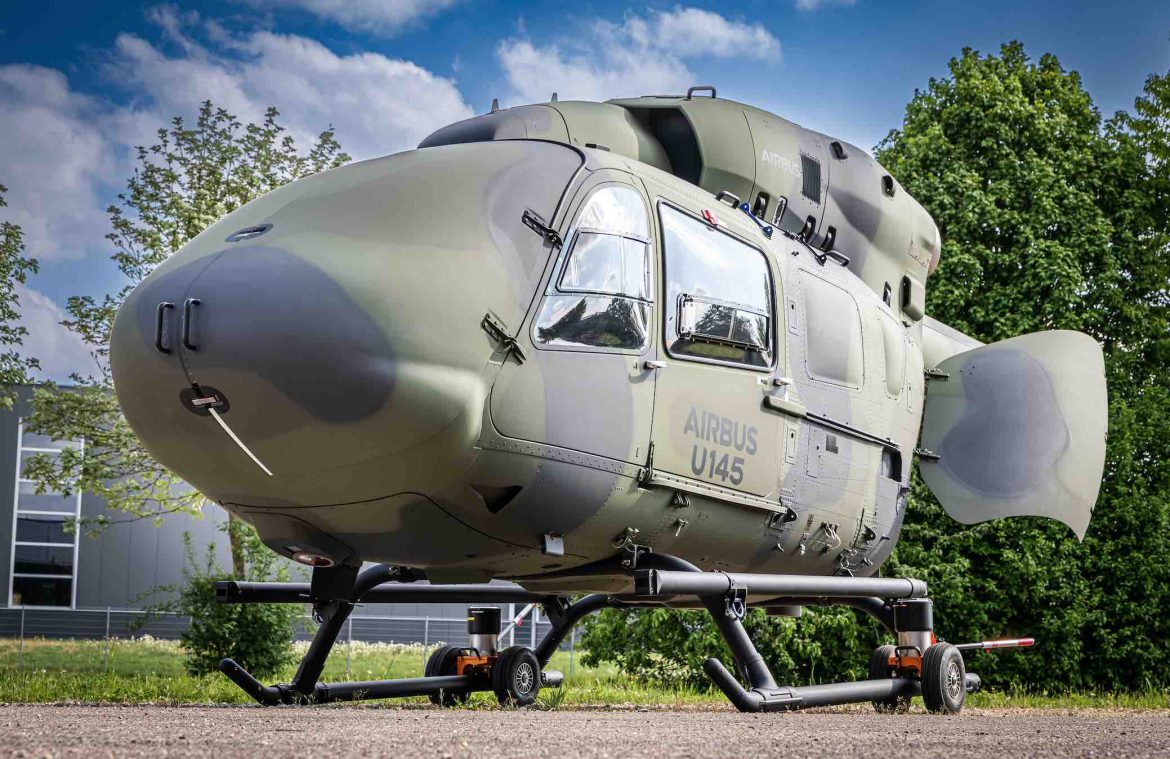
Airbus U.S. Space & Defense is offering the U.S. Marine Corps a fully autonomous variant of the UH-72B Lakota utility helicopter, designated the MQ-72C, developed in partnership with Shield AI, L3Harris, and Parry Lab.
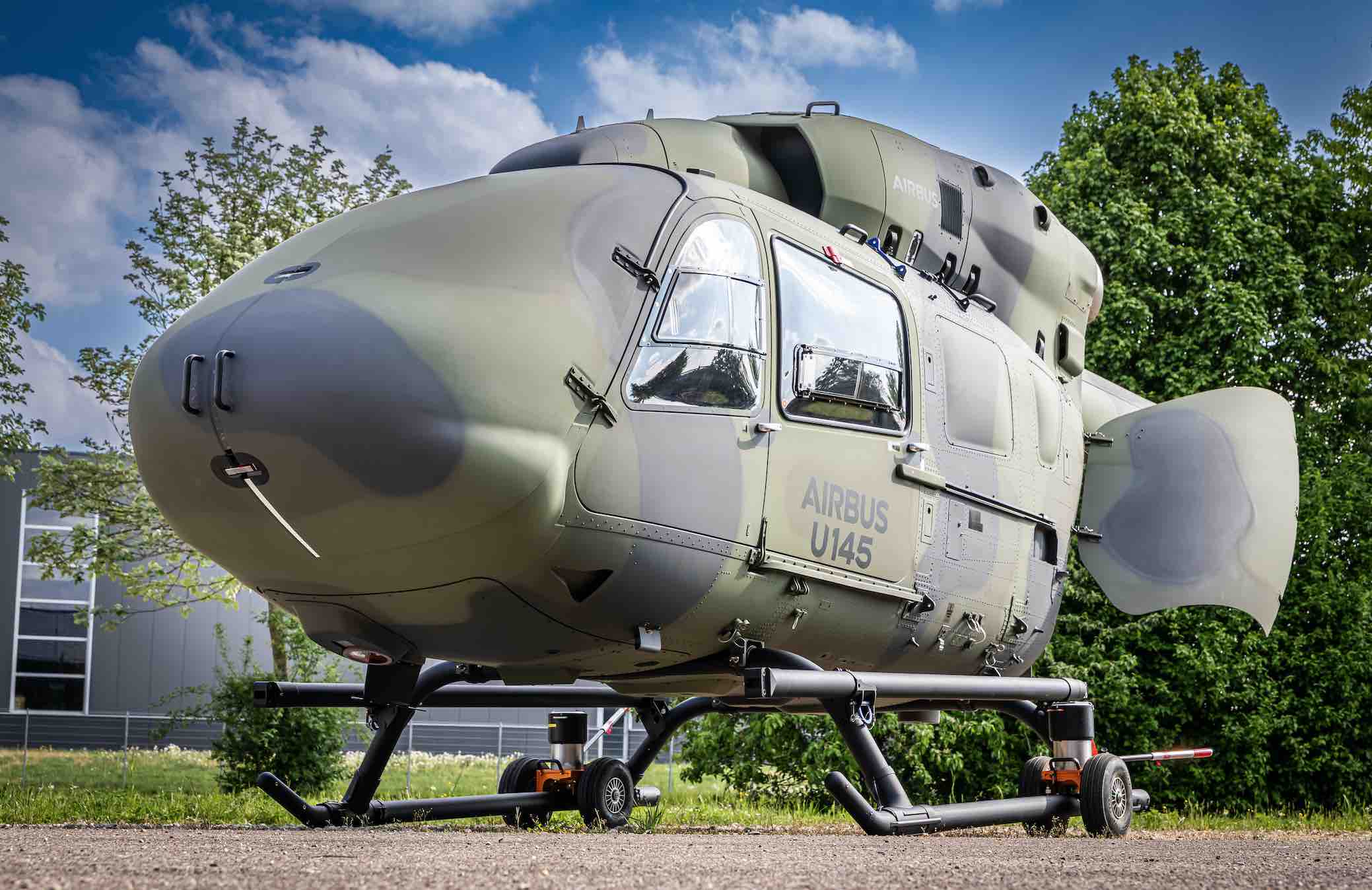
The offering was disclosed alongside a broad uncrewed systems portfolio that Airbus unveiled at the International Aerospace Exhibition in Berlin on June 8–9.
The MQ-72C is derived from the same H145 airframe as the European U145 announced at the show, but is described as a dedicated U.S. development tailored to USMC-specific requirements. Shield AI’s involvement — the company behind the LUCAS autonomy stack and Hivemind platform — points toward the same AI-driven autonomous flight stack the company has been developing for contested-environment operations.
The European U145, meanwhile, was displayed as a full-scale mock-up at ILA. Airbus Helicopters CEO Matthieu Louvot described it as combining the proven airframe, power, and useful load of the H145 with full UAS autonomy. The aircraft eliminates the physical cockpit, adds an integrated nose door with a foldable loading table and dedicated cargo floor, and carries a maximum takeoff weight of 3,800 kg. Primary mission is high-volume cargo resupply, with modular expansion into armed scouting, surveillance, disaster management, firefighting, and drone mothership roles for air-launched effects — the last in partnership with MBDA. A maiden flight with a safety pilot aboard is planned for late 2026, with entry into service at the beginning of the next decade.
The U145 is the second crewed helicopter Airbus is converting to an uncrewed variant, following the VSR700, derived from the Cabri G2.
The broader ILA portfolio showcased the full span of Airbus’s uncrewed ambitions. At the high end, the company displayed a full-scale model of the U760 Ravenstorm UCCA — a 10-meter wingspan, 13-meter length platform optimized for air-to-surface strikes, air-to-air defense, and electronic warfare, available in the early 2030s. The U740 Valkyrie, developed in cooperation with Kratos and equipped with Airbus’s MARS autonomous mission system, is targeting delivery to the German Air Force by 2029, enabling initial air-to-ground capability and Eurofighter teaming.
At the lighter end, Airbus displayed three tactical UAS: the 25 kg Aliaca (3 kg payload, six-hour endurance), the 25 kg Flexrotor (8 kg payload, 12–14 hours), and the 120 kg Capa-X (20 kg payload, multi-terrain adaptable). The U680 Bird of Prey drone interceptor, designed to engage massed one-way attack drones, completed its first demonstration flight in March 2026 — nine months after project kickoff — with additional flights planned through the year.
All combat and interceptor platforms run on MARS, Airbus’s sovereign AI-supported autonomy stack, which the company also intends to install on the U950 Eurodrone MALE platform, currently targeting first flight in 2029.
Airbus also formalized a new “U” naming convention for its full uncrewed portfolio, aligning with its “A” prefix for fixed-wing aircraft and “H” for helicopters.
