
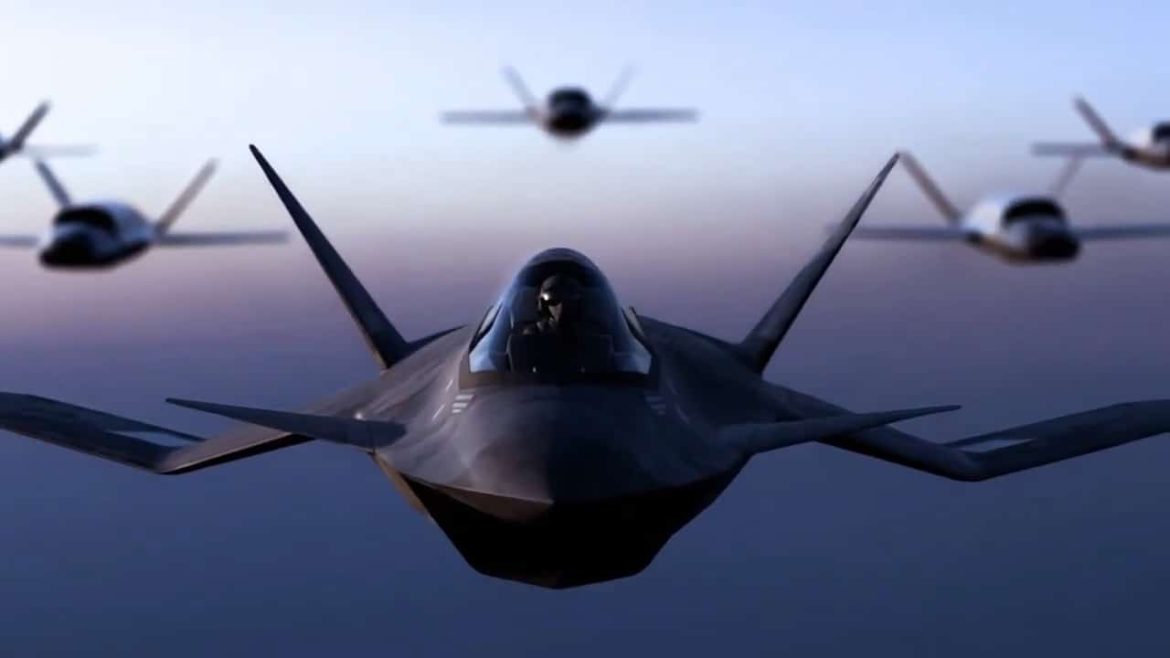
German companies announced the formation of Team Gen 6, a new industry grouping that aims to take responsibility for the development of a 6th-gen fighter aircraft after FCAS collapse.
Airbus announced at the ongoing ILA Berlin 2026 that German industry is coming together to form “Team Gen 6” to develop a sovereign European 6th-generation fighter aircraft. The announcement follows the recent collapse of the Next Generation Fighter project of the Future Combat Air System/Système de Combat Aérien du Futur (FCAS/SCAF) program.
The company said that after the “realignment” of FCAS, the development of the overarching ‘System of Systems’ is progressing as before but the 6th-generation fighter aircraft integrated within it requires a new, agile industrial setup. Eight leading German defense and aviation companies thus signed a strategic positioning paper to continue the work started under the NGF project.
An exciting step for European sovereignty at ILA Berlin: “Team Gen 6”, a group of eight leading German defence and aviation companies signed a strategic positioning paper. The German and French governments have announced a realignment of the European Future Combat Air System… pic.twitter.com/aZcjAaO6dE
— Airbus Defence (@AirbusDefence) June 11, 2026
In addition to Airbus, the other companies involved are Autoflug, Diehl Defence, Hensoldt, Lliebherr, MBDA Deutschland, MTU Aero Engines and Rohde&Schwarz. Together with the German industry, a Spanish group is also forming up with Indra, Airbus, Grupo Oesia, GMV, ITP Aero and Sener.
“As Team Gen 6, we have the capabilities and the capacities,” said the joint statement. “Now, we are looking for close alignment with policymakers and the Air Force to drive forward a superior European air combat system for collective security.”
Jean-Brice Dumont, head of air power at the Airbus Defence & Space, said that the industry is preparing options for the governments and the militaries in order to decide how to proceed after FCAS.
“At the moment, we are going to seek guidance from our governments [about] what they want us to do. There has to be demonstrated an industrial feasibility of what is being asked – not only technical,” said Dumont, according to Flight Global.
At the same time, Dumont stressed upon the need to not waste the work that was done so far for the development of the NGF and the whole FCAS. “We have to consider safeguarding areas where it works, and how we reshape,” he said.
6th gen concept
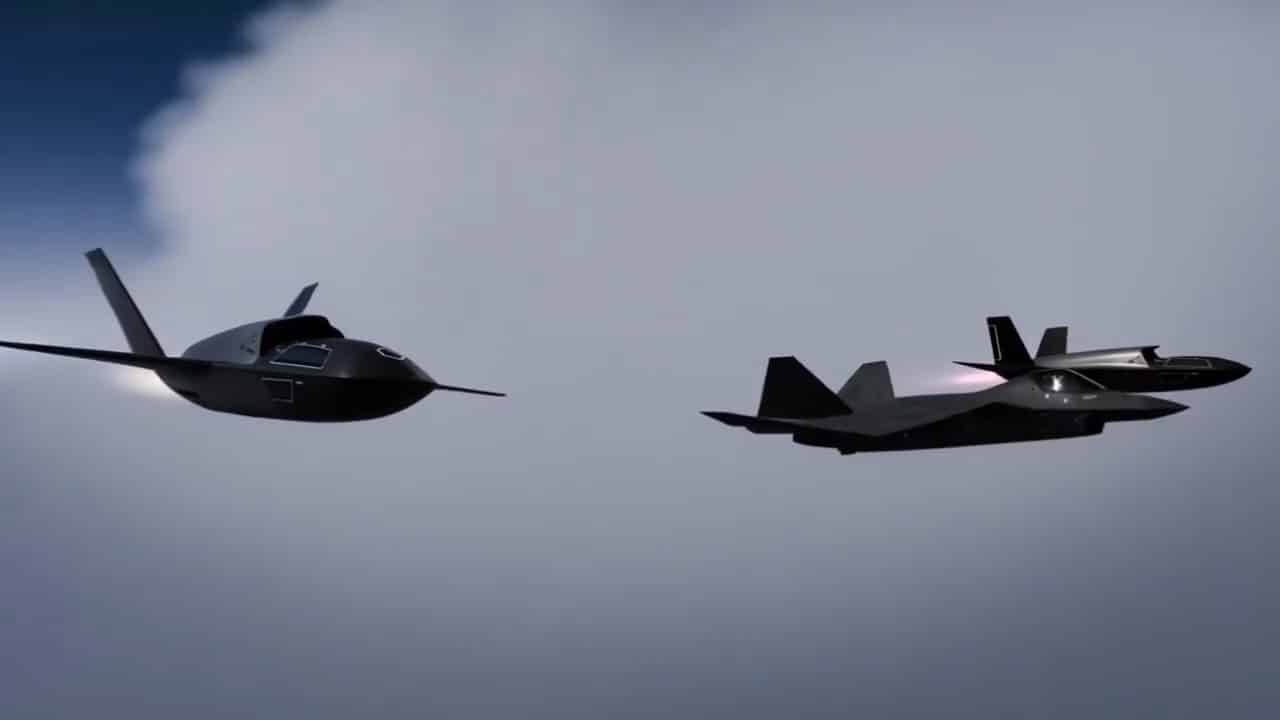
Together with the joint statement, Airbus has also released a short video showing the foundation of the FCAS alternative. The company is positioning itself as the lead of the new project.
The video starts with some views of the Eurofighter Typhoon, the Dornier Anti Radar drone, the LOUT Low-Observable UAV Testbed, the A330 MRTT and the EADS Barracuda. “The foundation is proven,” says the video, referring to the know-how acquired through these different programs in Airbus’ portfolio.
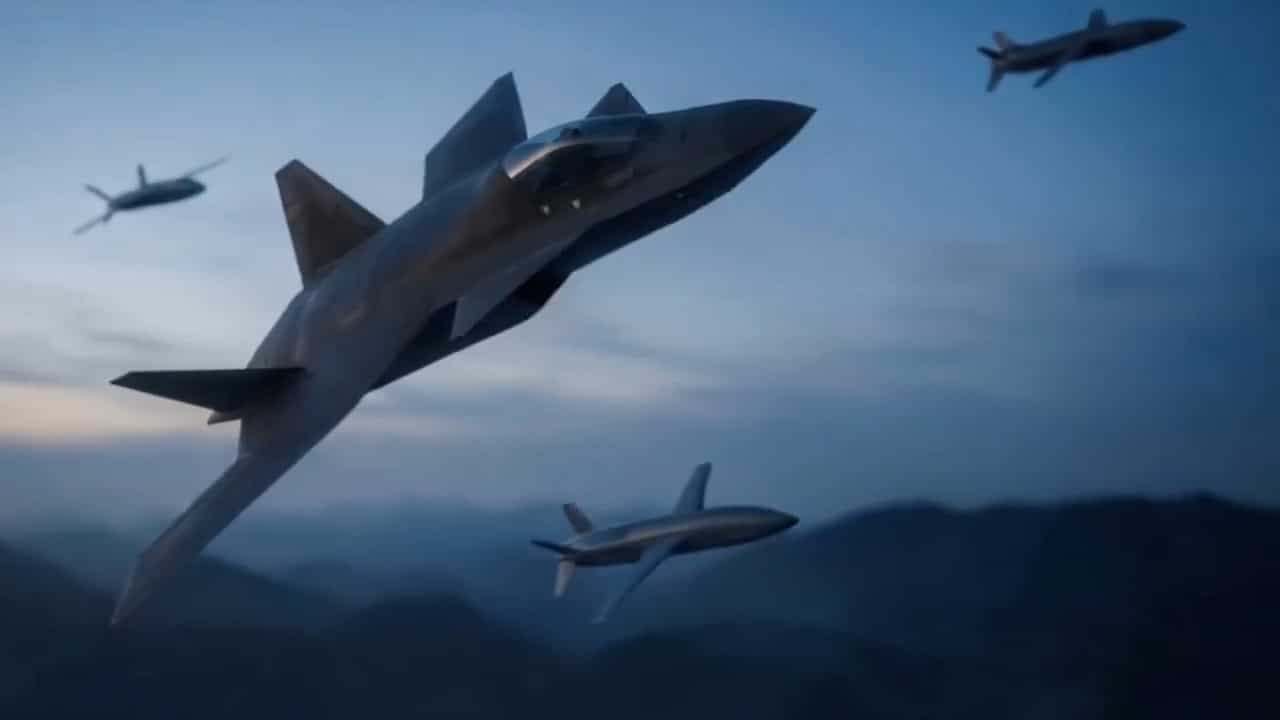
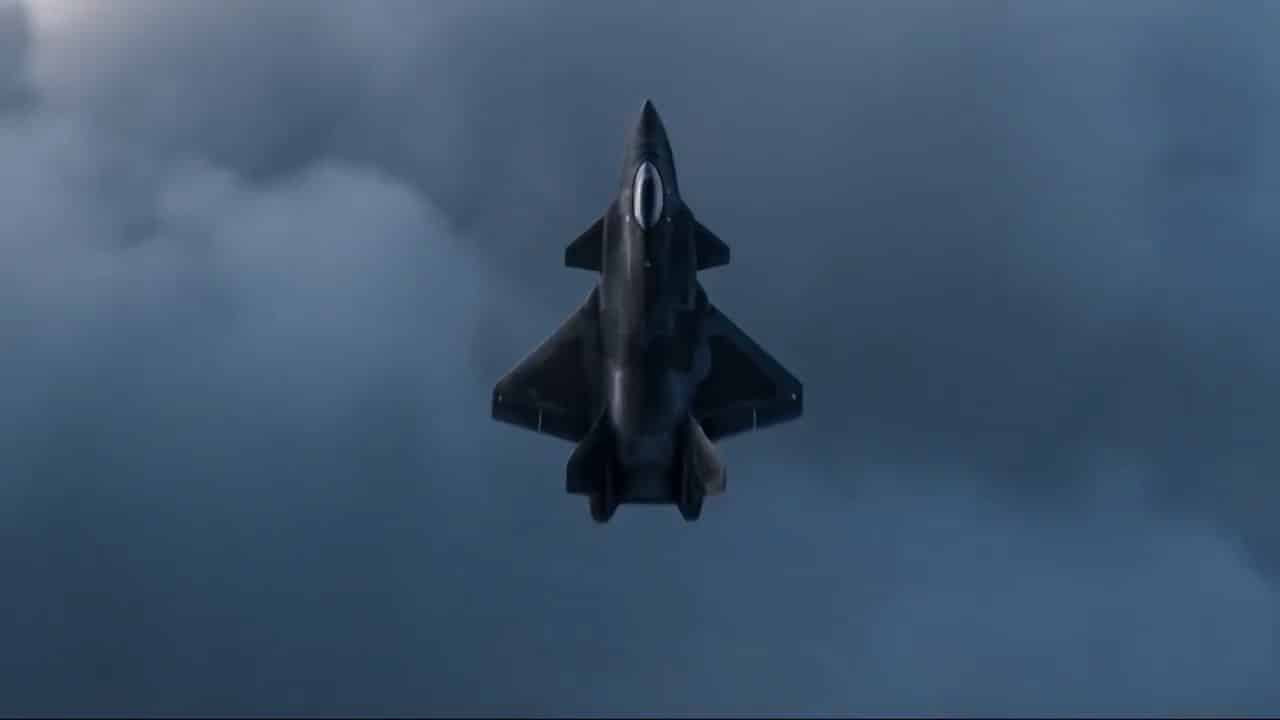
The company then says it’s ready for the future, showing a concept – possibly notional – of its proposed NGF alternative. Many have already noted some resemblance to another 6th gen aircraft, the Boeing F-47, although this concept might only be a placeholder and completely unrelated to the new project.
The aircraft is notably different from the earlier NGF renderings, which showed a more traditional twin engine aircraft with lambda wing, highly canted tail surfaces and so-called “armpit” air inlets. The new renderings, in fact, show a completely different twin-engine design, a negative dihedral gull wing, canard foreplanes and what appears to be a single ventral diverterless supersonic inlet (DSI).
The aircraft is shown operating with two different unmanned platforms. These include both the newly announced U760 Ravenstorm and the previously announced Loyal Wingman for the FCAS program.
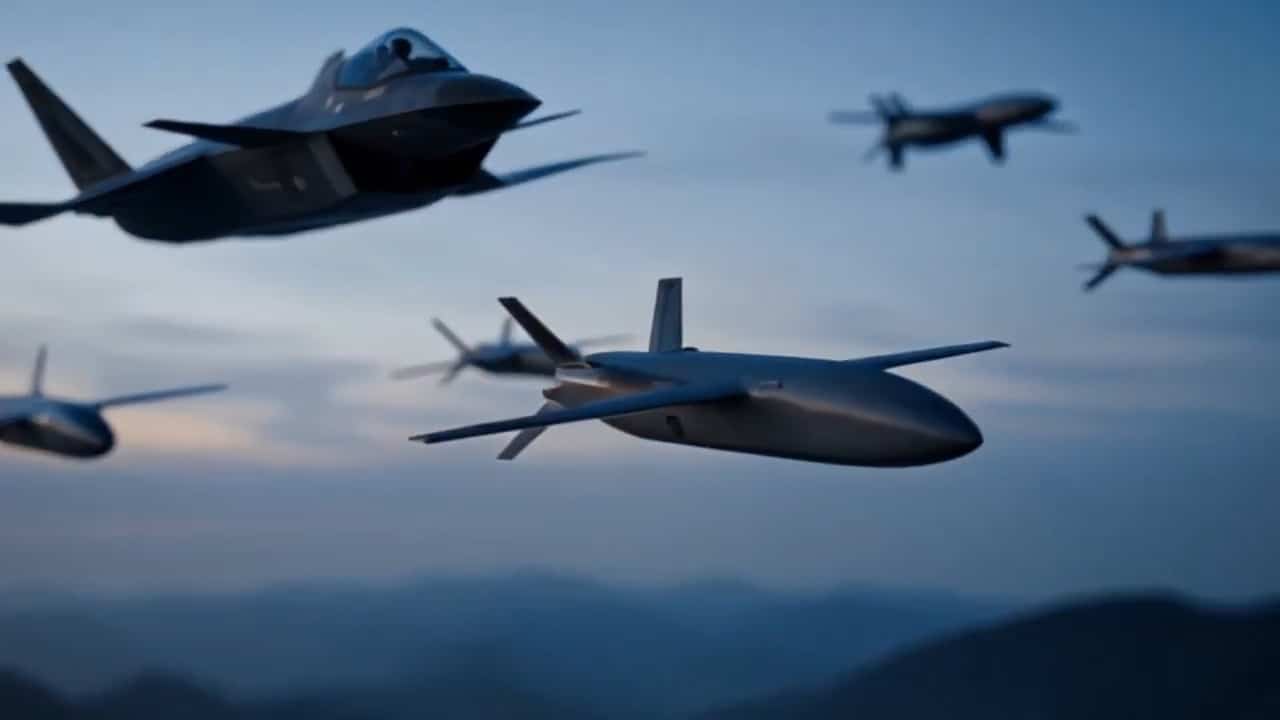
The latter is one of the surviving systems developed as part of the realignment of FCAS. In fact, Germany and France said they would continue to work on the drone system and related data network.
FCAS collapse
The imminent announcement of the collapse of the FCAS program was reported few days before ILA Berlin 2026 by French newspaper La Tribune and German outlet Frankfurter Allgemeine Zeitung. Both acknowledged profound disagreements over the program’s governance between Airbus and Dassault Aviation, which in the end were unable to find a common ground.
German Chancellor Friedrich Merz and French President Emmanuel Macron attempted to save the program. However, the mediation efforts failed as Dassault was reportedly looking at a greater workshare while Airbus wanted an equal share.
This disagreement led the program to be stuck at the Phase 1B Technological Development, which was supposed to lead to Phase 2 involved the development and production of a demonstrator aircraft. The initial goal was to begin flight testing of the demonstrator in 2026 and field the Next Generation Fighter aircraft in 2040, a timeline that already slipped to at least 2045.
The decision to end the program was reportedly taken during the EU-Balkan summit in Montenegro last week, where Merz and Macron met and discussed on the sidelines of the event. The two leaders however decided they will continue to develop a drone system and a related data network.
German Defense Minister Boris Pistorius later confirmed that the NGF indeed was gone. “It was an ambitious, large-scale European project that is now collapsing in the face of reality,” he said.
The Minister described the newly announced Team Gen 6 as “conceivable and one possibility.” However, he also said that alternatives are being considered, including acquiring additional F-35 Lightning II aircraft or joining other aircraft development programs.
Leonardo’s CEO Lorenzo Mariani has welcomed the possibility of Germany joining Global Combat Air Programme (GCAP), especially “in terms of capabilities and cost sharing.” However, Mariani has also warned that the ingress of a new member in the program could delay the 2035 deadline.
