
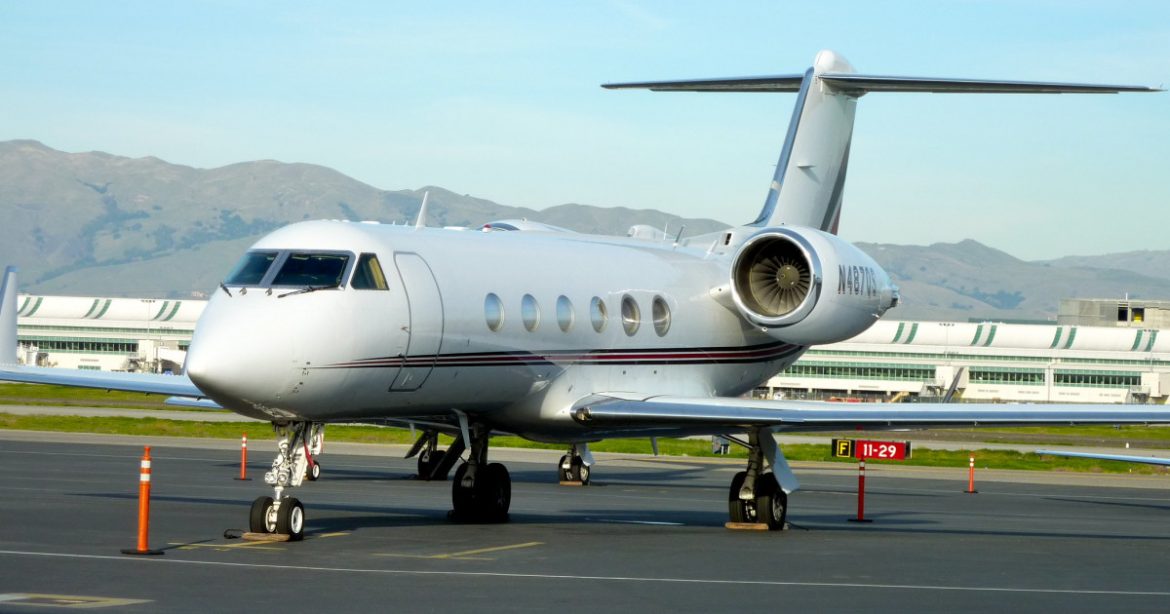
The Scottish Green Party has ignited a fierce global debate by proposing a total ban on private jets at all Scottish airports. While the move is hailed by environmentalists as a necessary step toward meeting the nation’s ambitious net-zero targets, business leaders and economists are warning of a significant “red ink” event that could drive investment away from Edinburgh and Glasgow.
Private aviation has long been the “bête noire” of the climate movement. A single private jet flight can emit two metric tons of CO2 in just one hour—roughly the same amount an average person emits in an entire year. However, the economic reality is that the sector supports thousands of high-value jobs and facilitates global trade that Scotland relies upon.
The Cost of Virtue
Opponents of the ban argue that Scotland risks isolating itself from the global financial elite. The Scottish Chambers of Commerce noted that private aviation is essential for the oil and gas sector in Aberdeen, as well as the growing tech hub in Edinburgh. They estimate that a ban could result in an annual loss of £700 million (approximately KES 115 billion) in direct and indirect economic activity.
Furthermore, there are concerns about “carbon leakage.” If private jets cannot land in Scotland, they will simply divert to northern England or Ireland, with the travelers completing their journey via helicopter or car. This would result in the same (or higher) emissions while Scotland loses the landing fees and service revenue. This “displacement effect” is a common pitfall in localized environmental bans.
Comparative Climate Data
The debate in Scotland has caught the attention of policy makers in Kenya, where the aviation sector is also under pressure to decarbonize. While Kenya is not considering a ban, the introduction of “green levies” on luxury travel is a recurring topic in Treasury discussions. The contrast between the two nations is stark:
- Private jets contribute 2.5% of total global aviation emissions despite carrying less than 0.1% of passengers.
- The UK (including Scotland) has the highest number of private jet departures in Europe.
- Kenya’s aviation sector contributes less than 0.5% of the national carbon footprint, yet faces high “green taxes” from international regulators.
- Sustainable Aviation Fuel (SAF) currently costs 3 to 5 times more than traditional kerosene, making it a difficult sell for commercial carriers.
A Global Precedent
If the Scottish ban proceeds, it would be the first of its kind in the Western world, setting a precedent that other “Green” coalitions in Europe might follow. It raises a fundamental question about the future of capitalism in a warming world: can we maintain global economic integration while restricting the mobility of those who manage the capital? For the Scottish Greens, the answer is a resounding “yes”—they argue that the prestige of a “Green Scotland” will attract a new wave of ethical investment that outweighs the loss of the jet-set.
For Kenya, the lesson is one of balance. As Nairobi positions itself as a regional financial hub, it must navigate the tension between attracting high-net-worth investors and leading the global south in climate resilience. The Scottish experiment will be watched closely from the towers of Upper Hill to the hangars of Wilson Airport. Whether it results in cleaner skies or a hollowed-out economy remains the multibillion-shilling question.
