
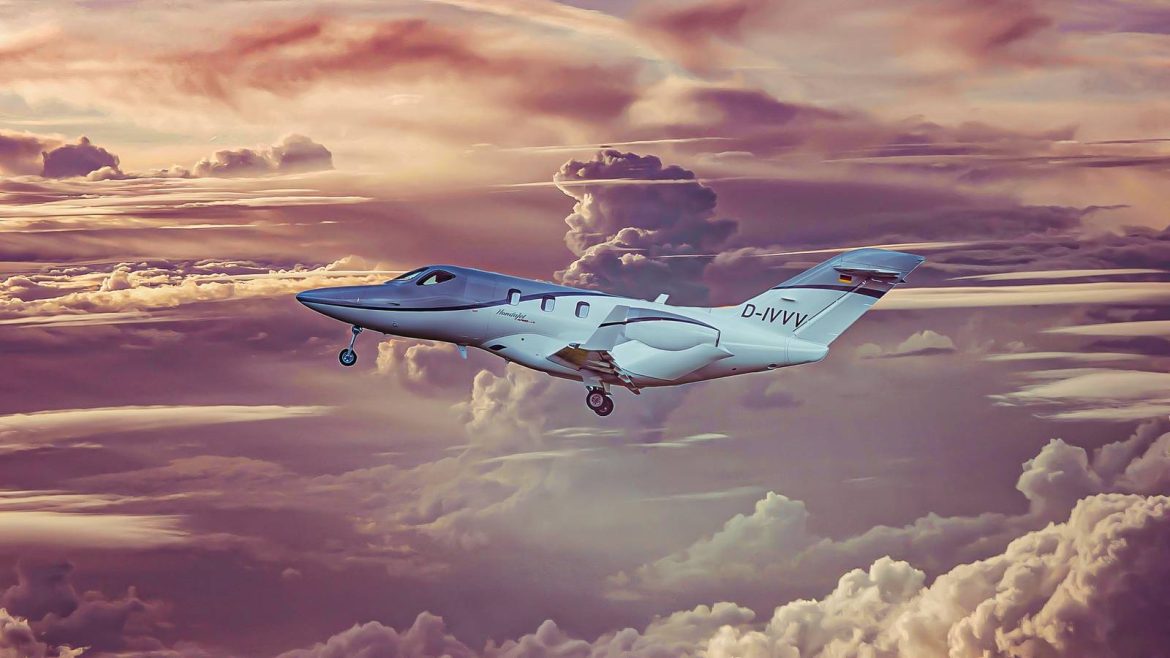
Honda, a name synonymous with automotive engineering, took theaviation world by stormwith the introduction of the HondaJet. A product of Honda Aircraft Company, this innovative very light jet (VLJ) has redefined the boundaries of efficiency, luxury, and design in business aviation. This article delves deeply into the HondaJet’s unique features, engineering breakthroughs, and its impact on the business jet market, as well as the broader implications for personal air travel and sustainability.
A legacy of innovation
Honda’s journey into aviation began in the 1980s with a vision to revolutionize personal air travel. For over two decades, the company has invested heavily in research and development, leveraging its automotive engineering prowess to enter a new frontier. They didn’t produce any aircraft or even designs until 1997. Instead, they took their time researching, designing and planning what would eventually become HondaJet. In fact, from 1986 until 1997, the entire time period was spent just on R&D and building up the aviation division from scratch.
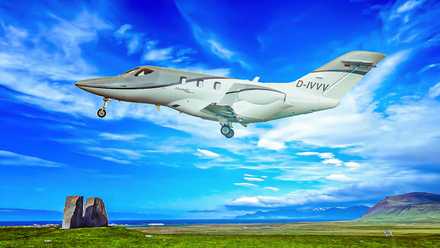
What Makes The HondaJet Such A Popular Very Light Jet?
The latest innovations in the design have defied industry standards.
The lead designer, Michimasa Fujino, came up with the idea for the over-the-wing engine mount in 1997 and development of this unique design began. This was a totally new design concept in business aviation and very exciting. Even today, this is considered a revolutionary design feature and is different from similarly designed aircraft such as the Boeing VFW-614. The first proof-of-concept HondaJet was flown in late 2003.

This flight marked a significant milestone for the company and showcased the brand’s commitment to innovation. The aircraft received FAA certification in 2015, officially introducing Honda to the competitive business jet market, some 30 years after its initial foray into aviation. Since that time, the company has worked quickly, introducing a variety of models to the market, each improving on the design before it. By blending advanced aerodynamics, innovative materials, and state-of-the-art technology, the HondaJet quickly became a symbol of Honda’s ability to adapt and excel in new industries.
Distinctive over-the-wing engine mount (OTWEM)
One of the most striking features of the HondaJet is its over-the-wing engine mount configuration, a revolutionary design that sets it apart from traditional jets. The OTWEM reduces drag and optimizes fuel efficiency, ensuring the aircraft achieves superior performance metrics. This design also significantly lowers cabin noise by physically isolating the engines from the main cabin.

Additionally, the OTWEM enables a more spacious and flexible cabin layout by eliminating the need for structural reinforcements to support rear-mounted engines. These benefits combine to provide an unparalleled passenger experience and operational efficiency. The design has earned widespread recognition as an engineering breakthrough in aviation.
Advanced aerodynamics and materials
The HondaJet’s sleek fuselage and wings are crafted using lightweight composite materials that offer durability and efficiency unmatched by traditional aluminum airframes. This approach not only reduces the aircraft’s overall weight but also increases its resistance to corrosion, extending its lifespan. The incorporation of natural laminar flow technology on both the wing and nose further minimizes drag, enabling the aircraft to achieve higher cruising speeds and lower fuel consumption. These aerodynamic advancements are the result of extensive wind tunnel testing and computational fluid dynamics simulations, emphasizing Honda’s commitment to precision engineering.
HondaJet models
The HondaJet’s performance metrics exemplify its position as a leader in the VLJ market. Currently, there are three models of HondaJets in production. All are twin-engine VLJs and can accommodate different passenger limits.
Original HondaJet
The original HondaJet has a maximum cruising speed of 422 knots and a range of 1,223 nautical miles (with four passengers). It is well-suited for regional and short international flights. The jet’s climb rate of 3,990 feet per minute ensures quick ascents to cruising altitudes, reducing overall travel time. Powered by two GE Honda HF120 turbofan engines, each producing 2,050 pounds of thrust, the HondaJet boasts impressive power and reliability. With a service ceiling of 43,000 feet, it can efficiently operate above commercial air traffic, ensuring smoother and faster journeys.
HondaJet Elite II
Certified in 2018, the HondaJet Elite II boasts an expanded range of 1,547 nautical miles, increased fuel capacity, and gross weight increase, giving users greater capability and more flexibility. The cruise speed is 422 knots and the max cruising altitude is 43,000 feet. The Elite II is essentially an optimized version of the original HondaJet and can even be ordered as a retrofit for existing HondaJet customers.
HondaJet Echelon
This is the next chapter in the evolution of the HondaJet. This model boasts ample cargo storage (120 cubic feet) and can accommodate up to ten passengers depending on the configuration. Capable of nonstop transcontinental flights across the United States, this model offers conveniences typically seen on larger aircraft. It boasts a max cruise speed of 450 knots, a range of 2,625 nautical miles and a max cruising altitude of 47,000 feet.
Special mission aircraft
HondaJet does offer the Medevac model for medical and organ transport missions. According to HondaJet, this model offers lower operating costs and higher speed than other medical transport aircraft on the market today. Available in three different configurations, the HondaJet Medivac can accommodate up to seven passengers.

Cabin comfort and technology
The HondaJet’s interior reflects a dedication to luxury and functionality. The cabin features leather seats with customizable configurations, allowing for optimal use of space. The fully enclosed lavatory, a rarity in the VLJ category, adds an extra layer of comfort and convenience for passengers. Ambient lighting, noise-reducing materials, and advanced climate control systems create a serene travel experience. For pilots, the Garmin G3000 avionics suite offers an intuitive interface, synthetic vision technology, and automated systems that enhance safety and ease of operation. This combination of passenger comfort and pilot-friendly features underscores Honda’s holistic design philosophy.
Market impact and competition
Since its debut, the HondaJet has significantly influenced the VLJ market, appealing to private owners, charter operators, and corporate executives. Competing with models like the Embraer Phenom 100EV and Cessna Citation M2, the HondaJet stands out for its innovative design and advanced technology.
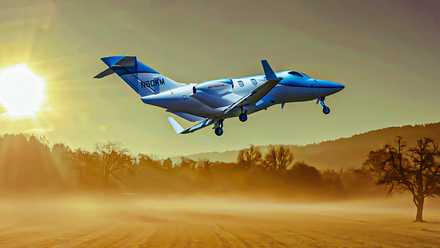
The introduction of the HondaJet Elite II has further expanded the aircraft’s appeal by offering an extended range, upgraded avionics, and enhanced cabin features. These advancements have solidified Honda’s reputation as a serious contender in the business aviation industry. The success of the HondaJet has also spurred competition, pushing other manufacturers to innovate and improve their offerings.
Environmental considerations
In a world increasingly focused on sustainability, the HondaJet’s efficient design addresses environmental concerns head-on. The lightweight composite materials and advanced aerodynamics contribute to significantly reduced fuel consumption and lower carbon emissions compared to other jets in its class. Honda’s production facilities also adhere to stringent environmental standards, reflecting the company’s broader commitment to sustainability. Future developments may include hybrid or fully electric propulsion systems, further aligning the HondaJet with global efforts to reduce aviation’s environmental footprint.
Customer reception and reviews
Owners and operators of the HondaJet consistently praise its reliability, performance, and luxurious features. Reviews highlight its low operating costs, estimated at $1,200 per flight hour, as well as its ease of maintenance, thanks to Honda’s well-established service network. Passengers appreciate the quiet cabin and spacious interior, while pilots commend the aircraft’s responsive handling and advanced avionics. These positive reviews have contributed to strong sales and a loyal customer base, positioning the HondaJet as a top choice in the VLJ market.
Challenges and future outlook
Despite its many successes, the HondaJet faces challenges, including fluctuating economic conditions, rising competition, and evolving customer expectations. However, Honda Aircraft Company’s proactive approach to innovation and its dedication to customer satisfaction provide a strong foundation for future growth.
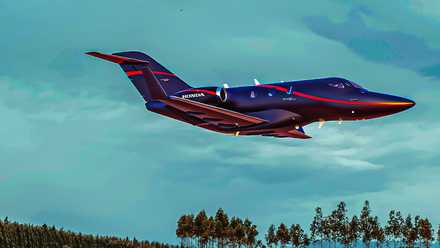
Newest HondaJet: A Guide To The HondaJet Elite II
The Elite II offers a compelling blend of performance, comfort, and cost-efficiency.
Potential advancements in propulsion technology and continued refinements in cabin comfort and efficiency could further enhance the HondaJet’s appeal. As the VLJ market evolves, Honda’s adaptability and commitment to excellence will be critical to maintaining its competitive edge.
The HondaJet exemplifies Honda’s innovative spirit and ability to redefine industry standards. Taking its cues from its parent company and automotive division, HondaJet seeks to be known for reliability, innovation and consistency; all things synonymous with the greater Honda brand. Its unique features, exceptional performance, and focus on sustainability have made it a trailblazer in the VLJ market. As Honda continues to innovate and adapt to changing market demands, the future of the HondaJet looks brighter than ever. With its blend of luxury, efficiency, and cutting-edge technology, the HondaJet is not just an aircraft—it is a testament to Honda’s legacy of excellence and a glimpse into the future of personal air travel.
