


Published 10th Jun 2026, 06:00 BST
It is a hard and fast rule in politics that there is nothing more popular than a tax that other people will pay. Consistent opinion polling shows that the public are in favour of higher taxes to fund public services, providing those are paid by other people, usually “the rich”. This group can be defined as anyone earning around £10,000 a year more than the respondents to any given survey.
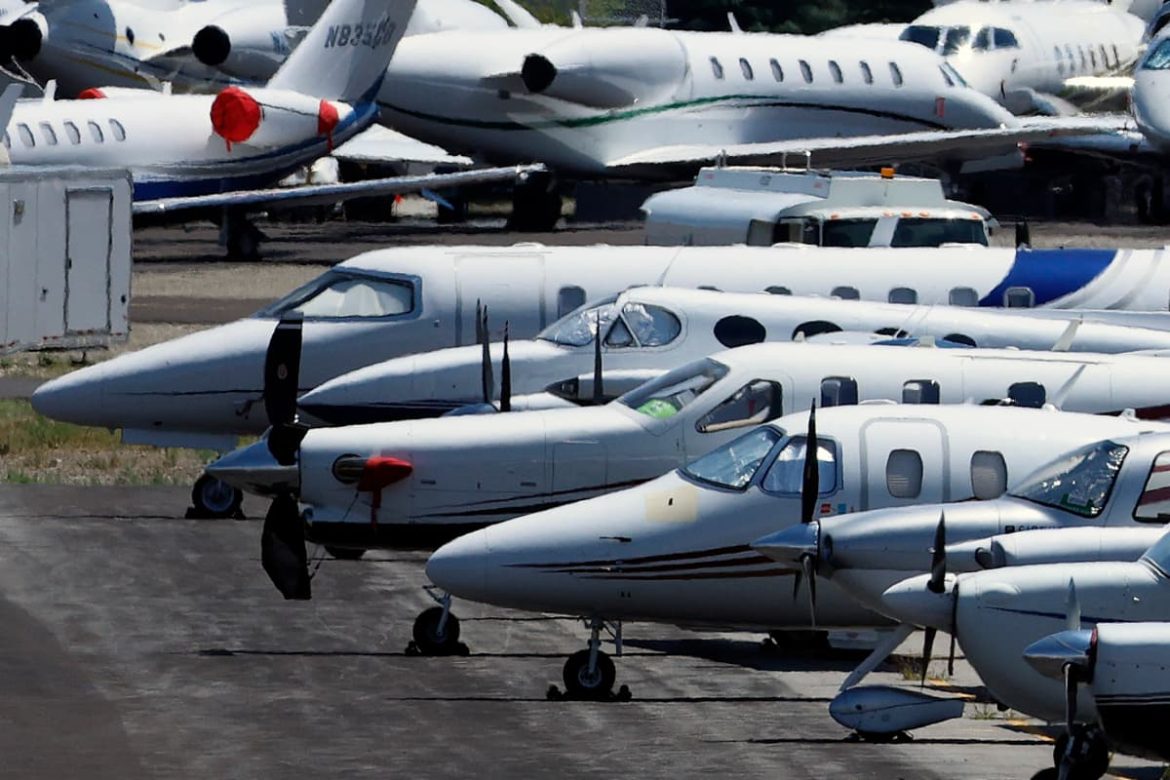
Against that backdrop, it is perhaps not surprising that the Scottish Government are currently introducing two new taxes which will impact on the better off – a mansion tax on more expensive properties whose council tax bills will go up, and a tax on private jets landing in Scottish airports.
Nor should we be surprised that the notion of a private jet tax is being pushed by the SNP’s erstwhile coalition partners in the Scottish Greens. Indeed, the Greens would go further still, with a proposal to ban private jets entirely from publicly owned airports in Scotland.
A private jet tax is likely to be popular with the public. After all, if popstars like Taylor Swift or sporting heroes like Rory McIlroy can afford to fly in a private jet, then surely they can afford to pay a little bit extra tax. Isn’t this just a pain free way of collecting a little bit more revenue to fill the black hole in the public finances?
If only it were that simple. There is a real concern in the tourist sector about the likely impact on visitor spend here should this proposal be implemented, with the risk that the biggest spenders could be diverted to other destinations.
Tourism is Scotland’s largest industry sector by value, and certainly the largest employer, with one in eleven jobs now dependent on the visitor economy, according to industry body The Scottish Tourism Alliance. Within those figures, high-end tourism, usually involving wealthy international visitors, now represents some 30 per cent of total tourism spend, and it is the sector that is growing most rapidly.
It is venues such as Gleneagles and the Fife Arms in Braemar which are the location of choice for these wealthy international travellers, and they bring with them extensive resources to spend on outdoor activities, on eating and drinking well, and on supporting local businesses. Anyone who has dropped into the House of Bruar on the A9 on a busy summer afternoon can just see the amount being spent by well-heeled visitors supporting jobs in an area that otherwise has few opportunities for well-paid, secure employment.
The ban on private jets proposed by the Greens would not impact on either Edinburgh or Glasgow airports which are privately owned, but currently these only account for around 40 per cent of departures, according to the European Business Aviation Association. Most private jet flights go to smaller local airports, particularly in the Highlands and Islands. And it is these, in locations such as Dundee, Inverness, Prestwick, Stornoway, and Wick which would be impacted if a ban were to be introduced.
Quoted in a recent edition of Forbes magazine, Peter Bates, an expert on luxury travel and former marketing head at Mandarin Oriental Hotel Group and Cunard Line, has expressed his concern about the damage such a ban would do to the Scottish economy. In his experience: “The type of people who arrive on private jets don’t come in ones or twos, they travel in small groups. The economic impact is exponential, and that money flows outside the hotel. They play golf, they go fishing, shooting, they come to Scotland for whisky tasting, and spending is a hobby”.
Moreover, there can be a long-term spin off from attracting these wealthy visitors. Those who visit once are more likely to come back time and time again once they see the warm welcome that Scotland provides. Even better, some will follow up their visits by investing in properties or in local businesses.
The high-net-worth traveller market is highly competitive, with other destinations such as Ireland trying to attract the same visitors that we want here in Scotland. Higher taxes on private jets, or worse still a ban on particular airports, will simply drive these visitors elsewhere. It will be the classic example of government killing the goose that lays the golden egg. These visitors will just stop coming to Scotland, and the value they currently bring will be lost entirely.
Marc Crothall, CEO of the Scottish Tourism Alliance, is clear that the industry needs inbound international visitors, and recognises the value of this is substantially more than is obtained from just the domestic market. “We’ve got a risk of putting off high-wealth clients to choose to come in and out of Scotland”, he warns, adding: “The people arriving on private jets spend a lot of money, especially on luxury Scottish products and experiences”.
Many of the calls we see are of course motivated by the politics of envy, nothing more. Yet what is disturbing is that the current Scottish Government seems attracted to the notion of wealth taxes, with a debate at Holyrood last week in which Ministers didn’t just celebrate the private jet and mansion taxes, but actually called for more powers so they could go further.
Scotland is already a high-tax country, and calls for more and more taxes will simply be counterproductive. When the former MSP Fergus Ewing was SNP Tourism Minister he wanted to see Air Passenger Duty devolved so it could be cut. Sadly he is no longer in Parliament, and the current generation of SNP Ministers now want to go in the opposite direction. It is Scottish tourism that will suffer as a consequence.
