
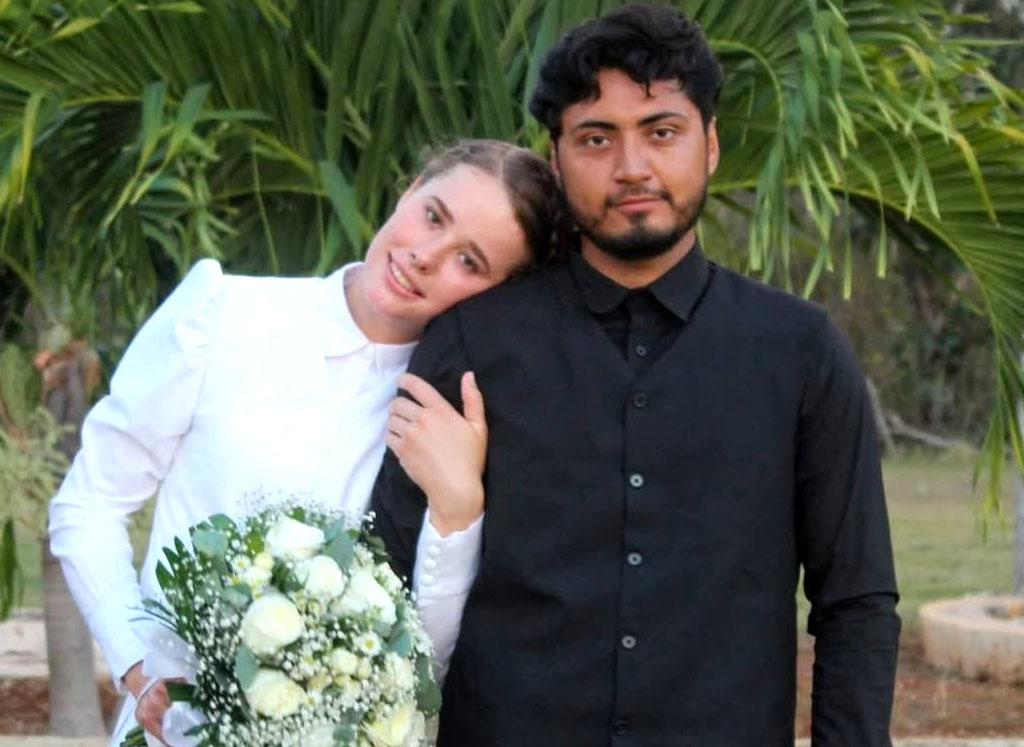
In the quiet municipality of Hopelchén, a recent wedding defied the usual patterns of social life in the region.
Katarina, a young woman from the local Mennonite community, married Camilo, a man identified as a chenero, from Hopelchén.
The event captured the community’s attention not for its extravagance but for its rarity.

To understand why such a union is an exception to the rule, one must first understand the long, deliberate journey of the Mennonite people to the Yucatán Peninsula and the formidable cultural barriers they maintain against the outside world.
The Mennonite presence in Mexico is not a recent phenomenon, but their settlement in Yucatán is. The first Mennonites arrived in Mexico from Canada in 1922, settling primarily in the northern states of Chihuahua, Durango, and Guanajuato.
They came seeking religious freedom and the ability to practice their traditional, agrarian way of life, which includes pacifism, adult baptism, and a conscious separation from secular society.
In the 1980s, driven by a need for more affordable, fertile land to accommodate their rapidly growing families, they established new colonies in Campeche, particularly around Hopelchén, and later in parts of Quintana Roo and eastern Yucatán.

This migration into the heart of the Maya lowlands brought two deeply rooted, traditional cultures into close contact. The Mennonites, with their German and Dutch heritage and Low German language, met the Maya and mestizo population of Campeche.
This coexistence has often led to economic interdependence, with Mennonites becoming major agricultural producers and a major source of local employment. However, it has rarely led to blended families. Marriages between Mennonites and outsiders, known as exogamy, remain profoundly uncommon.
The primary reason for this is religious and cultural preservation. The most traditional Mennonite groups, such as the Old Colony, practice a strict form of religious endogamy, meaning they require their members to marry within the faith.

For centuries, living in relatively closed and isolated communities, marriage was viewed not merely as a union of two individuals but as a crucial mechanism for preserving their unique identity, language, and religious practices. In these conservative circles, marriage involves a formal process often mediated by church officials and requires the approval of both families, with young people socializing only within their own community.
The fear is that a marriage to an outsider would introduce conflicting values, disrupt the patriarchal household structure, and ultimately lead to the erosion of their tightly knit society. While some research suggests that as many as twenty percent of Mennonites in Mexico belong to more liberal groups that have adopted exogamous marriage, the vast majority, particularly the Old Colony settlers in Campeche, adhere to the traditional, closed practice.
Exceptions, like the recent wedding in Hopelchén, do occur, but they often come at a high cost. In many traditional communities, a marriage to an outsider typically means the couple is not integrated into the Mennonite colony.
Thus, the union of Katarina and Camilo carries a symbolic weight far beyond a simple wedding announcement.
Whether this rare convergence of two different worlds will lead to a permanent bridge between them or remain an isolated event, only time will tell. For now, in the fields and growing towns of Hopelchén, it serves as a reminder that while cultures build walls to protect themselves, the human heart sometimes finds a way through.

Senior Editor Carlos Rosado van der Gracht, PhD, is a journalist, photographer, and expedition leader. Born in Mérida, Carlos holds degrees from universities in Mexico, Canada, and Norway. Most recently, he earned a doctorate in Heritage Studies in 2026.
